Singapore: The Lion City
Singapore defies expectations. This tiny city-state has transformed from colonial trading post to global financial hub in just decades, yet preserves its multicultural heritage with fierce pride. Gleaming skyscrapers tower over 19th-century shophouses, Michelin-starred restaurants coexist with legendary hawker stalls, and futuristic gardens bloom beside ancient temples. At just 733 square kilometers—smaller than New York City—Singapore packs extraordinary diversity into every corner1.
Singapore's Remarkable Transformation
From Fishing Village to Global Hub
When Sir Stamford Raffles arrived in 1819, Singapore was a swampy island of about 1,000 inhabitants2. Today, it's consistently ranked among the world's most competitive economies, safest cities, and best airports. This transformation, orchestrated largely by founding Prime Minister Lee Kuan Yew after independence in 1965, remains one of history's most dramatic national developments.
The famous efficiency has real teeth: Changi Airport regularly wins "World's Best Airport" awards, the MRT system is spotless and punctual, and corruption is virtually nonexistent3. What visitors may not expect is the warmth beneath the surface—Singaporeans are proud of their home and eager to share its secrets.
Neighborhoods in Depth
Marina Bay: The Modern Showcase
Marina Bay represents Singapore's ambition made tangible. Marina Bay Sands, the iconic three-tower hotel topped by a 340-meter SkyPark, cost over $8 billion to build4. Non-guests can access the SkyPark observation deck or splurge on sunset drinks at CÉ LA VI.
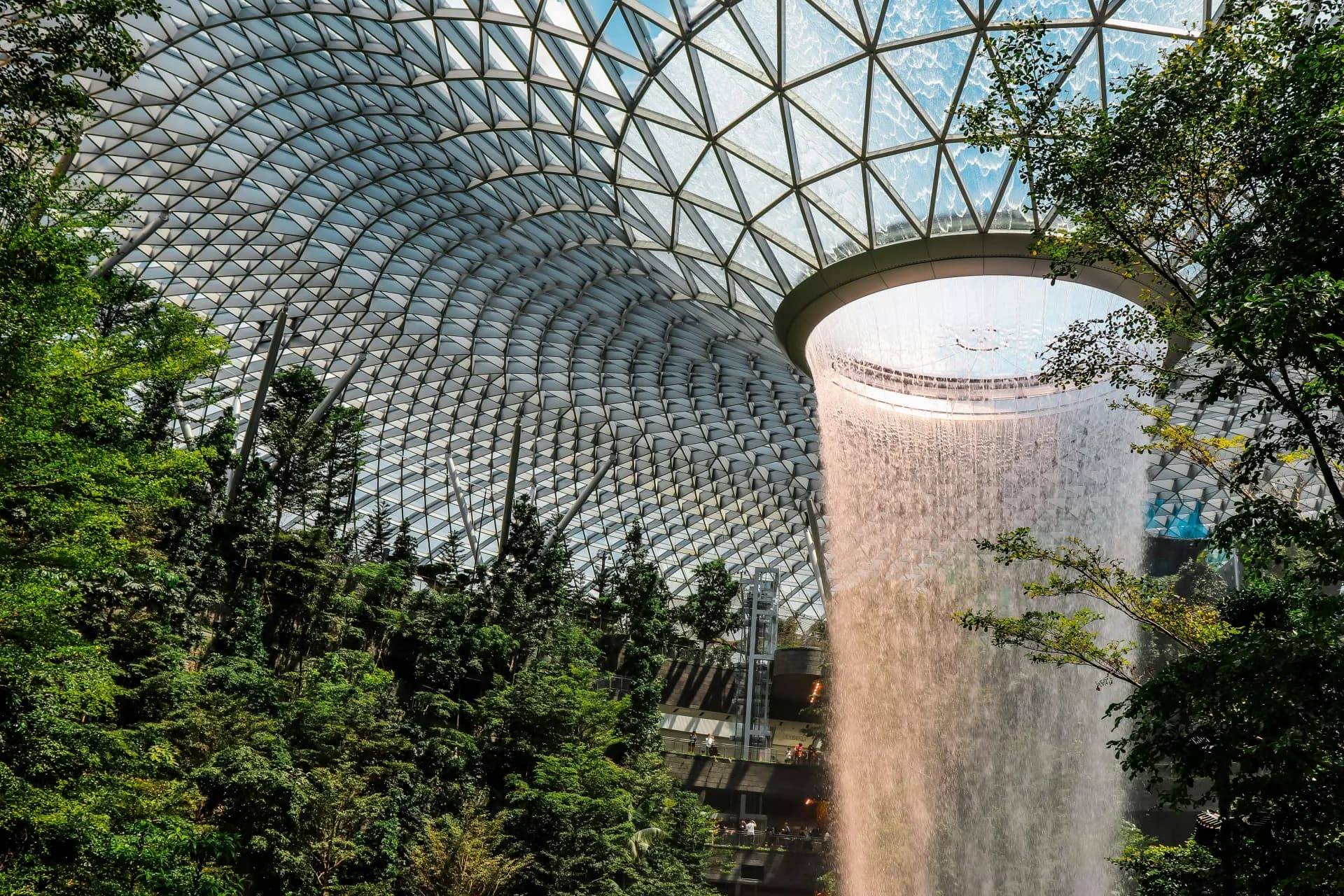
Gardens by the Bay is Singapore's crown jewel. The 101-hectare gardens feature the famous Supertrees—vertical gardens up to 50 meters tall that perform a nightly light show5. The Supertree Grove is free; the Cloud Forest and Flower Dome conservatories require tickets but are absolutely worth it. The Cloud Forest houses the world's tallest indoor waterfall at 35 meters.
Chinatown: Heritage Heart
Despite the souvenir shops on Pagoda Street, Chinatown retains authentic character in its temples, hawker centers, and shophouse architecture. The district was designated for Chinese settlers in Raffles' 1822 town plan6.
Buddha Tooth Relic Temple is a stunning five-story temple built in 2007 to house what's believed to be a tooth of the Buddha. The architecture follows Tang Dynasty style, and the rooftop garden offers city views7. Free entry; dress modestly.
Thian Hock Keng Temple, Singapore's oldest Hokkien temple (1839), was built without nails using traditional Chinese techniques. Workers shipped tiles and dragon sculptures directly from China8.
Little India: Sensory Overload
Little India explodes with color, sound, and fragrance. Flower garlands hang beside spice shops, Indian music drifts from doorways, and the aroma of fresh roti fills the air. The area truly comes alive during Deepavali (Festival of Lights), when the streets blaze with decorations9.
Sri Veeramakaliamman Temple, dedicated to the goddess Kali, features an ornate gopuram (entrance tower) covered in Hindu deities. Built in 1881, it remains an active place of worship10.
The Tekka Centre hawker center serves some of Singapore's best Indian food. Don't miss the biryani at Allauddin's Briyani or fresh murtabak at nearby Zam Zam.
Kampong Glam: Malay Heritage
Singapore's Malay quarter centers on the magnificent Sultan Mosque, whose golden dome dominates the skyline. Built in 1824 and reconstructed in 1932, it remains the largest mosque in Singapore11. Free guided tours explain Islamic culture and architecture—a rare opportunity in this majority-Chinese city.
Arab Street has evolved from textile trading hub to boutique paradise, while Haji Lane is Instagram central with street art, independent shops, and hipster cafés.
Tiong Bahru: Art Deco Charm
Singapore's first public housing estate (1930s) has become its trendiest neighborhood. The art deco SIT (Singapore Improvement Trust) flats, with their distinctive curved balconies and spiral staircases, now house independent bookshops, specialty cafés, and design stores12.
BooksActually is a beloved independent bookstore championing Singaporean literature. Plain Vanilla Bakery serves excellent cupcakes. For heritage, the Qi Tian Gong Temple (Monkey God Temple) hosts spirit medium sessions.
Katong & Joo Chiat: Peranakan Culture
The Peranakan (Straits Chinese) culture—a unique blend of Chinese and Malay traditions—finds its most colorful expression here. The pastel-colored shophouses along Koon Seng Road are Singapore's most photographed13.
328 Katong Laksa is legendary for its rich, coconut-curry noodle soup—so thick you eat it with a spoon. The Peranakan Terraces explain the culture through beautifully restored homes.
Food: Singapore's True Religion
Understanding Hawker Culture
Singapore's hawker centers are UNESCO-recognized cultural heritage14. These open-air food courts, born from street food vendors relocated by the government in the 1970s for hygiene reasons, serve extraordinary food at pocket-change prices. Eating at hawker centers isn't budget tourism—it's how locals eat daily.
Essential Hawker Centers
Maxwell Food Centre - Chinatown's most famous. The queue at Tian Tian Hainanese Chicken Rice (stall #10) is legendary for good reason. Also try Maxwell Fuzhou Oyster Cake and Ah Tai's duck rice15.
Old Airport Road Food Centre - The largest (150+ stalls) and most local. Overwhelming but rewarding. Don't miss Lao Fu Zi Fried Kway Teow or Nam Sing Hokkien Mee.
Chinatown Complex Food Centre - Home to Hawker Chan's Hong Kong Soya Sauce Chicken, which famously received a Michelin star at $2 per plate (now $3.80)16.
Tiong Bahru Market - Renovated but authentic. The second floor has excellent chwee kueh (rice cakes) and lor mee (braised noodles).
Lau Pa Sat - The 1894 Victorian structure is touristy but convenient, and Satay Street (Boon Tat Street) sizzles nightly with dozens of satay vendors.
The Essential Singapore Food List
- Hainanese Chicken Rice - Poached chicken, fragrant rice cooked in chicken fat, three sauces. The unofficial national dish. Debates over the best version can last hours.
- Laksa - Rich, spicy coconut curry soup with noodles. Katong-style (cut noodles eaten with spoon) is most famous.
- Char Kway Teow - Wok-fried flat rice noodles with Chinese sausage, cockles, egg, and fish cake. The wok hei (breath of the wok) smokiness is essential.
- Chilli Crab - Sweet-savory-spicy crab in tomato-chili sauce. Served with mantou (fried buns) to mop up the sauce. Must-try at jumbo Seafood or No Signboard.
- Satay - Grilled meat skewers with peanut sauce. Lau Pa Sat's Satay Street is the classic experience.
- Bak Kut Teh - Peppery pork rib soup, traditionally breakfast. Song Fa is the famous chain; Founder's offers the peppery Teochew style.
- Kaya Toast - Coconut jam spread on toast with butter, served with soft-boiled eggs and kopi. Singapore's quintessential breakfast.
- Rojak - Fruit and vegetable salad with shrimp paste dressing. The name means "mixture" in Malay.
Fine Dining Excellence
Singapore has more Michelin stars per capita than most cities. Three three-starred restaurants anchor the scene: Odette (French, at National Gallery), Les Amis (French, Orchard), and Zén (Nordic)17.
More accessible starred options include Burnt Ends (Australian BBQ), Labyrinth (modern Singaporean), and Candlenut (world's first Michelin-starred Peranakan restaurant).
Kopitiams: Coffee Shop Culture
Traditional coffee shops serve kopi—local coffee roasted with sugar and margarine, creating an intensely sweet, rich brew. Order by customizing: "kopi-o" (black), "kopi-c" (evaporated milk), "kopi-gao" (strong), "kopi-peng" (iced).
Classic kopitiams include Ya Kun Kaya Toast (chain but authentic), Chin Mee Chin (old-school Katong charm), and Tong Ah Eating House (Keong Saik Road institution since 1939).
Must-See Attractions
Gardens by the Bay
Beyond the Supertrees, the 101-hectare gardens contain two conservatories. The Cloud Forest recreates highland tropical environments with its 35-meter waterfall. The Flower Dome is the world's largest glass greenhouse, replicating Mediterranean and semi-arid climates18. The nightly Garden Rhapsody light show (7:45 PM and 8:45 PM) is free and magical.
Singapore Botanic Gardens
Singapore's only UNESCO World Heritage Site (inscribed 2015), these 160-year-old gardens were instrumental in establishing the region's rubber industry19. The National Orchid Garden houses over 1,000 species. Free except for the orchid garden.
National Gallery Singapore
Housed in the former Supreme Court and City Hall buildings, the gallery holds the world's largest collection of Southeast Asian art—over 8,000 pieces spanning the 19th century to present20. Don't miss the building's colonial architecture and rooftop views.
Hidden Gems
Haw Par Villa - The most bizarre attraction in Singapore. This theme park, built in 1937 by the Tiger Balm brothers, depicts Chinese mythology and moral lessons through gruesome dioramas—including the famous "Ten Courts of Hell"21. Free and unforgettable.
Bukit Brown Cemetery - The largest Chinese cemetery outside China, containing 100,000+ graves dating to 1922. A living museum of early Chinese immigrant history, though threatened by development22.
Pulau Ubin - A 10-minute bumboat ride transports you to 1960s Singapore. This island kampong (village) has dirt roads, wooden houses, wild boars, and granite quarries turned lakes. Rent bikes at the jetty23.
Day Trips & Escapes
Sentosa Island
Singapore's resort island offers theme parks, beaches, and family attractions, connected to the mainland by bridge, cable car, or monorail.
Universal Studios Singapore remains Southeast Asia's only Universal park24. S.E.A. Aquarium is one of the world's largest, with 100,000 marine animals25. The beaches (Siloso, Palawan, Tanjong) are artificial but pleasant.
Regional Escapes
Singapore's location makes regional travel easy. Bintan Island (Indonesia), just one hour by ferry, offers beaches, golf, and mangrove tours26. Johor Bahru (Malaysia) is 45 minutes by bus, popular for shopping. Malacca (Malaysia), a UNESCO World Heritage Site four hours north, offers colonial history and famous street food.
Practical Information
Getting Around
MRT: Singapore's metro is clean, cheap, air-conditioned, and extensive. Use an EZ-Link card or contactless payment. Lines are color-coded and signage is excellent27.
Grab: Southeast Asia's Uber equivalent. Essential app—more reliable than flagging taxis.
Walking: Possible but hot. Use underground connections in the Central Business District and malls connected by air-conditioned walkways.
Weather Reality
Singapore is equatorial: hot and humid year-round. Expect 30-32°C (86-90°F) with 80%+ humidity. Afternoon thunderstorms are common, usually brief but intense.
Survival tips:
- Carry an umbrella always
- Seek air-conditioning regularly (malls are designed for this)
- Stay hydrated—Singapore mandates water coolers in public areas
- February to April is driest; November to January wettest
Laws: Not a Joke
Singapore is famously strict, and laws are enforced:
- Chewing gum is banned (except therapeutic)28
- Smoking only in designated areas (S$1,000 fine)
- No eating or drinking on MRT (S$500 fine)
- Drug offenses carry severe penalties, including death for trafficking
- Jaywalking and littering are fineable offenses
Follow the rules and you'll have zero problems.
Costs
Singapore is expensive by Asian standards but offers value across all budgets:
- Budget: S$80-120/day (hostels, hawker food, public transport)
- Mid-range: S$200-400/day (3-4 star hotels, mix of hawker and restaurants)
- Luxury: S$500+/day (5-star hotels, fine dining)
Food is the exception—Michelin-quality meals cost S$5 at hawker centers.
Suggested Itineraries
3 Days: Essential Singapore
Day 1: Marina Bay - Gardens by the Bay (morning, avoid heat), Marina Bay Sands SkyPark, Merlion, ArtScience Museum, evening Supertree light show
Day 2: Cultural neighborhoods - Chinatown morning (temple, hawker breakfast), Little India (lunch at Tekka Centre), Kampong Glam (afternoon tea, Sultan Mosque), Lau Pa Sat satay dinner
Day 3: Orchard Road shopping, Singapore Botanic Gardens, Tiong Bahru exploration, Maxwell Food Centre farewell dinner
Singapore Stopover (24-48 Hours)
Focus on Marina Bay, one cultural neighborhood (Chinatown or Little India), and maximum hawker food. Gardens by the Bay evening light show is unmissable.
Final Thoughts
Singapore rewards close attention. Beyond the gleaming surface lies a complex society where Chinese, Malay, Indian, and global influences interweave into something unique. The real Singapore isn't in the Instagram spots—it's in the uncle flipping char kway teow at midnight, temple incense mixing with tropical rain, fierce debates over which chicken rice is best. Give it time, and the Lion City reveals its soul.
Ready to experience Singapore? Our Southeast Asia specialists can help you discover hidden culinary gems and cultural treasures in the Lion City.
---
Sources
1. Singapore Statistics - Land Area
2. National Library Board - Singapore History
3. Transparency International - Corruption Index
5. Gardens by the Bay Official
10. Sri Veeramakaliamman Temple
12. Visit Singapore - Tiong Bahru
13. Visit Singapore - Katong Joo Chiat
14. UNESCO - Singapore Hawker Culture
16. Michelin Guide - Hawker Chan
17. Michelin Guide Singapore - 3 Stars
18. Gardens by the Bay - Flower Dome
19. UNESCO - Singapore Botanic Gardens
20. National Gallery Singapore
21. Haw Par Villa
24. Universal Studios Singapore
25. S.E.A. Aquarium
26. Bintan Resorts