Prague: The City of a Hundred Spires
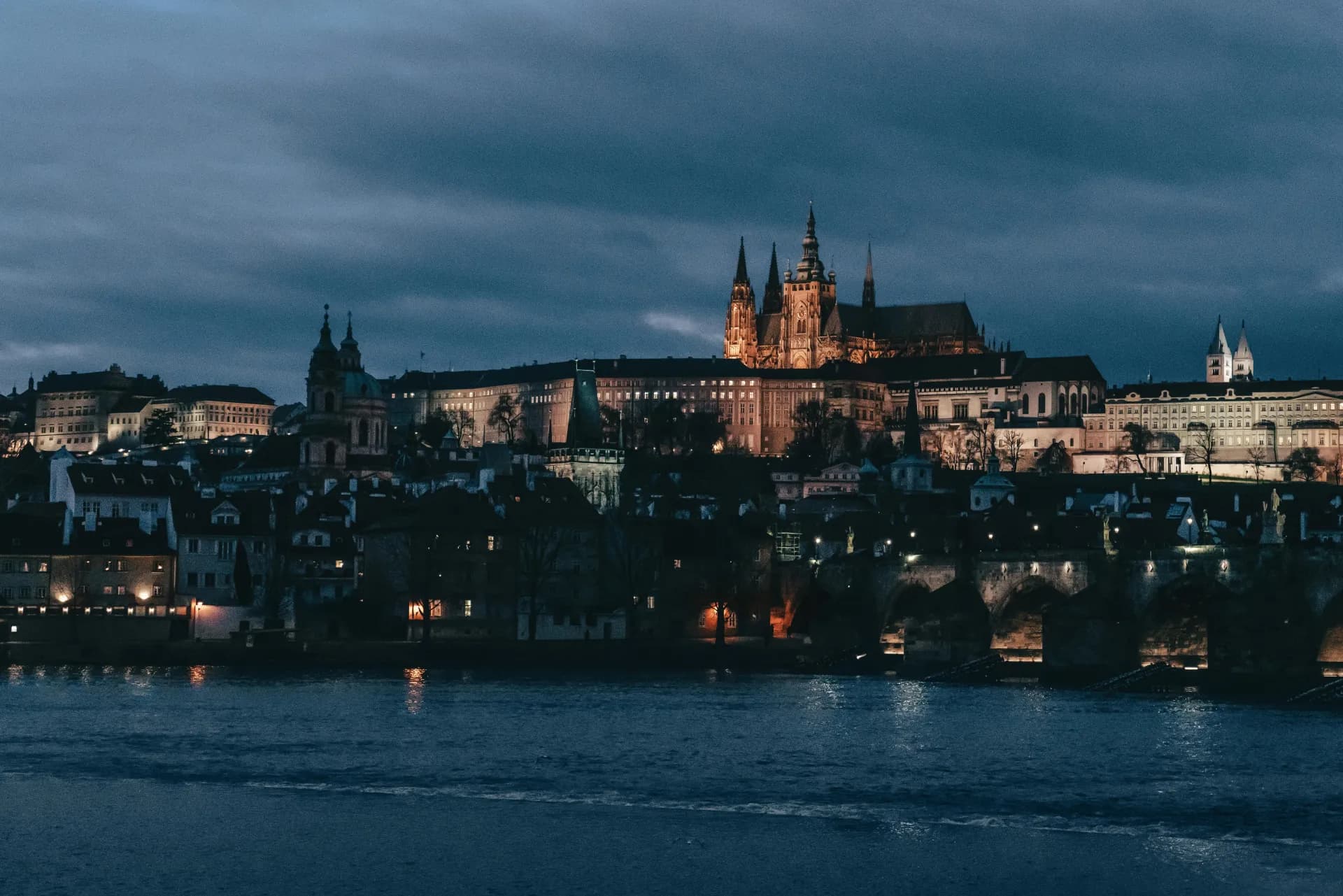
Prague survived the 20th century's wars almost untouched, leaving a medieval core so perfectly preserved it feels like a film set. Gothic spires pierce the sky, Baroque palaces line cobblestone streets, and Art Nouveau facades shimmer with gold leaf. But Prague is no museum—it's a living city with a dark humor, world-class beer, and a creative spirit forged through centuries of occupation. The city's historic center earned UNESCO World Heritage status in 1992, recognizing one of Europe's most complete medieval cityscapes1.
Prague's Layered History
Prague's story spans over a millennium. Founded in the 9th century, the city became the capital of the Kingdom of Bohemia and, under Emperor Charles IV in the 14th century, the seat of the Holy Roman Empire—briefly making it the most important city in Central Europe2. Charles founded the university (Central Europe's oldest, 1348), built the famous bridge, and transformed the city into a Gothic masterpiece.
The Habsburg centuries brought Baroque splendor but also religious conflict—the 1618 Defenestration of Prague (officials thrown from a window) sparked the Thirty Years' War3. The 20th century brought Nazi occupation, Communist rule, the Prague Spring (1968), and finally the Velvet Revolution (1989), when playwright Václav Havel led the peaceful overthrow of communism4.
Understanding Prague's Districts
Staré Město (Old Town)
The medieval heart of Prague surrounds Old Town Square, dominated by the Gothic twin spires of the Church of Our Lady before Týn and the famous Astronomical Clock5. The clock, dating to 1410 and updated in 1490, performs an hourly show of mechanical apostles. Arrive before the hour to watch, but don't expect too much—the brief spectacle is more historically significant than spectacular.
The Old Town Hall tower offers the best views of the square's pastel merchant houses. Wander the surrounding lanes to discover hidden courtyards, Renaissance houses, and remnants of the medieval city.
Josefov: The Jewish Quarter
Prague's Jewish community dates to the 10th century. The remarkable preservation of Josefov has a dark origin: Nazi occupiers kept it intact, planning a "Museum of an Extinct Race"6. Instead, it stands as one of Europe's most important Jewish heritage sites.
The Old Jewish Cemetery contains approximately 12,000 tombstones layered over 12 burial levels—graves stacked because the community couldn't expand beyond ghetto boundaries. Some stones date to the 1400s7.
The Old-New Synagogue (Staronová synagoga), built around 1270, is Europe's oldest active synagogue. Legend claims the Golem of Prague—a clay creature brought to life by Rabbi Loew to protect the community—still rests in its attic8.
The Spanish Synagogue, with its stunning Moorish Revival interior (1868), houses an exhibition on modern Jewish history. A combined ticket from the Jewish Museum covers all synagogues and the cemetery—essential booking in summer.
Malá Strana (Lesser Town)
Beneath Prague Castle, the Baroque beauty of Malá Strana unfolds across hills and gardens. The district escaped major development, leaving 17th and 18th-century palaces largely intact. St. Nicholas Church, with its massive dome, is one of Central Europe's finest Baroque buildings9.
Wallenstein Garden, hidden behind the Wallenstein Palace (now the Czech Senate), is a free Baroque garden complete with peacocks, an artificial grotto, and evening tranquility10. The palace itself, built by Imperial general Albrecht von Wallenstein, rivals many royal residences.
Hradčany: The Castle District
Prague Castle (Pražský hrad) holds the Guinness World Record as the largest ancient castle complex—covering 70,000 square meters with over 1,000 years of continuous use11. The grounds are free; interiors require tickets. The three main circuits cover:
- St. Vitus Cathedral: Gothic magnificence, 600 years in construction, housing the Czech crown jewels and Alfons Mucha's stunning Art Nouveau stained glass12
- Old Royal Palace: Medieval halls including the massive Vladislav Hall
- Golden Lane: Tiny colorful houses once home to castle guards and later alchemists—Kafka briefly lived at No. 22
Visit early morning or late afternoon to avoid the worst crowds. The changing of the guard at noon is elaborate; the hourly changes are simpler.
Nové Město (New Town)
Despite its name, the "New Town" dates to 1348. Wenceslas Square (actually a long boulevard) witnessed key moments: the 1968 Soviet invasion, the Velvet Revolution, and Jan Palach's 1969 self-immolation protesting Soviet occupation13.
The square and surrounding streets showcase spectacular Art Nouveau architecture. The Municipal House (Obecní dům), built 1905-1912, represents Art Nouveau at its peak—every surface decorated by leading Czech artists including Alfons Mucha14. Book a guided tour or simply admire the facade and café.
Vinohrady & Žižkov: Local Prague
Beyond the tourist center, Vinohrady offers leafy streets, wine bars, and the hipster-meets-bourgeois atmosphere of Prague's trendiest neighborhood. Žižkov, named for Hussite warrior Jan Žižka, keeps Prague's gritty, pub-centric soul alive—the legendary Balbínova street has more pubs per meter than anywhere in the city.
Czech Beer: A Cultural Institution
The Czechs invented pilsner (in Plzeň, 1842) and drink more beer per capita than any nation on Earth—142 liters annually15. Prague takes beer seriously.
Historic Beer Halls
U Zlatého Tygra - The legendary pub where Václav Havel brought Bill Clinton and where writer Bohumil Hrabal held court. Crowded, smoky (well, it used to be), local, and serving perfectly tapped Pilsner Urquell16. Go early—regulars have permanent seats.
U Fleků - Brewing since 1499, making it one of the oldest breweries in the world still operating. The dark lager is excellent; the atmosphere touristy but genuine. Skip the overpriced shots the servers push17.
Lokál - Modern chain reviving traditional pub culture with impeccably tapped tank beer (unpasteurized, delivered fresh). Multiple locations, reliable quality, good Czech food18.
Pivovarský Dům - Experimental brewpub with unusual offerings: coffee beer, banana beer, nettle beer. Worth exploring if you like variety.
Craft Beer Revolution
Prague's craft scene has exploded:
- Vinohradský Pivovar - Neighborhood brewery with excellent Czech-style lagers
- Craft Beer Prague - Curated taps from Czech microbreweries
- Beer Geek - Bottle shop with international and local selections
Beer Tips
- "Pivo, prosím" (beer, please) gets you a half-liter (0.5L)
- Fresh tank beer (tankové pivo) is unpasteurized, unfiltered, exceptional
- Tip by rounding up (leave ~10% at restaurants)
- Drinking in parks is legal—grab a bottle and head to Letná
Czech Cuisine
Czech food is hearty, meat-heavy, and perfect beer accompaniment.
Traditional Dishes
- Svíčková na smetaně - Beef sirloin in cream sauce with bread dumplings and cranberries. The national dish, done right at traditional restaurants19
- Vepřo-knedlo-zelo - Roast pork, dumplings, sauerkraut. Hearty and classic
- Kulajda - Creamy mushroom soup with dill and poached egg
- Smažený sýr - Fried cheese with tartar sauce. Late-night drunk food, perfected
- Trdelník - Chimney cake omnipresent in tourist areas, actually Hungarian, and not traditional Czech at all. Skip it.
Where to Eat
Café Savoy - Gorgeous Neo-Renaissance interior (1893), upscale Czech-French cuisine. The breakfast is legendary20.
Lokál - Traditional Czech food done right, reliable and reasonably priced.
Kantýna - Modern Czech with farm-to-table approach, excellent meat cuts.
Eska - Contemporary restaurant focused on fermentation and local sourcing. Industrial-chic space, ambitious cooking21.
Sisters Bistro - Elevated open-faced sandwiches (chlebíčky), Czech soul food reimagined.
Markets
Náplavka Farmers Market - Saturday morning riverside market with local produce, street food, and excellent people-watching22.
Manifesto Market - Shipping container food halls with diverse vendors. Locations in Florenc and Smíchov.
Art, Culture & Music
Museums Worth Visiting
National Gallery - Split across multiple venues. The Veletržní Palác houses excellent modern and contemporary art, including Mucha's monumental Slav Epic—20 giant canvases depicting Slavic history23.
DOX Centre for Contemporary Art - Industrial space in Holešovice with thought-provoking international exhibitions24.
Franz Kafka Museum - Surreal, appropriately disorienting exhibition on Prague's most famous writer. The entry courtyard features David Černý's statue of two men urinating into a pool shaped like the Czech Republic.
Mucha Museum - Devoted to Art Nouveau master Alfons Mucha, though his greatest work (Slav Epic) is at Veletržní Palác25.
Classical Music
Prague has deep musical heritage—Mozart premiered Don Giovanni here in 1787. Quality varies wildly among tourist-targeted concerts; book through official venues:
Rudolfinum - Home of the Czech Philharmonic, exceptional acoustics26
Municipal House (Smetana Hall) - Art Nouveau splendor, excellent acoustics
National Theatre - Opera, ballet, drama in stunning 19th-century theater27
Day Trips from Prague
Kutná Hora (1 hour)
This medieval silver-mining town made Bohemia one of Europe's richest kingdoms. Two UNESCO sites make it essential:
Sedlec Ossuary (Bone Church) - A small chapel decorated with the bones of 40,000-70,000 people, arranged into chandeliers, crosses, and coats of arms. Macabre and unforgettable28.
St. Barbara's Cathedral - Gothic masterpiece rivaling Prague's St. Vitus, with unique mining-themed decorations.
Český Krumlov (3 hours)
A fairytale town with a massive castle (second largest in the Czech Republic) curving around the Vltava River. The UNESCO-listed center is exquisite, though crowded. Can be done as a day trip, but an overnight stay lets you experience the quiet magic after tourists leave29.
Karlštejn Castle (45 min)
Gothic fortress built by Charles IV to house the crown jewels and holy relics. The castle looks straight from a fairy tale perched on its hill. Touristy but impressive; book interior tours ahead30.
Terezín (1 hour)
The former garrison town was converted by Nazis into a concentration camp and Jewish ghetto. Moving memorials and museums document this dark history. Essential for understanding the region's 20th century31.
Practical Information
Getting Around
- Walking is best in central Prague—the historic core is compact and gorgeous
- Metro/Tram for longer distances. Buy 24/72-hour passes; validate paper tickets
- Uber and Bolt work reliably
- Taxis have historically poor reputations—stick to apps
Money
- Czech Koruna (CZK), not Euro. Roughly 25 CZK = 1 EUR
- Cards widely accepted in the center; cash useful in traditional pubs
- Never exchange at street booths—they're notorious ripoffs. Use ATMs
- Prague is significantly cheaper than Western Europe, especially beer and food
When to Visit
- Spring (April-May): Pleasant temperatures, gardens blooming, manageable crowds
- Summer (June-August): Warmest, longest days, peak tourist season
- Autumn (September-October): Beautiful weather, fewer tourists, golden light
- Winter (November-March): Cold but atmospheric, excellent Christmas markets
- Easter & Christmas: Beautiful but extremely crowded
Avoiding Tourist Traps
- Skip restaurants directly on Old Town Square (overpriced, mediocre food)
- Ignore touts selling tours and concerts on the street
- Exchange offices are ripoffs—use ATMs from legitimate banks
- Trdelník is not traditional Czech (but fine if you like it)
Suggested Itineraries
3 Days: Essential Prague
Day 1: Old Town Square, Astronomical Clock, Jewish Quarter (cemetery and synagogues), Charles Bridge at sunset, dinner in Malá Strana
Day 2: Prague Castle morning (early to avoid crowds), St. Vitus Cathedral, Golden Lane, Petřín Hill funicular and views, Letná beer garden evening
Day 3: Vyšehrad fortress (quieter alternative to the castle), Vinohrady neighborhood exploration, National Gallery, farewell pub crawl in Žižkov
5 Days: Deeper Prague
Add: Day trip to Kutná Hora (Bone Church), Art Nouveau walking tour (Wenceslas Square, Municipal House), Stromovka park, DOX contemporary art, serious beer exploration
Final Thoughts
Prague's beauty is undeniable, but don't mistake prettiness for superficiality. This is Kafka's city, Havel's city, a place that survived Habsburgs, Nazis, and Soviets with its dark humor and creative spirit intact. Escape the Old Town crowds, find a pub where locals outnumber tourists, watch the light turn golden on the Vltava, and Prague reveals why artists and dreamers have always been drawn to the city of a hundred spires.
Ready to explore Prague? Our Central Europe specialists can help you discover the city beyond the tourist trail.
---
Sources
1. UNESCO - Historic Centre of Prague
2. Britannica - Prague History
3. Britannica - Defenestration of Prague 1618
4. History Channel - Velvet Revolution
5. Prague.eu - Astronomical Clock
7. Jewish Museum - Old Jewish Cemetery
10. Czech Senate - Wallenstein Garden
13. Prague.eu - Wenceslas Square
15. Statista - Beer Consumption by Country
16. U Zlatého Tygra
17. U Fleků Brewery
20. Café Savoy
21. Eska Restaurant
24. DOX Centre for Contemporary Art
25. Mucha Museum
26. Rudolfinum
28. Sedlec Ossuary - Bone Church
30. Karlštejn Castle
31. Terezín Memorial