Barcelona: Where Art Meets Mediterranean Life
Barcelona welcomed 12 million international visitors in 2024, making it Spain's most visited city and one of Europe's premier destinations1. Unlike anywhere else in Spain, this Mediterranean metropolis fiercely guards its Catalan identity while embracing avant-garde architecture, world-class art, innovative cuisine, and beach culture. The result is an intoxicating urban experience where Gaudí's fantastical buildings rise above medieval streets, where tapas bars spill onto plazas until the early hours, and where the sea provides daily escape from city intensity.
Understanding Barcelona
The Catalan Identity
Barcelona is the capital of Catalonia, an autonomous community with its own language, culture, and political aspirations that stretch back over a thousand years2. The 2017 independence referendum (declared illegal by Spain) reflected tensions that continue shaping local identity. Understanding this context enriches your visit:
Catalan language appears on signs, menus, and in daily conversation alongside Spanish (Castilian). Many locals prefer Catalan and appreciate visitors' attempts—"Bon dia" (good day), "Gràcies" (thank you), "Si us plau" (please) open doors.
Catalan flags fly everywhere—the Senyera (four red stripes on yellow) and the Estelada (with blue triangle and star, symbolizing independence aspirations).
National traditions include the Diada (September 11, Catalonia's national day), castells (human towers), and sardana (circle dance performed at the cathedral on weekends).
Neighborhood Guide
Ciutat Vella (Old City) encompasses three distinct quarters within medieval walls:
Barri Gòtic (Gothic Quarter) preserves medieval streets, the cathedral, and Roman remnants beneath modern pavement. Tourist crowds fill main arteries; side streets reveal hidden plazas and authentic bars.
El Born (Sant Pere, Santa Caterina, La Ribera) centers on the Santa Maria del Mar basilica and the Picasso Museum. Narrow medieval streets now house trendy bars, boutiques, and restaurants. Evening energy peaks here.
El Raval was once notorious for crime but now mixes multicultural character, students, and creative types. MACBA museum anchors the northern section; southern streets retain edge.
Eixample (the "expansion") spreads across the grid pattern designed by Ildefons Cerdà in 1859. Octagonal block corners (chamfered for visibility) distinguish the district. Modernist masterpieces—Sagrada Família, Casa Batlló, Casa Milà—line Passeig de Gràcia. The Dreta (right) side is upscale; the Esquerra (left) holds LGBTQ+ Gaixample neighborhood.
Gràcia was an independent village until 1897 and retains that character—local plazas (Plaça del Sol, Plaça de la Virreina) fill with neighbors at sunset, independent shops reject chains, and bohemian atmosphere prevails. Park Güell crowns the hills above.
Barceloneta occupies the triangular peninsula built in 1753 for displaced residents. The maritime neighborhood combines beach access, seafood restaurants, and local character despite tourist pressure.
Poblenou transformed from industrial Manchester Català (Catalan Manchester) to creative district. Design studios, tech companies, beach access, and xiringuitos (beach bars) characterize the emerging 22@ innovation district.
Montjuïc rises 173 meters on the southwestern peninsula—site of the 1992 Olympics, MNAC museum, Fundació Joan Miró, and the hilltop castle with port views.
Best Time to Visit
Barcelona's Mediterranean climate provides year-round appeal3:
May-June delivers ideal conditions: temperatures 20-25°C, beach season beginning, outdoor dining comfortable, and summer crowds not yet peaked. Primavera Sound music festival (early June) brings international visitors.
September-October rivals spring—warm seas from summer heating, La Mercè festival (late September), grape harvest in surrounding wine regions, temperatures moderating to comfortable levels.
November-March offers mild winters (10-15°C), cultural season, lower prices, and fewer tourists. Beach season ends, but museums, architecture, and dining thrive. Christmas markets add December charm.
July-August brings maximum beach and nightlife energy—but temperatures exceed 30°C with humidity, tourists crowd attractions, and locals flee to the coast. Book well ahead and expect heat.
Gaudí's Barcelona
Antoni Gaudí (1852-1926) transformed Barcelona into an open-air museum of modernist architecture. Seven of his buildings hold UNESCO World Heritage status4.
Sagrada Família
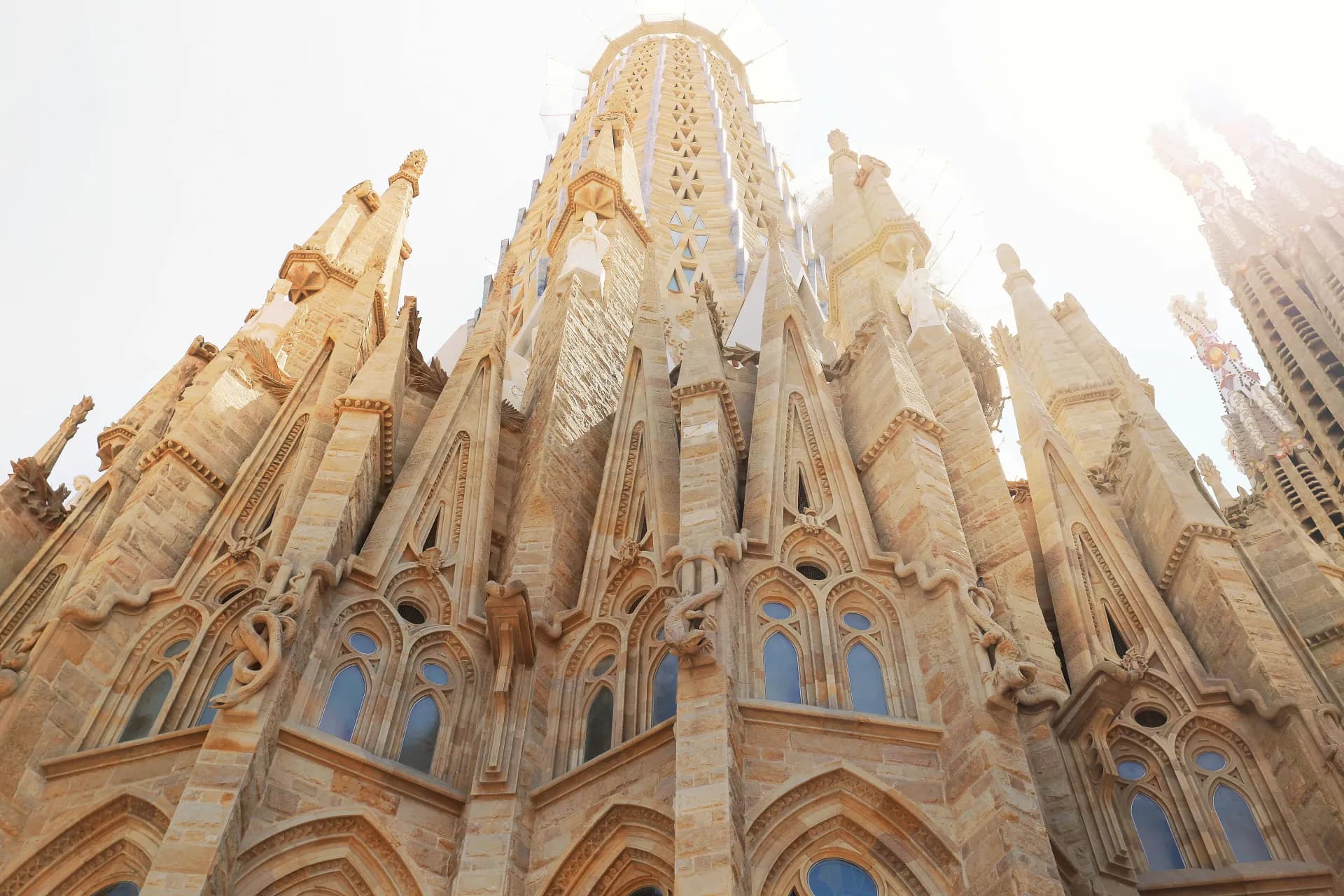
Barcelona's defining landmark began in 1882 and remains unfinished—anticipated completion around 2030 would mark the centenary of Gaudí's death5. Understanding the symbolism requires preparation:
Book timed entry 2-3 months ahead through the official website only—third-party tickets cost more without benefits.
Choose Nativity Facade + Tower ticket for the eastern towers' organic forms and city views. The newer Passion Facade towers offer different perspectives.
Morning visits (9-11 AM) capture eastern light flooding through blue and green stained glass; afternoon light (4-6 PM) illuminates western orange and red glass.
Audio guide is essential—Gaudí encoded Catholic theology into every structural element: columns as forest trees, nave as church-shaped ocean, facades representing Birth, Passion, and (future) Glory.
Allow 2-3 hours minimum for proper appreciation. The crypt contains Gaudí's tomb (viewable through the museum).
Park Güell
Eusebi Güell commissioned this failed garden city (1900-1914), and Barcelona inherited a whimsical public park6:
Only the Monumental Zone requires tickets—the famous mosaic bench, dragon staircase, and Hypostyle Room. Book online for timed slots.
Free areas spanning most of the park offer excellent city views, forested walks, and Gaudí's organic stonework.
Visit at 8 AM opening or after 5:30 PM (summer) to avoid peak crowds and harsh midday light.
Access challenges: Uphill walk from metro (Vallcarca or Lesseps) takes 20 minutes. The official shuttle bus from Alfons X metro provides easier access.
Casa Batlló & Casa Milà (La Pedrera)
Two masterpieces face each other across Passeig de Gràcia's Illa de la Discòrdia (Block of Discord, named for competing modernist buildings):
Casa Batlló (1906) remodeled an existing building into an organic dreamscape—bone-like balconies, dragon-scale roof, skull-and-cross window columns. The AR-enhanced audio guide transforms the visit. Evening concerts on the rooftop terrace provide unique access7.
La Pedrera/Casa Milà (1912) was Gaudí's last civil work before devoting himself entirely to Sagrada Família. The undulating stone facade (no straight lines), courtyard, apartment, and surreal chimney rooftop justify the name (la pedrera = the quarry). Slightly better value than Casa Batlló; summer evening rooftop events include drinks and music8.
Less-Visited Gaudí
Palau Güell (1890) near La Rambla showcases early Gaudí—wrought iron, parabolic arches, and rooftop chimneys prefiguring later work. Smaller crowds than famous sites.
Casa Vicens (1885), Gaudí's first major commission, opened to visitors only in 2017. Moorish influences and ceramic tiles reveal his developing style. Located in Gràcia neighborhood.
Colònia Güell (40 minutes from Barcelona) contains an unfinished church representing Gaudí's most experimental structural techniques. The crypt he completed influenced Sagrada Família engineering.
Beyond Gaudí
Gothic Quarter (Barri Gòtic)
The medieval core rewards aimless wandering, but specific sites merit seeking:
Cathedral cloister (€9 entry, €3 for cloister only) houses 13 white geese (one for each year of Sant Eulàlia's martyrdom) and Gothic galleries around a tropical garden.
Plaça del Rei preserves medieval royal palace architecture and the steps where Ferdinand and Isabella reportedly received Columbus upon returning from America.
El Call (Jewish Quarter) traces streets where Barcelona's Jewish community lived until 1391 expulsion. A small museum interprets the remaining synagogue fragments.
Plaça Sant Felip Neri holds haunting beauty—Civil War bullet holes still scar the church facade from 1938 bombing that killed 42, mostly children.
Museums
Picasso Museum occupies five connected Gothic palaces in El Born, housing 4,251 works spanning Picasso's career—particularly strong in early formative years and the Las Meninas series9. Free Thursday evenings and first Sunday monthly (book ahead).
MNAC (National Art Museum of Catalonia) crowns Montjuïc with Europe's finest Romanesque art collection (rescued from Pyrenees churches) plus Gothic, Renaissance, and Modernist galleries. Free Saturday afternoons and first Sunday monthly10.
MACBA (Museum of Contemporary Art) anchors El Raval's regeneration with rotating exhibitions and the Richard Meier-designed white building that skaters have claimed for the plaza.
Fundació Joan Miró celebrates Barcelona's other great 20th-century artist—10,000+ works in architect Josep Lluís Sert's light-filled Montjuïc building11.
Markets
La Boqueria (officially Mercat de Sant Josep) is famous and worth visiting—but strategy matters12. Avoid the front stalls selling overpriced fruit cups to tourists. Head toward the back for authentic vendors, fish, meat, and Bar Pinotxo for standing-room breakfast.
Mercat de Santa Caterina (El Born) features stunning undulating roof by Enric Miralles and more local atmosphere—produce, prepared foods, and restaurants serving market-fresh ingredients.
Mercat de Sant Antoni reopened in 2018 after meticulous restoration—beautiful ironwork, local vendors, and the famous Sunday mercat dominical for books, stamps, and collectibles.
Food & Dining
Tapas Culture
Barcelona evolved Basque pintxos and traditional tapas into distinctive dining culture13:
Quimet & Quimet (Poble Sec): Tiny standing-room bar where third-generation owner creates legendary conserva (tinned seafood) combinations. Arrive at 1 PM opening or face crowds.
Cal Pep (El Born): Counter seats at the seafood master's kitchen. No reservations for bar; arrive 30 minutes before 1:30 PM or 8:30 PM opening.
Cervecería Catalana (Eixample): Reliable, always crowded, beloved—the patatas bravas and mini-burgers justify the wait.
Bar Mut (Eixample): Upscale tapas and wines in elegant setting. Reservations accepted.
Els Quatre Gats (Gothic): Where Picasso exhibited in 1900—now tourist-oriented but atmospheric for coffee or drinks in the modernist space.
Vermouth Culture
Vermuteo (vermouth hour) defines Barcelona Sundays and pre-lunch rituals:
Order vermut (local sweet vermouth, not Italian) on ice with a splash of soda, accompanied by olives, anchovies, boquerones (pickled white anchovies), and potato chips. Traditional bars include Miramelindo (Gràcia) and Bar Cañete (near Liceu).
Fine Dining
Disfrutar holds two Michelin stars and ranks among the world's best—Adrià veterans (Oriol Castro, Mateu Casañas, Eduard Xatruch) push cuisine boundaries. Book 3+ months ahead14.
Moments offers Carme Ruscalleda's cuisine at the Mandarin Oriental—two stars, refined Catalan tradition.
Cinc Sentits balances creative and accessible—seasonal tasting menus featuring Catalan ingredients.
Must-Try Dishes
Pa amb tomàquet: Bread rubbed with ripe tomato, drizzled with olive oil, sprinkled with salt—the Catalan essential accompanying most meals.
Patatas bravas: Fried potatoes with spicy brava sauce (debate rages over correct recipe).
Escalivada: Roasted eggplant and peppers in olive oil—simple and excellent.
Esqueixada: Shredded salt cod salad with tomatoes, onions, and olives.
Botifarra amb mongetes: Catalan sausage with white beans.
Crema catalana: Caramelized custard predating crème brûlée (claimed Catalan origin).
Cava: Catalan sparkling wine (Penedès region, 45 minutes away)—often excellent at €10-15/bottle.
Where NOT to Eat
Anywhere directly on La Rambla charges tourist prices for mediocre food. Restaurants with picture menus target those who can't read Spanish/Catalan. Touts aggressively pulling customers signal desperation. Walk 2-3 blocks from any major attraction for dramatically better value.
Beach Life
Barcelona's 4.5 km of urban beaches transformed from industrial to recreational for the 1992 Olympics15:
Barceloneta is the original and most atmospheric—crowded, energetic, lined with seafood restaurants and xiringuitos.
Sant Sebastià continues Barceloneta southward with the W Hotel landmark—slightly less dense.
Bogatell provides more space, popular with local families and joggers on the promenade.
Mar Bella offers clothing-optional section and younger/alternative crowd.
Ocata (Masnou): 20 minutes by train north reveals calmer beaches, local families, and seafood restaurants without Barcelona's intensity.
Beach tips: Arrive before 11 AM for space. Watch belongings carefully—professional pickpockets target beachgoers. Xiringuitos provide lunch, drinks, and bathrooms. Swimming is excellent May-October.
Nightlife & Entertainment
Catalans eat late (9-11 PM) and party later—many clubs don't fill until 2 AM16:
Gothic Quarter offers intimate cocktail bars and jazz clubs within medieval walls.
El Born concentrates trendy bars with crowds spilling onto streets—Passeig del Born becomes outdoor party space.
Gràcia provides local atmosphere—plaza-hopping between Plaça del Sol, Plaça de la Virreina, and Plaça de la Revolució.
Poble Sec emerges as destination for affordable drinks and creative cocktails along Carrer Blai (tapas street).
Clubs spread along the waterfront and Poble Espanyol—Razzmatazz (five rooms, major acts), Sala Apolo (historic venue), and beach clubs operating summer nights.
Live Music & Performance
Palau de la Música Catalana (UNESCO-listed) stuns with modernist interior—stained glass inverted dome, sculptural columns, floral motifs. Concerts range from classical to flamenco17.
Gran Teatre del Liceu anchors La Rambla as Barcelona's opera house (rebuilt after 1994 fire).
Jazz clubs: Jamboree (Gothic Quarter, historic) and Harlem Jazz Club (born) host international acts nightly.
Flamenco: Tablao Flamenco Cordobes provides quality shows in tourist-friendly setting—not authentic Barcelona culture but entertaining.
Day Trips
Montserrat
The jagged mountain monastery 1 hour northwest draws pilgrims and hikers:
Take the rack railway (cremallera) from Monistrol for dramatic ascent through rock formations.
The Black Madonna (La Moreneta) draws Catholic pilgrims—you can touch the sphere she holds.
Escolania boys' choir (one of Europe's oldest) sings daily at 1 PM (not Saturdays or summer). Arrive early for seats.
Hiking trails access Sant Joan hermitage (funicular + walk) and spectacular ridgeline views18.
Costa Brava
The Wild Coast north of Barcelona features cliffs, coves, and fishing villages:
Cadaqués preserved whitewashed beauty attracted Dalí (whose house-museum at Port Lligat requires advance booking), Picasso, and García Lorca.
Tossa de Mar combines medieval castle walls with family beaches.
Girona city (40 minutes by train) offers medieval Jewish quarter, cathedral steps (Game of Thrones filming), and excellent dining.
Tarragona
Roman Tarraco, UNESCO World Heritage Site 1 hour south:
Amphitheater overlooking Mediterranean seated 15,000 spectators.
Roman walls, circus, and forum spread throughout modern city.
Beach town atmosphere and excellent seafood—less crowded than Barcelona.
Penedès Wine Region
Cava country 45 minutes southwest:
Codorníu and Freixenet offer cave tours and tastings at historic estates.
Smaller producers like Gramona and Recaredo provide artisanal alternatives.
Combine with Vilafranca del Penedès wine museum and local restaurants.
Practical Information
Transportation
Metro (TMB) covers most attractions efficiently—T-Casual 10-ride ticket offers best value for tourists. Runs 5 AM-midnight (24 hours weekends)19.
Walking suits the Old City; distances between neighborhoods are manageable.
Aerobus connects airport to Plaça Catalunya every 5 minutes (35 minutes, €7.75).
Safety
Barcelona is generally safe but pickpockets are professional—one of Europe's highest rates20:
Hotspots: La Rambla, Sagrada Família queues, metro (especially L3 and L1), Barceloneta beach.
Tactics: Distractions (spilled drinks, "helpful" strangers pointing at stains, bird poop scam), metro door crowding, bag slashing.
Protection: Front pockets only, crossbody bags worn front, money belts for passports, leave valuables in hotel safe.
Money
Credit cards accepted widely; cash needed for small bars, markets, some restaurants.
ATMs plentiful—avoid Euronet and similar tourist-oriented machines with high fees; use bank ATMs inside branches.
Festivals
Sant Jordi (April 23): Book and rose day—men give women roses, women give men books. La Rambla fills with stalls; authors sign books. Magical local tradition.
La Mercè (September 20-24): Barcelona's biggest festival—castells (human towers), correfocs (fire runs with devils and dragons), gegants (giant puppets), free concerts throughout the city21.
Festa Major de Gràcia (August): Neighborhood streets compete for best decoration themes—transformed into underwater worlds, jungles, or historical recreations.
Primavera Sound (June): Major music festival drawing international acts and 200,000+ attendees.
Final Thoughts
Barcelona reveals itself slowly. Beyond the architectural marvels and crowded Rambla lies a city of neighborhood plazas, family-run vermuterías, and late-night conversations. The creative energy that produced Gaudí, Miró, and Picasso continues in design studios, restaurants, and music venues. Slow down, eat late, embrace the Catalan pride, and let the city's Mediterranean soul infuse your visit.
Ready to discover Barcelona? Our Spain specialists can design an itinerary balancing Gaudí's genius with authentic Catalan experiences.
Sources
1. Barcelona Tourism - Visitor statistics
2. Generalitat de Catalunya - Regional government
3. Barcelona City Council - Official city site
4. UNESCO - Works of Antoni Gaudí - Heritage listing
5. Sagrada Família Official - Basilica information
6. Park Güell - Park information
7. Casa Batlló - Building tours
8. La Pedrera - Building information
9. Picasso Museum Barcelona - Museum information
10. MNAC - National museum
11. Fundació Joan Miró - Art foundation
12. La Boqueria Market - Market information
13. Time Out Barcelona - Restaurants - Dining guide
14. Disfrutar Restaurant - Fine dining
15. Barcelona Beaches - Beach guide
16. Time Out Barcelona - Nightlife - Entertainment
17. Palau de la Música - Concert hall
18. Montserrat - Monastery visit
19. TMB Barcelona Transit - Transportation
20. Barcelona Safety - City information
21. La Mercè Festival - Festival information