Costa Rica: Where Adventure Meets Tranquility
Costa Rica pioneered ecotourism before the term existed. This small Central American country—roughly the size of West Virginia—packs 5% of the world's biodiversity into 0.03% of its landmass, creating one of the planet's most wildlife-rich destinations1. Add world-class adventure activities, the laid-back "pura vida" lifestyle, and exceptional safety for travelers, and Costa Rica earns its place as Central America's most popular destination.
Understanding Costa Rica
Why Costa Rica Works
- 5% of world's biodiversity concentrated in a tiny area
- Stable democracy, oldest in Latin America, consistently ranked safest in Central America
- No military since 1948—funds redirected to education and conservation2
- Over 25% of land protected as national parks and reserves
- English widely spoken in tourist areas
- Two coastlines (Pacific and Caribbean) just hours apart
- "Pura vida" philosophy embracing simplicity and gratitude
The Regions
Central Valley: Home to San José and the country's coffee heartland. Gateway to volcanoes and cloud forests.
Pacific Coast (Guanacaste): Dry tropical forests, beach resort towns, surfing, and luxury resorts.
Pacific Coast (Central): Manuel Antonio National Park, surf towns, and the Osa Peninsula wilderness.
Caribbean Coast: Laid-back Afro-Caribbean culture, sea turtle nesting beaches, reggae vibes.
Northern Zone: Arenal Volcano, hot springs, hanging bridges, adventure capital.
Best Time to Visit
Dry Season (December-April)
- Best weather throughout most of the country
- High season, higher prices, larger crowds
- Perfect for Pacific coast beaches
- Book eco-lodges and popular tours well ahead
- Hot and sunny, especially on Pacific coast
Green Season (May-November)
- Afternoon rains (mornings typically clear)
- Lush, verdant landscapes—everything is green
- Lower prices, fewer crowds (significant savings)
- Best for Caribbean coast (driest September-October)
- Wildlife more active
- Better for photography (dramatic clouds)
Year-Round Constants
- Tropical climate with microclimates based on elevation
- Warm temperatures at sea level (75-90°F / 24-32°C)
- Cooler in cloud forests and highlands (60-75°F / 15-24°C)
- Rain possible any time—always pack a rain layer
Top Destinations
Arenal Volcano & La Fortuna
Costa Rica's adventure capital sits beneath the iconic cone of Arenal Volcano. Though the volcano has been dormant since 2010 (after being one of the world's most active for 43 years), the area remains packed with activities3.
Must-Do Activities:
- Hot springs: Natural volcanic springs at Tabacon, Baldi, The Springs, or budget-friendly Titoku
- Hanging bridges: Walk through forest canopy on suspension bridges at Arenal Sky Adventures or Mistico
- Waterfall hikes: La Fortuna Waterfall (500 steps down/up, swimmable pool)
- White water rafting: Class II-IV rapids on Pacuare, Sarapiquí, or Peñas Blancas rivers
- Zip-lining: Original canopy tours with multiple platforms
- Night wildlife tours: Spot frogs, snakes, sloths, and nocturnal creatures
- Lake Arenal: Stand-up paddleboarding, fishing, kayaking
Volcano Views: Best early morning before clouds form. Many lodges and hot springs offer volcano views, but clouds can obscure for days during green season.
Monteverde Cloud Forest
One of the world's most unique ecosystems, the cloud forest receives constant moisture from trade winds, creating a misty, magical environment hosting over 2,500 plant species and 400+ bird species including the resplendent quetzal4.
Why Visit:
- Unique cloud forest ecosystem found in only 1% of global forests
- Quetzal sightings (March-April is nesting season)
- 500+ species of butterflies and moths
- Hanging bridges through forest canopy
- Some of Costa Rica's longest zip lines
- Coffee, chocolate, and cheese tours (Quaker community heritage)
- Mystical atmosphere—literally walking through clouds
Multiple Reserves: The famous Monteverde Cloud Forest Reserve requires booking, but Santa Elena Reserve and Curi-Cancha offer similar experiences with smaller crowds.
Tips:
- Rain/mist possible any time—waterproof everything
- Hire naturalist guides for wildlife spotting (they find animals invisible to untrained eyes)
- Book lodges inside or near reserves for early access
- Temperatures are cooler—bring warm layers
Manuel Antonio National Park
Costa Rica's most visited national park combines pristine beaches with easily accessible wildlife. The park is small (1,983 hectares) but packed with biodiversity5.
Highlights:
- Multiple white-sand beaches inside the park
- Extremely habituated wildlife—monkeys, sloths, iguanas, coatis visible on most visits
- Hiking trails through primary and secondary forest
- Protected marine area for snorkeling
Practical Tips:
- Closed Tuesdays (wildlife regeneration)
- Limited daily entries—arrive by 7 AM or book guided tours (guides have guaranteed entry)
- Hire a guide—they spot animals you'd walk past (wildlife is everywhere but camouflaged)
- Protect belongings from capuchin monkeys (they open bags and steal food)
- Swimming possible at park beaches
- Surrounding town is touristy but well-developed
Tortuguero National Park
Accessible only by boat or small plane, Tortuguero protects critical sea turtle nesting habitat along the Caribbean coast. The network of canals and lagoons creates a "mini-Amazon" experience6.
The Turtle Experience:
- Green, hawksbill, and leatherback turtles nest here (July-October, peak August-September)
- Guided night tours to witness nesting (advance booking required)
- Strict protocols protect turtles—no flashlights, limited group sizes
Beyond Turtles:
- Canal boat tours at dawn and dusk
- Monkeys (howler, white-faced, spider), sloths, caimans, manatees
- 350+ bird species including toucans and green macaws
- Jungle lodges only—no roads in
Getting There: Fly from San José (35 minutes) or take the boat journey from Cariari/Moín (3 hours, scenic)
Osa Peninsula & Corcovado
National Geographic called Corcovado "the most biologically intense place on Earth." This remote park protects the largest remaining Pacific coastal rainforest and hosts Costa Rica's healthiest jaguar population7.
Why It's Special:
- Highest biodiversity density on the planet
- All four Costa Rican monkey species
- Tapirs, jaguars, pumas (rare to see but present)
- Scarlet macaw populations
- Bull sharks in rivers, crocodiles, sea turtles
- Unspoiled, minimal infrastructure
Access & Logistics:
- Fly to Puerto Jiménez or Drake Bay
- Guided tours required inside Corcovado
- Ranger stations for day hikes or multi-day treks
- Lodges range from basic to luxury (Lapa Rios is famous)
- Not for beginners—remote, hot, challenging terrain
Wildlife Spotting Guide
Costa Rica's Greatest Hits
Sloths: Both two-toed (nocturnal) and three-toed (diurnal). Look for round shapes in cecropia trees. Found throughout the country, especially Manuel Antonio, Caribbean coast, and Monteverde.
Monkeys: Four species—howler (loudest), white-faced capuchin (mischievous), spider (acrobatic), squirrel (smallest). Present in most parks.
Quetzals: The holy grail of birders. Cloud forests of Monteverde and San Gerardo de Dota. Nesting season (March-May) offers best sightings8.
Scarlet Macaws: Osa Peninsula and Carara National Park have largest populations.
Sea Turtles: Tortuguero (Caribbean) and Ostional (Pacific) for nesting. Snorkeling encounters at Cahuita and Caño Island.
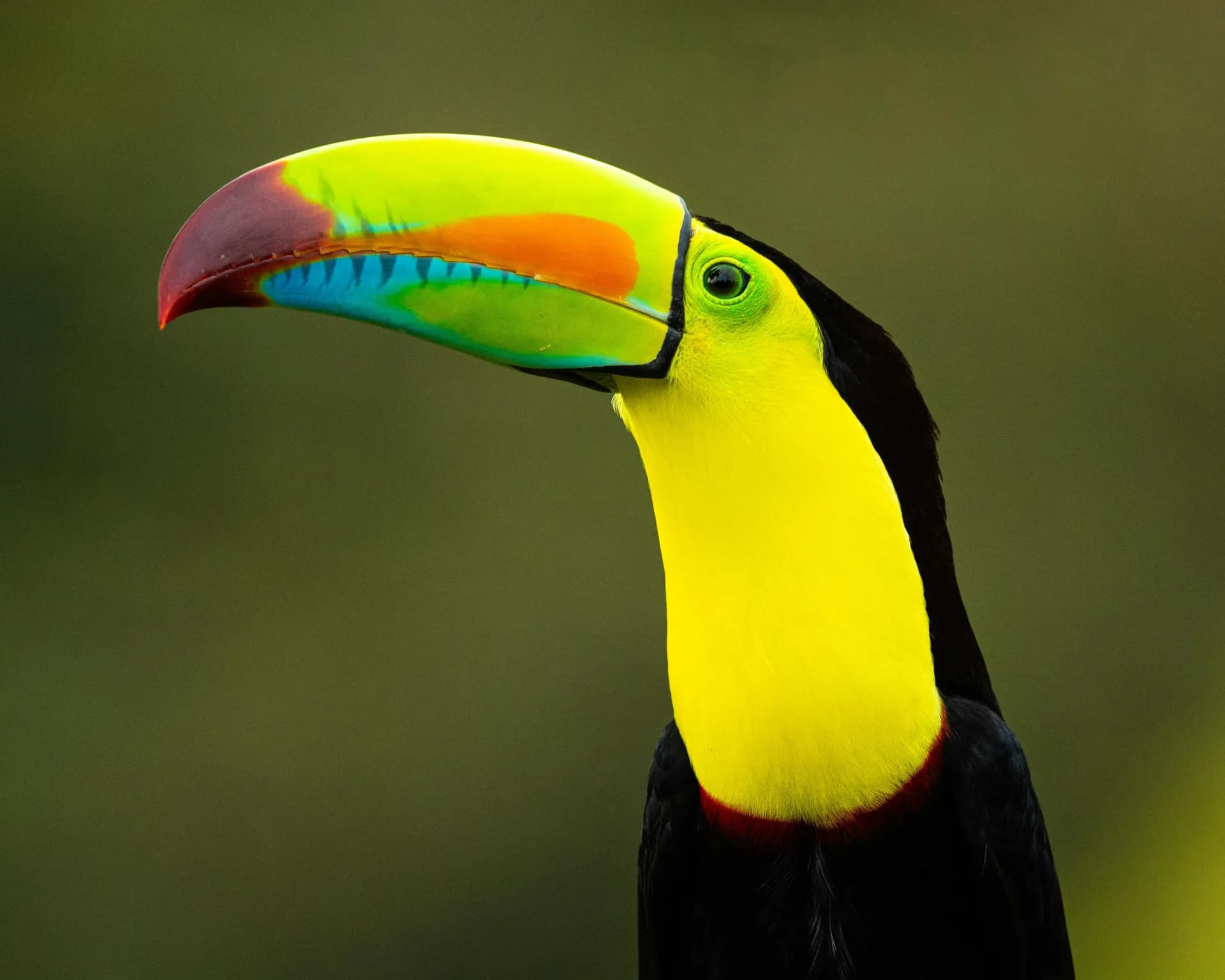
Toucans: Seven species including the iconic keel-billed. Throughout forests nationwide.
Poison Dart Frogs: Blue jeans, green-and-black, strawberry varieties. Rainforest undergrowth, especially Caribbean lowlands.
Pro Tip: Always hire local naturalist guides. They spot wildlife invisible to untrained eyes and understand animal behavior.
Beaches by Coast
Pacific Coast
Guanacaste (North Pacific):
- Tamarindo: Surf town, nightlife, developed infrastructure
- Nosara: Yoga capital, excellent surfing, upscale eco-lodges
- Samara: Family-friendly, calm waters, authentic feel
- Papagayo Peninsula: Luxury resorts (Four Seasons, Andaz)
Central Pacific:
- Manuel Antonio: Beautiful but touristy, wildlife at doorstep
- Dominical: Surf culture, raw, developing
- Uvita: Whale-tail sandbar, whale watching (August-October)
South Pacific (Osa):
- Drake Bay: Gateway to Corcovado, remote eco-lodges
- Puerto Jiménez: Town base for Osa exploration
Caribbean Coast
Different culture, different feel—Afro-Caribbean influence, reggae soundtrack, spicier food:
- Puerto Viejo: Surf, parties, beach town vibes
- Cahuita: Laid-back, national park with snorkeling
- Manzanillo: Quiet, excellent reef snorkeling
Note: Caribbean water can be rough for swimming. Pacific has bigger waves. Check local conditions.
Adventure Activities
Must-Do Experiences
Zip-Lining: Costa Rica invented the modern canopy tour. Best at Monteverde (longest cables), Sky Adventures (multiple locations), Arenal.
White Water Rafting: The Pacuare River offers world-class Class III-IV rapids through pristine jungle gorge. One or two-day trips available9.
Surfing: Pacific coast offers consistent breaks—Tamarindo and Nosara for beginners/intermediate, Dominical and Pavones for advanced.
Snorkeling/Diving: Cahuita (Caribbean), Caño Island (Pacific—best in Costa Rica for large marine life), Cocos Island (advanced—world-class but expensive liveaboard only).
Hiking: National parks nationwide. Corcovado for multi-day wilderness treks.
Night Tours: Different wildlife emerges—frogs, snakes, tarantulas, kinkajous. Available most locations.
Practical Information
Getting Around
Rental Car: The best way to explore Costa Rica's dispersed attractions.
- 4WD strongly recommended (essential in green season)
- GPS essential—addresses don't work, navigation by landmarks
- Book ahead during high season
- Major roads paved; secondary roads can be rough
- River crossings possible in remote areas
Shuttle Services: Tourist shuttles connect major destinations without the stress of driving. Interbus and Grayline are reliable10.
Domestic Flights: SANSA and small carriers connect San José to popular destinations (Arenal, Tamarindo, Puerto Jiménez, Tortuguero). Saves time but limited schedules.
Public Buses: Cheap but slow. Useful for budget travelers with time.
Costs
Costa Rica is pricier than neighboring countries:
- Budget: $50-70/day (hostels, local food, public transport)
- Mid-range: $100-200/day (comfortable hotels, some tours)
- Luxury: $300+/day (eco-lodges, private guides)
National park entrance fees: $15-18 for foreigners
Safety
Costa Rica is Central America's safest country for tourism:
- Petty theft in tourist areas (don't leave valuables in cars)
- Use hotel safes
- Standard urban precautions in San José
- Avoid isolated beaches after dark
- Rip currents are common—respect ocean warning flags
Sustainability
Costa Rica leads the world in sustainable tourism:
- CST (Certificate for Sustainable Tourism) rates hotels and tours11
- Support certified eco-lodges
- Use reef-safe sunscreen
- Keep safe distance from wildlife
- Never feed animals
- Carry reusable water bottles (many lodges filter tap water)
Sample Itineraries
Classic Costa Rica (10 Days)
- San José (1 night): Arrival, explore if time
- Arenal (2-3 nights): Volcano, hot springs, adventure
- Monteverde (2 nights): Cloud forest, wildlife
- Manuel Antonio (3 nights): Beach and wildlife
- San José (1 night): Departure
Caribbean Focus (7-10 Days)
- San José (1 night)
- Tortuguero (2 nights): Turtle nesting, canals
- Puerto Viejo area (4-5 nights): Beach, reef, Caribbean culture
- San José (1 night)
Ultimate Adventure (2 Weeks)
- Arenal (3 nights): Rafting, zip-lining, hot springs
- Monteverde (2 nights): Cloud forest, canopy
- Pacuare River (1-2 nights): Multi-day rafting
- Osa Peninsula (3-4 nights): Corcovado wilderness
- Manuel Antonio (2 nights): Beach wind-down
Final Thoughts
Costa Rica delivers on its ecotourism promise. Yes, it's pricier than neighbors. Yes, roads can be challenging. But where else can you zip-line through cloud forests, watch sea turtles nest, soak in volcanic hot springs, surf world-class waves, and spot quetzals—all in one trip? The pura vida lifestyle is real: slow down, appreciate nature, embrace the simple joys. Costa Rica changes you.
Ready for Costa Rica? Our Central America specialists can design your pura vida adventure from rainforest to coast.
---
Costa Rican Culture
Pura Vida Philosophy
"Pura vida" (pure life) is Costa Rica's national expression and philosophy:
What it means: More than a greeting, pura vida expresses appreciation for life's simple pleasures, a relaxed attitude toward problems, and genuine gratitude for what one has.
In practice: Ticos (Costa Ricans) use "pura vida" as hello, goodbye, "you're welcome," "everything's fine," and affirmation. The phrase captures the national character.
Lifestyle: Costa Rica consistently ranks among the world's happiest countries. The pura vida attitude—prioritizing family, nature, and wellbeing over material accumulation—contributes significantly.
Peace and Progress
Costa Rica's progressive policies set it apart in Central America:
No military: The army was abolished in 1948. Funds redirected to education and healthcare have produced remarkable development.
Environmental leadership: Over 25% of territory protected. Pioneer of ecotourism. Leader in renewable energy (consistently achieving 90%+ renewable electricity).
Education: Free, compulsory education since 1869. Literacy exceeds 97%.
Tico Culture
Family: Extended family ties remain strong. Sunday family gatherings are sacrosanct.
Religion: Predominantly Catholic, though declining. Religious festivals maintain cultural importance.
Soccer (fútbol): National obsession. Support for La Sele (national team) unifies the country.
Sources
1. WWF - Mesoamerica Biodiversity