Cape Town: The Mother City
Cape Town stuns from the moment of arrival. Table Mountain rises flat-topped and ancient above the city, flanked by Lion's Head and Devil's Peak, while two oceans—the Atlantic and Indian—meet at the Cape of Good Hope. This is Africa's most beautiful city, a place where you can surf in the morning, visit penguins at lunch, taste world-class wine in the afternoon, and dine with Table Mountain views at sunset. The natural setting would be enough, but Cape Town also offers rich history, creative energy, and the complexities of a nation still writing its post-apartheid story.
Why Cape Town Captivates
The Natural Drama
Few cities can match Cape Town's setting. Table Mountain dominates everything—ancient sandstone that's been here for 600 million years. The Cape Peninsula stretches south through mountains, beaches, and nature reserves. The ocean defines daily life.
Wine Country at Your Door
Stellenbosch, Franschhoek, and the Constantia Valley produce world-class wines within an hour of the city. The combination of Cape Dutch architecture, mountain backdrops, and exceptional winemaking makes for some of the world's most beautiful wine tasting.
Wildlife Accessibility
Penguins waddle on Boulders Beach. Whales breach in the bay (seasonal). Sharks patrol the waters. The Big Five roam reserves within driving distance. Few cities put you this close to iconic African wildlife.
Cultural Complexity
Cape Town's history spans indigenous Khoisan peoples, Dutch colonization, British rule, apartheid, and ongoing transformation. Robben Island, District Six, and Bo-Kaap tell pieces of a complex story. Understanding Cape Town means engaging with this history.
Cape Town's Soul: Must-Experience Places
Table Mountain
The icon demands attention. The cable car whisks you up in five minutes; the hiking trails offer harder-won rewards. At the top: 360-degree views, endemic fynbos vegetation, dassies (rock hyraxes) sunning themselves. Come early or late—the weather changes constantly, and the "tablecloth" of clouds can obscure everything.
#### Getting Up
- Cable Car - Rotating cars, 5-minute ride, long queues (book online). Closes in high winds.
- Platteklip Gorge - The most direct hike, 2-3 hours, steep but achievable.
- India Venster - More scenic, some scrambling required.
- Skeleton Gorge - From Kirstenbosch, through forest, longer but beautiful.
The V&A Waterfront
Cape Town's most visited destination blends working harbor, shopping, dining, and attractions. Touristy but genuinely pleasant—especially around the Clock Tower and Silo District. Watch seals laze on the docks, visit the Zeitz MOCAA, and catch the sunset with Table Mountain behind.
#### Zeitz MOCAA
Africa's first major museum of contemporary African art occupies a converted grain silo in a stunning architectural transformation. The collection is excellent; the building is extraordinary.
Bo-Kaap
The colorful houses climbing Signal Hill were home to the Cape Malay community—descendants of enslaved people and political prisoners from Southeast Asia. The candy-colored streetscapes are Instagram favorites, but respect that this is a living neighborhood with deep history. The Bo-Kaap Museum and cooking classes offer context.
Robben Island
Nelson Mandela spent 18 of his 27 prison years here. The UNESCO World Heritage Site is now a museum, with tours led by former political prisoners. The ferry ride, the cells, the limestone quarry—it's powerful and essential for understanding South Africa. Book well ahead; tours sell out.
Kirstenbosch Botanical Gardens
On Table Mountain's eastern slopes, Kirstenbosch showcases South Africa's extraordinary floral diversity. The centenary tree canopy walkway (Boomslang) offers elevated forest views. Summer sunset concerts are legendary. Even non-gardeners find it magical.
Camps Bay & Clifton Beaches
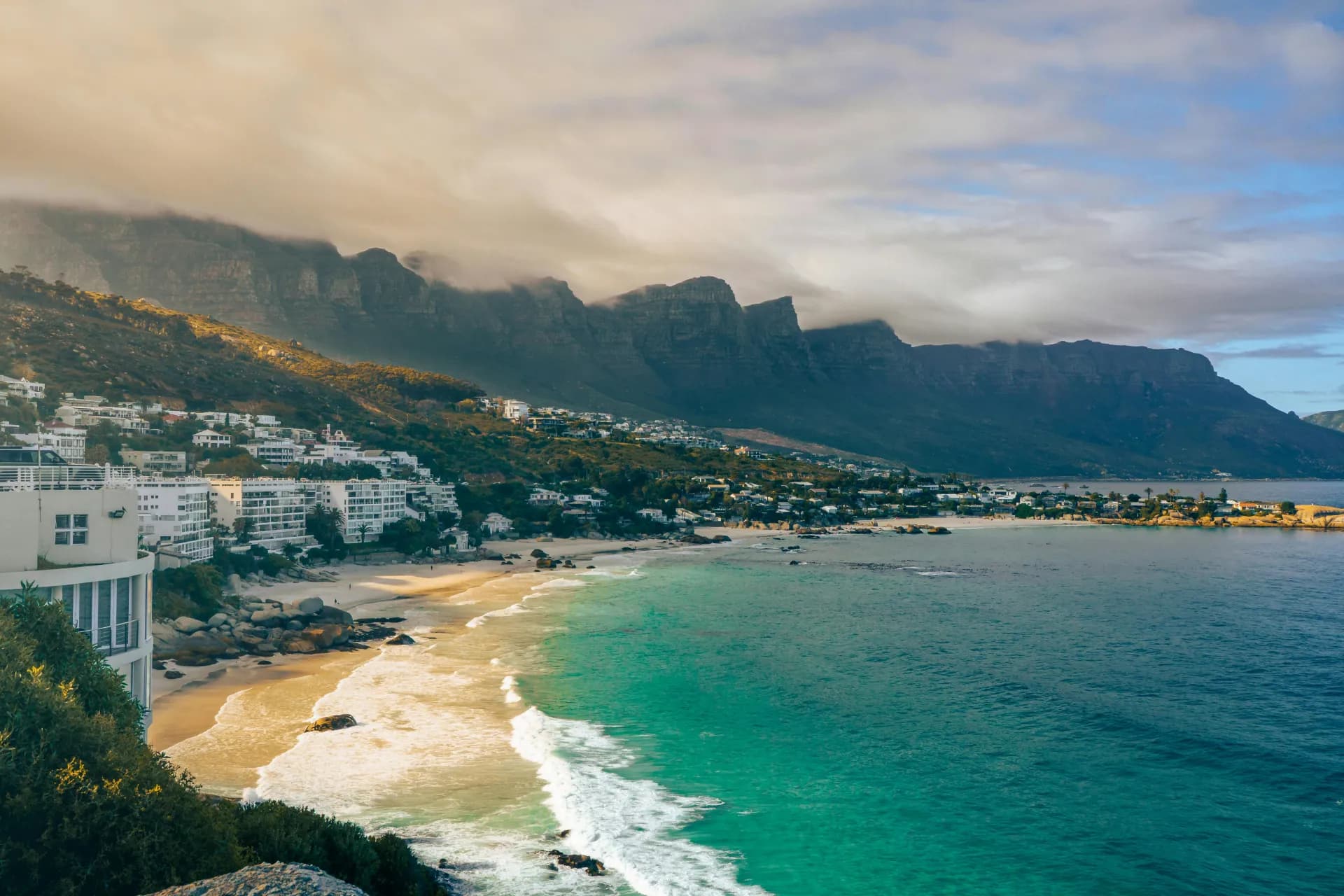
Cape Town's riviera stretches along the Atlantic, with the Twelve Apostles mountains as backdrop. Clifton's four beaches (numbered 1-4) are sheltered and exclusive; Camps Bay has the restaurant strip and sundowner scene. The water is freezing (Atlantic currents), but the setting is undeniably stunning.
The Cape Peninsula
The dramatic drive to Cape Point takes you through some of South Africa's most spectacular scenery.
#### Chapman's Peak Drive
One of the world's great coastal drives, carved into the cliffs between Hout Bay and Noordhoek. Nine kilometers of hairpin turns and ocean views.
#### Simon's Town
The historic naval base has Victorian charm and serves as gateway to Boulders Beach, where African penguins nest among the granite rocks. Yes, you can swim with them.
#### Cape Point & Cape of Good Hope
The nature reserve at Africa's southwestern tip delivers wild landscapes, baboons, and the famous "meeting of two oceans" (technically a bit north, but the myth persists). The old lighthouse hike rewards with dramatic views.
The Winelands
#### Stellenbosch
South Africa's second-oldest town is wine country's heart—oak-lined streets, Cape Dutch architecture, and dozens of estates within minutes. Serious about wine, serious about food, serious about beauty.
#### Franschhoek
The "French Corner" was settled by Huguenot refugees and retains French influence. More boutique than Stellenbosch, exceptional dining, charming main street. The wine tram offers car-free tasting.
#### Constantia
Cape Town's original wine region, just 20 minutes from the city center. Historic estates like Groot Constantia (founded 1685) and newer properties in a verdant valley setting.
Signal Hill & Lion's Head
Signal Hill's drive-up viewpoint delivers sunset panoramas without the hike. Lion's Head requires a 2-hour round-trip climb, including chains and ladders near the top, but rewards with the best 360-degree views in Cape Town. Full-moon hikes are a local tradition.
Woodstock & The Old Biscuit Mill
The Neighbourgoods Market at the Old Biscuit Mill draws Saturday crowds for food, crafts, and people-watching. The surrounding Woodstock neighborhood has transformed into Cape Town's creative hub—galleries, design shops, street art, and some of the city's best restaurants.
Where to Eat
Fine Dining
- The Test Kitchen - Luke Dale-Roberts' world-renowned tasting menus (if you can get a reservation)
- La Colombe - Constantia Valley setting, exceptional contemporary cuisine
- FYN - Japanese-meets-South African, innovative and beautiful
- Salsify at The Roundhouse - Historic venue, modern South African cooking
Cape Malay & Local
- Bo-Kaap Kombuis - Traditional Cape Malay cooking, cooking classes available
- Biesmiellah - No-frills Bo-Kaap institution, exceptional curries
- Mzansi - Township restaurant, authentic South African flavors
Seafood
- Harbour House - Kalk Bay harbor setting, fresh catches
- Nobu - V&A Waterfront, Japanese-Peruvian excellence
- Codfather - Camps Bay, choose-your-fish market style
Casual & Markets
- Neighbourgoods Market - Saturday's essential food scene at Old Biscuit Mill
- Oranjezicht City Farm Market - Sunday mornings at the Waterfront
- Mojo Market - Sea Point's permanent market, diverse food stalls
- Kalky's - Kalk Bay's legendary fish and chips
Wine Country Dining
- La Petite Colombe - Franschhoek's culinary destination
- Delaire Graff - Stellenbosch views and fine dining
- Tokara - Terrace dining with panoramic vineyard views
- Overture - Hidden Valley gem, inventive South African cuisine
Where to Drink
Rooftops & Views
- The Silo Rooftop - Best Table Mountain views from the Silo Hotel
- Chinchilla - Camps Bay sunset cocktails
- Tjing Tjing - Rooftop bar in Long Street
Cocktail Bars
- The House of Machines - Motorcycles, cocktails, and live music
- Orphanage Cocktail Emporium - Speakeasy vibes in the CBD
- Cause & Effect - Botanical cocktails in Cape Quarter
Wine Bars
- Publik Wine Bar - Natural wines and small plates
- Wine Bar at La Parada - Tapas and excellent South African wines
- The Stack - Waterfront wine and art space
Craft Beer
- Devil's Peak Brewing - Taproom in Woodstock
- Jack Black's Brewing Co. - Diep River brewery and beer hall
- Newlands Brewery - SAB's historic brewery tour
Where to Stay
V&A Waterfront
The most polished area: The Silo Hotel (extraordinary design, rooftop pool), One&Only (luxury resort feel), and numerous business hotels. Convenient but somewhat removed from neighborhood character.
City Bowl
The downtown area below Table Mountain holds boutique hotels and guesthouses. Access to Long Street nightlife, gardens, and cable car.
Camps Bay & Clifton
Beach proximity, sunset views, upmarket holiday feel. POD Camps Bay and the Marly Hotel deliver boutique style; Atlantic guesthouses offer value.
Constantia
Wine country calm, 15-20 minutes from the city. The Cellars-Hohenort and Steenberg Hotel are rural luxury options.
Cape Winelands
Stay in Stellenbosch or Franschhoek to immerse in wine country. Babylonstoren combines farm, gardens, and exceptional accommodation.
Practical Wisdom
Getting Around
Renting a Car - Almost essential for Cape Town. Public transit is limited; Uber/Bolt work but the distances are significant. The drives are beautiful; the parking usually manageable.
Uber/Bolt - Reliable for central areas. Essential for nights out.
MyCiti Bus - Covers airport to City Bowl and some coastal routes. Limited but useful for specific trips.
Walking - Feasible in specific areas (Waterfront, Sea Point promenade, wine estates) but not between neighborhoods.
When to Visit
- Summer (December-March) - Hot, dry, crowded (South African holiday season). Best beach weather. Book far ahead for December/January.
- Fall (April-May) - Cooler, fewer crowds, harvest season in the winelands. Excellent.
- Winter (June-August) - Rainy season, but mild. Whale season begins. Lower prices, moody beauty.
- Spring (September-November) - Wildflowers bloom, whale watching peaks, pleasant temperatures. Arguably the best time.
Safety Realities
Cape Town has high crime rates; tourist areas are generally safe but require awareness.
- Don't walk alone at night in isolated areas
- Be cautious with valuables in cars (smash-and-grabs occur)
- Certain areas (townships, some CBD streets) require local knowledge or guides
- Use Uber/Bolt rather than walking after dark
- Common sense prevails—most visitors experience no problems
The Seasons of Table Mountain
The mountain creates its own weather. The famous "tablecloth" cloud can appear anytime. Cable car closes in high winds (frequently in summer). Check conditions before heading up; have backup plans.
Water Consciousness
Cape Town experienced severe drought (the "Day Zero" crisis). Water management remains important. Hotels and restaurants have adapted; visitors should be mindful.
Tipping
10-15% at restaurants. Car guards (informal parking attendants) get R5-10. Tip generously—wages are low.
Health
No vaccinations required for Cape Town specifically. Malaria-free. Excellent medical facilities. Tap water is safe.
Suggested Itineraries
4 Days: Essential Cape Town
Day 1: Table Mountain (cable car or hike), V&A Waterfront afternoon, sunset drinks with mountain views
Day 2: Cape Peninsula drive—Hout Bay, Chapman's Peak, Simon's Town, Boulders Beach penguins, Cape Point. Fish and chips at Kalk Bay.
Day 3: Winelands day trip—Stellenbosch or Franschhoek, 3-4 estate tastings, lunch at a wine estate
Day 4: Bo-Kaap walking tour, Zeitz MOCAA, Robben Island (if bookings allow), farewell dinner in Woodstock
7 Days: Cape Town In-Depth
Add: Lion's Head sunrise hike, Kirstenbosch afternoon, deeper winelands exploration (both Stellenbosch and Franschhoek), Constantia wine route, Saturday at Old Biscuit Mill, beach time at Camps Bay or Clifton
10+ Days: Cape Town & Beyond
Add: Garden Route extension (Hermanus whale watching, Knysna, Plettenberg Bay), safari at a nearby reserve (Aquila, Sanbona), West Coast exploration, deeper township tour with cultural context
Wildlife Experiences
Penguins at Boulders Beach
The African penguin colony at Simon's Town is irresistible—boardwalks through nesting sites, a beach where you swim among them. Best in the morning before crowds.
Whale Watching
Southern right whales visit Walker Bay (Hermanus) from July to November. Some years they're visible from Cape Town beaches. Boat trips offer closer encounters.
Shark Diving
Cage diving with great white sharks operates from Gansbaai (2 hours from Cape Town). Controversial but unforgettable for those who go.
Safari Options
For Big Five, head to the Eastern Cape (Shamwari, Kariega—fly or drive) or do a quick trip to Aquila or Inverdoorn reserves (2-3 hours). True wilderness requires going further afield.
Cape Point Wildlife
The nature reserve holds baboons (don't feed them!), eland, zebra, ostriches, and diverse birdlife. Not safari, but wild and beautiful.
The Wine Experience
Wine Tasting Basics
- Most estates charge R50-150 for tastings (often waived with purchase)
- Book ahead for popular estates, especially for lunch
- Designated driver essential, or book a tour/wine tram
- The quality-to-price ratio is exceptional by global standards
Key Varietals
- Pinotage - South Africa's signature grape
- Chenin Blanc - The country's most planted white
- Cabernet Sauvignon & Bordeaux Blends - Stellenbosch excels
- Cap Classique - South African sparkling wine, often excellent
Recommended Estates
- Groot Constantia - Historic, beautiful, essential
- Jordan - Stellenbosch hillside, exceptional wines
- Haute Cabrière - Franschhoek, sabering demonstrations
- Delaire Graff - Art, views, luxury
- Waterford - Diverse offerings, chocolate pairings
Understanding Cape Town's History
Robben Island
The prison island where Mandela and other anti-apartheid leaders were held. Tours led by former prisoners offer powerful firsthand testimony.
District Six Museum
This inner-city neighborhood was destroyed under apartheid, its residents forcibly removed. The museum preserves memory through personal objects and oral histories.
Bo-Kaap
The Cape Malay Quarter's colorful houses have deep history—descendants of enslaved people from Southeast Asia created a distinct culture that persists today.
Townships
Cape Town's townships—Langa, Gugulethu, Khayelitsha—hold most of the city's population and history. Visit only with reputable local guides who ensure responsible engagement.
Final Thoughts
Cape Town is a city of staggering beauty and uncomfortable truths. Table Mountain and the Cape Peninsula would make any destination remarkable; add the wine, the wildlife, the beaches, and the creative energy, and you have one of the world's great cities. But Cape Town is also profoundly shaped by its history—colonialism, slavery, apartheid—and its present-day inequalities. The contrast between Clifton mansions and township shacks is visible from Lion's Head.
Engaging with Cape Town honestly means acknowledging this complexity. Visit Robben Island, learn about District Six, take a township tour with local guides. The beauty isn't diminished by understanding the context—it's enriched. Cape Town is South Africa's story in miniature: difficult, hopeful, and utterly compelling.
Come for the mountain. Stay for the wine. Return because Cape Town works its way under your skin—the light, the drama, the warmth of its people. This is Africa's most beautiful city, in one of its most beautiful settings, wrestling with its past while building something new. It asks visitors to see all of it, not just the postcard views. Those who accept that invitation leave changed.
Ready to experience Cape Town? Our South Africa specialists can arrange Robben Island tours, wine country itineraries, safari extensions, and help you navigate this extraordinary city's many layers.