Iceland: Fire and Ice at the Edge of the World
Iceland defies expectations at every turn. This North Atlantic island sits on the Mid-Atlantic Ridge where tectonic plates pull apart, creating a landscape of active volcanoes, geysers, glaciers, and lava fields found nowhere else on Earth. With only 380,000 people in an area the size of Kentucky, Iceland offers raw nature at its most dramatic—and increasingly, it's become one of Europe's most sought-after destinations1.
Understanding Iceland
Geography & Geology
Iceland is geologically young—formed 16-18 million years ago and still actively building itself:
The facts:
- 130 volcanic mountains, 30+ active volcanic systems
- 11% of the country covered by glaciers
- Sits directly on the Mid-Atlantic Ridge (where Europe and North America separate)
- Geothermal energy heats 90% of homes
- New land still forming from volcanic eruptions
The result: A landscape of extremes—fire and ice coexisting, hot springs steaming beside glaciers, black sand beaches against emerald moss2.
Why Iceland Captivates
- Landscapes that look genuinely alien
- Northern Lights (September-March)
- Midnight sun (June-July)
- Geothermal swimming culture (hot springs and pools)
- Safe, easy travel with exceptional infrastructure
- English widely spoken
- Small population with proud cultural heritage
- Wildlife (puffins, whales, seals)
Best Time to Visit
Summer (June-August)
Pros:
- Midnight sun allows 24-hour exploration
- All roads open (including highlands)
- Puffin season (nesting through mid-August)
- Warmest temperatures (10-15°C / 50-60°F)
- Full access to all attractions
- Whale watching peak season
Cons:
- No Northern Lights
- Most crowded, highest prices
- Book months ahead for popular hotels
Winter (November-March)
Pros:
- Northern Lights (peak: September-March)
- Ice caves accessible (November-March)
- Dramatic, moody landscapes
- Fewer tourists
- Lower prices
Cons:
- Limited daylight (4-5 hours in December)
- Some roads closed (highlands, northern routes)
- Extreme weather possible
- Some attractions inaccessible
Shoulder Seasons (April-May, September-October)
Sweet spot: September offers Northern Lights possibility, reasonable daylight, autumn colors, and fewer summer crowds. April brings lengthening days and possible Northern Lights.
Weather Reality
Iceland's weather is notoriously unpredictable3:
- "If you don't like the weather, wait five minutes"
- Rain, wind, and sun can occur within an hour
- Layer everything, waterproof outer layer essential
- Check road conditions daily: road.is
- Weather forecasts: vedur.is
The Golden Circle
Iceland's most popular route—easily completed in one day from Reykjavik:
Þingvellir (Thingvellir) National Park
UNESCO World Heritage Site where history meets geology4:
Historical significance: The Alþingi (world's oldest parliament) met here from 930 CE. Iceland's independence declared here in 1944.
Geological significance: Walk between tectonic plates in the Almannagjá gorge. The only place on Earth where the Mid-Atlantic Ridge is visible above sea level.
Activities:
- Silfra snorkeling/diving: Crystal-clear glacial water between continents. Visibility 100+ meters. Requires dry suit certification for diving; snorkeling open to all5.
- Walking trails through rift valley
- Öxarárfoss waterfall
Geysir Geothermal Area
The original geyser—the word comes from Icelandic:
The eruptions: The Great Geysir rarely erupts now, but Strokkur reliably shoots 20-40 meters every 5-10 minutes. Time your photo.
The area: Boiling mud pots, steaming vents, colorful mineral deposits. Stay on marked paths (ground can be dangerously thin).
Gullfoss
"Golden Falls" lives up to its name—a massive two-tiered waterfall where the Hvítá River plunges 32 meters into a canyon:
Views: Multiple viewing platforms offer different perspectives. Rainbow-filled spray in sunny conditions.
History: Nearly dammed for hydroelectric power but saved by environmental advocates in the 1920s.
The South Coast
Route Overview
The South Coast drive from Reykjavik to Jökulsárlón offers Iceland's greatest concentration of accessible wonders. Allow 2-4 days for proper exploration.
Seljalandsfoss & Skógafoss
Seljalandsfoss: 60-meter waterfall you can walk behind. Magical when empty, busy at peak times. Waterproof jacket essential.
Skógafoss: 25 meters wide and 60 meters tall—one of Iceland's most powerful waterfalls. Climb 527 steps for views from the top.
Reynisfjara Black Sand Beach
Dramatic basalt columns, black sand, and thundering waves at Iceland's most famous beach6:
Formations: Reynisdrangar sea stacks rise from the ocean—legend says they're frozen trolls.
Warning: Sneaker waves are deadly. Never turn your back on the ocean. Multiple drownings from tourists underestimating wave reach.
Vík
Charming village marking South Coast's midpoint. Good base, famous Icelandic wool sweaters at local shops.
Skaftafell & Svínafellsjökull
Part of Vatnajökull National Park (Europe's largest glacier)7:
Glacier hiking: Guided walks onto Svínafellsjökull glacier—crampons and guides required. Game of Thrones "beyond the wall" filming location.
Ice climbing: Available for adventurous visitors.
Hiking: Svartifoss (Black Fall) trail passes waterfalls and basalt columns.
Jökulsárlón Glacier Lagoon
Where Breiðamerkurjökull glacier calves icebergs into a lagoon:
The experience: Blue and white icebergs float toward the ocean. Seals rest on ice. Otherworldly, especially at sunrise/sunset.
Boat tours: Amphibian boats and zodiac tours among the bergs.
Diamond Beach: Across the road, icebergs wash onto black sand—"ice diamonds" against volcanic beach.
Reykjavik
The World's Northernmost Capital
Reykjavik punches far above its weight for a city of 140,0008:
Hallgrímskirkja: Expressionist church inspired by basalt columns. Tower views over the city.
Harpa: Stunning concert hall with geometric glass facade.
Old Harbour: Whale watching tours, puffin tours, restaurants.
Laugavegur: Main shopping/nightlife street.
Museums: National Museum, Settlement Exhibition (Viking Age), Phallological Museum (yes, really).
Hot Springs Culture
Geothermal swimming is Iceland's national pastime—and the best way to meet locals:
Public pools: Every neighborhood has one. Blue Lagoon gets attention, but locals prefer Reykjavik's pools: Laugardalslaug, Vesturbæjarlaug, Sundhöllin9.
Etiquette: Shower naked before entering (enforced). Respect hot pot conversation rules (quiet voices).
Blue Lagoon: The famous commercial facility 45 minutes from Reykjavik. Expensive, touristy, but genuinely beautiful. Book well ahead10.
Sky Lagoon: Newer alternative closer to Reykjavik with infinity edge toward the ocean.
Northern Iceland
Akureyri
Iceland's "Capital of the North" offers a different pace:
Access: Domestic flights (45 minutes) or scenic drive (4.5 hours via Route 1, longer via scenic routes).
Attractions: Botanical gardens at 65°N latitude, Christmas House, whale watching (better odds than Reykjavik).
Diamond Circle
Northern Iceland's answer to the Golden Circle:
Húsavík: Whale watching capital—best odds for humpbacks and blue whales in Iceland11.
Goðafoss: "Waterfall of the Gods"—where Iceland's law speaker threw pagan idols when converting to Christianity in 1000 CE.
Mývatn: Geothermal lake area with otherworldly lava formations, pseudocraters, and the Mývatn Nature Baths (less crowded Blue Lagoon alternative).
Dettifoss: Europe's most powerful waterfall. Raw, thundering, accessible via rough road.
Ásbyrgi: Horseshoe-shaped canyon, mythologically created by Odin's eight-legged horse.
The Westfjords
Iceland's least-visited region offers the most dramatic isolation:
Characteristics:
- Remote, winding roads (4WD essential)
- Sheer cliffs and deep fjords
- Almost no other tourists
- Challenging logistics, extraordinary rewards
Highlights:
- Dynjandi: Spectacular tiered waterfall
- Látrabjarg cliffs: Puffin colonies at Europe's westernmost point
- Abandoned fishing villages
- Hot springs in remote valleys
Practicalities: Requires dedicated time (3-5 days minimum). Limited services. Check road conditions carefully. Best June-August.
Northern Lights
The Aurora Basics
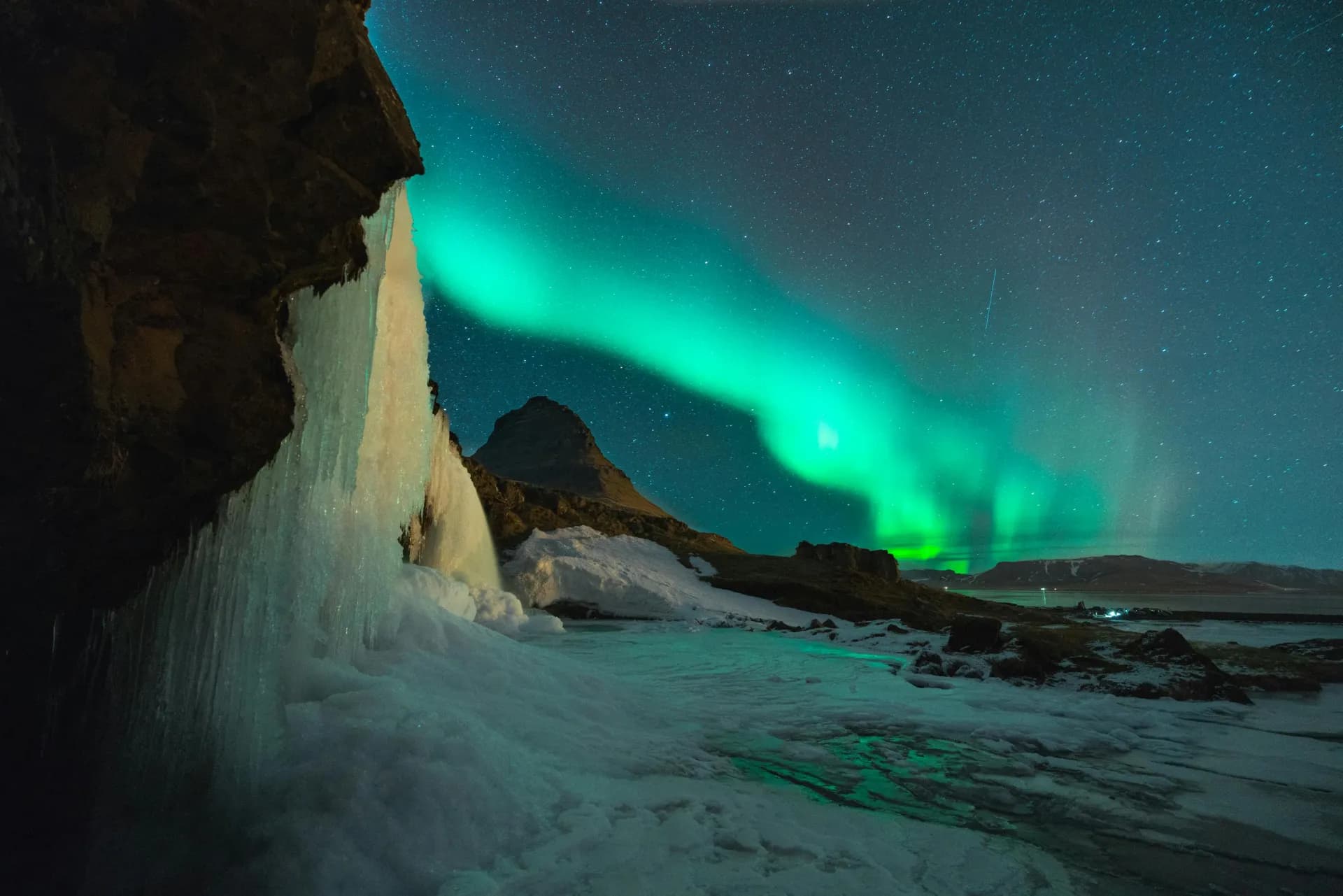
Iceland sits at ideal latitude (64-66°N) for Northern Lights viewing:
Season: September-March (dark skies required)
Peak hours: 9 PM - 2 AM typical
Best conditions: Clear skies, low light pollution, high solar activity
Viewing Tips
Forecasts: Check vedur.is for aurora forecast and cloud cover12.
Escape Reykjavik: City lights reduce visibility. Drive 30+ minutes from city.
Patience required: Even in perfect conditions, aurora timing is unpredictable. Some nights they dance for hours; others, nothing appears.
Photography: Tripod essential. Wide-angle lens. ISO 1600-6400, 10-25 second exposure, wide aperture.
Tours: Guided Northern Lights tours transport you to dark locations and provide warm comfort while waiting.
Practical Information
Getting There & Around
Flights: Keflavik International Airport, 45 minutes from Reykjavik. Direct flights from many European and North American cities.
Rental cars: Essential for exploring beyond Reykjavik. 4WD required for highlands and many winter conditions. Book ahead in summer13.
F-roads: Highland roads (marked with "F") require 4WD and are only open June-September. River crossings common.
Ring Road (Route 1): 1,300 km around the island. Possible in 7-10 days, better with 2 weeks.
Costs
Iceland is expensive:
- Budget: $150-200/day (hostels, cooking own food, limited activities)
- Mid-range: $300-400/day (hotels, restaurants, major tours)
- Luxury: $600+/day (boutique hotels, private guides)
Money savers:
- Grocery stores (Bónus is budget option)
- Hot dogs at Bæjarins Beztu (famous, cheap)
- Free attractions (waterfalls, beaches, hot springs)
- Camping (summer only, well-developed sites)
What to Pack
Essential:
- Waterproof outer layer (rain guaranteed)
- Warm layers (wool, fleece, down)
- Sturdy waterproof boots
- Swimsuit (hot springs everywhere)
- Sunglasses and sunscreen (summer)
- Eye mask (summer midnight sun)
Winter additions:
- Thermal base layers
- Hand and toe warmers
- Ice cleats (for walking on ice)
- Extra camera batteries (cold drains them)
Safety
Driving: Check road.is daily. Pull fully off road for photos. Watch for sheep on roads.
Weather: Conditions change rapidly. Don't underestimate wind, cold, or waves.
Geothermal areas: Stay on paths. Ground can be thin over boiling water.
Wildlife: Keep safe distance from seals and nesting birds. Never approach puffins.
Sample Itineraries
Essential Iceland (7 Days)
- Day 1: Arrive Keflavik, Blue Lagoon, Reykjavik
- Day 2: Golden Circle (Þingvellir, Geysir, Gullfoss)
- Day 3-4: South Coast to Jökulsárlón
- Day 5: Glacier hike, return west
- Day 6: Reykjavik exploration, hot springs
- Day 7: Departure
Ring Road Circuit (10-14 Days)
- Days 1-2: Reykjavik, Golden Circle
- Days 3-4: South Coast, Jökulsárlón
- Days 5-6: East Fjords
- Days 7-8: Mývatn area, Húsavík
- Days 9-10: Akureyri, Snæfellsnes
- Days 11+: Return to Reykjavik with stops
Northern Lights Focus (5 Days - Winter)
- Day 1: Arrive, Reykjavik
- Day 2: Golden Circle, Northern Lights tour
- Day 3: South Coast day trip
- Day 4: Blue Lagoon, Northern Lights hunt
- Day 5: Departure
Final Thoughts
Iceland has transformed from obscure North Atlantic island to tourism phenomenon in just two decades. The crowds at the Blue Lagoon and Golden Circle are real—but the crowds exist because these places are genuinely remarkable. Drive a bit farther, take the less-famous roads, and you'll find the Iceland of imagination: steaming earth, thundering waterfalls, glaciers grinding toward the sea, and winter skies dancing with green fire. It's expensive, the weather is challenging, and the daylight is either endless or barely there. None of that matters when you're standing in landscapes that feel like another planet.
Ready for Iceland? Our Nordic specialists can design your fire-and-ice adventure from Northern Lights to midnight sun.
---
Wildlife & Nature
Bird Life
Iceland hosts millions of seabirds throughout its dramatic coastline:
Puffins: 60% of the world's Atlantic puffins nest in Iceland. Best viewing May-August at Látrabjarg (Westfjords), Dyrhólaey (South Coast), and Heimaey (Westman Islands). These charming birds with colorful beaks are Iceland's most beloved wildlife.
Arctic Terns: Migrate from Antarctica annually—the longest migration of any bird. Aggressive near nests during breeding season; they will dive-bomb intruders without hesitation.
Other species: Guillemots, razorbills, gannets, and fulmars form massive colonies on coastal cliffs, creating spectacular viewing opportunities.
Marine Life
Whales: Multiple species including humpback, minke, blue (rare but present), orcas, and sperm whales. Húsavík is recognized as Iceland's whale-watching capital.
Seals: Common and grey seals populate the Vatnsnes Peninsula and beaches throughout the coast. Seal watching is free and excellent from shore.
Fish: Atlantic salmon and Arctic char fill rivers; cod and haddock from surrounding seas sustain traditional fishing communities.
Geology in Action
Iceland straddles the Mid-Atlantic Ridge, literally splitting apart at a rate of 2 centimeters per year:
- New land forms regularly from volcanic eruptions (Surtsey emerged 1963-67)
- Geysers, hot springs, and fumaroles appear throughout the country
- Þingvellir's rift valley shows the tectonic plates separating visibly
- Geothermal energy powers 90% of Icelandic homes and heats all swimming pools
Sources
2. Iceland.is - Nature & Environment
3. Icelandic Meteorological Office
6. South Iceland - Reynisfjara
10. Blue Lagoon