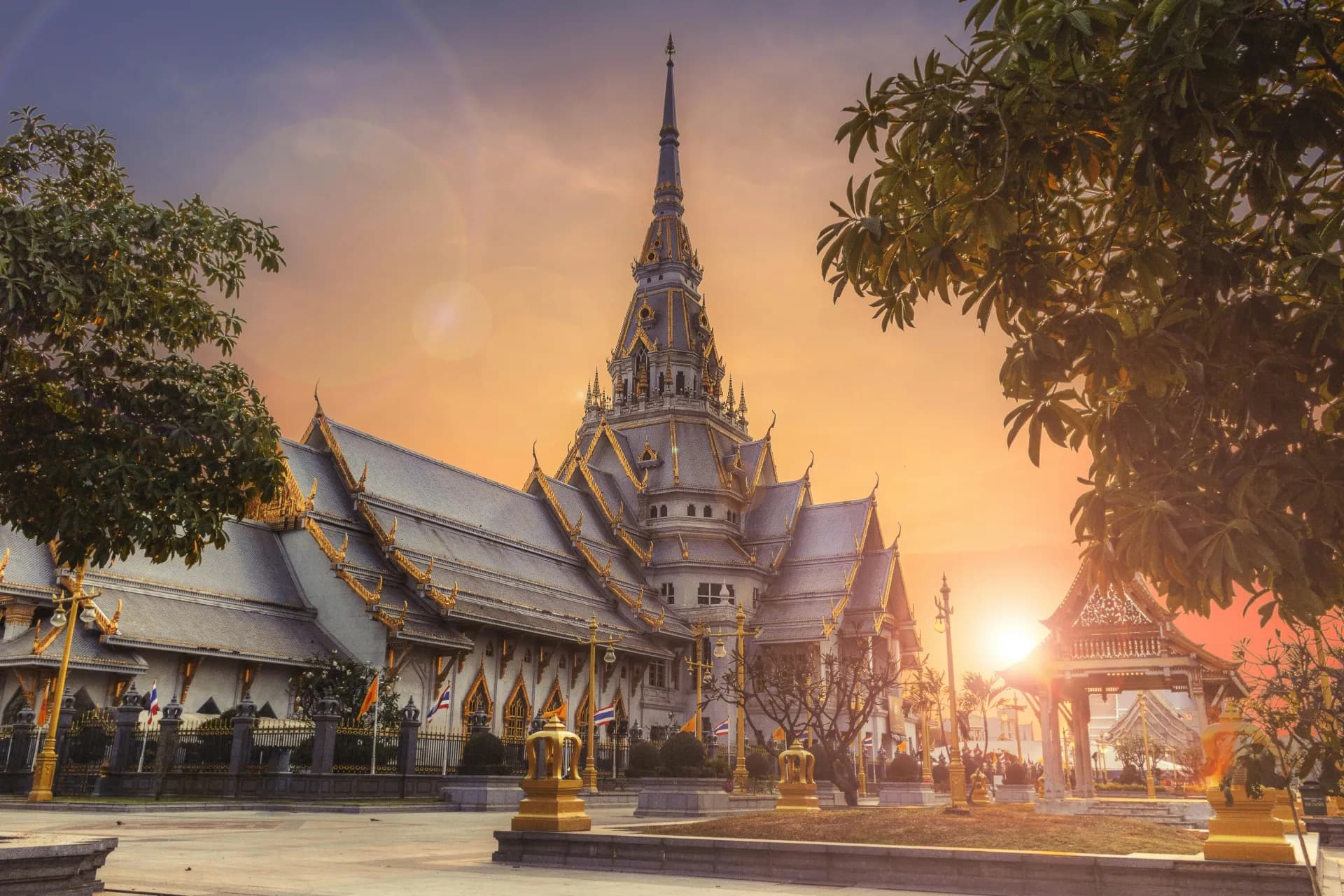
Thailand: The Land of Smiles
Thailand welcomed 35.5 million international visitors in 2024, cementing its position as Southeast Asia's tourism powerhouse1. The kingdom has earned its nickname "Land of Smiles" through genuine warmth that greets visitors everywhere. From the chaos of Bangkok to peaceful temple towns and pristine islands, Thailand delivers incredible variety at remarkably affordable prices—all while maintaining a unique cultural identity shaped by centuries of Buddhist tradition and the distinction of being Southeast Asia's only nation never colonized by European powers2.
Understanding Thailand
Why Thailand Works
Thailand has refined tourism infrastructure without losing authenticity:
Accessibility for all budgets. The same destination can cost $20/day for backpackers or $500/day for luxury seekers. Both experiences deliver genuine Thailand. The tourism ecosystem matured over decades, creating options from street food carts to Michelin-starred restaurants, from hostels to world-renowned resorts.
Delicious, cheap food everywhere. Thai cuisine consistently ranks among the world's favorites, and the street food culture means excellent meals cost under $2. The same dishes appearing in upscale restaurants originated with pushcart vendors—no pretense separates fine dining from roadside stalls3.
Stunning natural diversity. Within a single country: tropical beaches with limestone karsts, mountain forests with waterfalls, ancient cities in river plains, and islands ranging from party destinations to deserted paradises.
Rich Buddhist culture. Over 90% of Thais practice Buddhism, and the spiritual tradition shapes daily life4. Temples (wats) anchor communities, monks collect morning alms in orange robes, and merit-making (doing good deeds) motivates much behavior. Understanding this context enriches every temple visit.
Easy independent travel. Buses, trains, and budget flights connect major destinations. English appears on signs in tourist areas. The tourism ecosystem has solved most logistics problems travelers might face.
Geography and Regions
Central Thailand centers on Bangkok, the sprawling capital of 10+ million people. The central plains grow most of Thailand's rice. Ancient capitals—Ayutthaya and Sukhothai—preserve ruins of kingdoms predating Bangkok.
Northern Thailand rises into forested mountains reaching 2,565 meters at Doi Inthanon. Chiang Mai anchors the region as a cultural capital with distinct Lanna heritage. Hill tribe communities maintain traditional practices. The famous Golden Triangle (Thailand-Laos-Myanmar border) has transformed from opium territory to tourist destination.
Northeast Thailand (Isaan) remains Thailand's least-visited region by international tourists despite being most populous. Lao cultural influence, ancient Khmer temple ruins, and authentic rural Thai life reward adventurous travelers. This is where most Thai migrants to other regions originate—their food traditions now dominate Bangkok street food.
Southern Thailand (Gulf Coast) offers islands in the Gulf of Thailand: developed Koh Samui with its airport and luxury resorts, party-famous Koh Phangan, and dive-mecca Koh Tao. The coastline runs from Chumphon to the Malaysian border.
Southern Thailand (Andaman Coast) faces the Andaman Sea: developed Phuket, spectacular Krabi with limestone cliffs, and islands from overcrowded Phi Phi to tranquil Koh Lipe near Malaysia. This coast was devastated by the 2004 tsunami and has rebuilt stronger.
Best Time to Visit
Thailand spans multiple climate zones, but general patterns hold5:
Cool Season (November-February)
The best weather nationwide—temperatures averaging 25-30°C with low humidity and minimal rain. Peak tourist season means higher prices and crowds, especially around Christmas-New Year and Chinese New Year. This is when Bangkok becomes genuinely pleasant and northern mountains turn cool enough for trekking comfort.
Hot Season (March-May)
Temperatures reach 35-40°C with high humidity. April's Songkran water festival (Thai New Year, April 13-15) brings nationwide water fights and merit-making6. Beach season continues in full force. Fewer tourists despite good conditions—an underrated time to visit southern islands.
Rainy Season (June-October)
The monsoon brings daily afternoon downpours, typically 1-3 hours, then clearing. Landscapes turn lush and green. Hotel prices drop 30-50%. Morning activities proceed normally; plan indoor options for afternoon storms.
Crucially: Gulf coast islands (Koh Samui, Phangan, Tao) have reversed seasons—their best weather is July-September when the Andaman coast gets heavy rain. Smart travelers use this to find better deals and fewer crowds.
Bangkok: The Essential Stop
Bangkok (Thai name: Krung Thep Maha Nakhon, "City of Angels") is massive, chaotic, and utterly compelling. The city sprawls across both banks of the Chao Phraya River without a clear center, but BTS Skytrain, MRT subway, and boat networks make navigation manageable7.
Must-Experience
Grand Palace & Wat Phra Kaew remain Thailand's most sacred site—the Emerald Buddha (Phra Kaew Morakot) sits in a chapel within the dazzling palace complex built in 1782. Dress modestly (covered shoulders and knees—sarongs available for rent) and expect crowds. Arrive at 8:30 AM opening for best experience. Ignore anyone outside saying it's closed—common scam.
Wat Pho (Temple of the Reclining Buddha) houses a 46-meter gold-plated reclining Buddha representing his entry into nirvana. The temple also hosts Thailand's first public university and the famous traditional massage school—treatments on-site cost a fraction of spa prices with world-class technique.
Wat Arun (Temple of Dawn) rises on the opposite riverbank—its spire covered in Chinese porcelain fragments glitters at sunset. Take the 3-baht ferry across for golden hour photography.
Chatuchak Weekend Market claims over 15,000 stalls across 27 acres, making it one of the world's largest markets8. Clothing, antiques, pets, plants, food, furniture—everything imaginable appears somewhere in the maze. Saturday-Sunday 6 AM-6 PM; air-conditioned JJ Mall next door provides escape from midday heat.
Chinatown (Yaowarat) transforms after dark into Bangkok's greatest street food zone. Follow the neon signs down Yaowarat Road past fish maw soup vendors, roast duck stalls, and seafood restaurants spilling onto sidewalks. The energy peaks 8-11 PM. Nearby Talat Noi preserves older Chinese architecture and street art.
Khao San Road deserves a single evening visit to experience its chaotic backpacker circus—bucket drinks, massage chairs, pad thai vendors, and travelers from everywhere. The vibe is more party than cultural, but it's earned its legendary status over 40 years of hosting budget travelers.
Beyond Temples
Jim Thompson House preserves the compound of the American silk entrepreneur who revived Thai silk industry before mysteriously disappearing in Malaysia in 1967. Traditional teak houses reassembled from various regions contain his Asian art collection. The surrounding galleries and shop warrant extended visits.
BACC (Bangkok Art and Culture Centre) provides free contemporary art in a nine-story building opposite MBK mall. Rotating exhibitions, gallery spaces, and art-house cinema make it worth repeated visits.
Lumpini Park offers 142 acres of green escape in central Bangkok—morning tai chi groups, monitor lizards in the lake, and rowing boats for rent. Evening brings outdoor aerobics classes and joggers escaping the smog.
Rooftop bars define Bangkok nightlife at any budget. The original Sky Bar at Lebua (Hangover II filming location) and Vertigo at Banyan Tree attract tourists for sunset views. Speakeasy Rooftop Bar offers cocktails without pretension. Dress codes apply at upscale venues (no flip-flops/shorts).
Floating markets range from authentic to tourist trap. Amphawa Floating Market (1.5 hours south) operates weekends with Thai visitors dining on boats—genuinely atmospheric. Damnoen Saduak is the famous image but primarily tourist-oriented. Taling Chan sits closest to Bangkok with weekend market vibes.
Where to Stay
Riverside (Rattanakosin) positions you near Grand Palace, Wat Pho, and river ferry access. Historic hotels include the legendary Mandarin Oriental (since 1876) and Peninsula. Budget options exist on Khao San Road nearby.
Silom/Sathorn combines business district efficiency with excellent nightlife, restaurants, and BTS access. The gay nightlife centers on Silom Soi 4. Both high-rise hotels and boutique options abound.
Sukhumvit stretches endlessly as Bangkok's main artery, segmented by numbered side streets (sois). Lower numbers (1-23) offer Japanese food and red-light areas. Middle numbers bring expat restaurants and nightlife. Higher numbers grow more residential. BTS serves the entire strip.
Chinatown places you in atmospheric older Bangkok with incredible food access. Fewer Western-oriented hotels but growing boutique options cater to travelers wanting authentic neighborhoods.
Northern Thailand
Chiang Mai
Thailand's cultural capital has attracted visitors since hippie trail days and now draws over 10 million annually9. The city combines ancient temples with creative energy—digital nomads, artists, and wellness seekers join package tourists and backpackers.
The Old City preserves remnants of the 13th-century Lanna kingdom within partially intact moats and walls. Over 30 temples cluster here—Wat Phra Singh and Wat Chedi Luang are essential, but wandering discovers dozens more. The atmosphere is walkable, relaxed, and punctuated with cafés.
Doi Suthep rises 15km west of the city, its golden pagoda visible from everywhere below. A 306-step naga staircase or cable car reaches the temple platform with panoramic city views. Come at dawn for monks' prayers or sunset for golden light.
Night Bazaar operates daily along Chang Klan Road—tourist goods, food stalls, and entertainment fill multiple buildings and street sections. The Sunday Walking Street (Ratchadamnoen Road, 4 PM-midnight) offers better quality handicrafts and less aggressive selling.
Cooking classes taught by local chefs include market visits, mortar-and-pestle curry paste making, and hands-on preparation of 4-5 dishes you eat afterward. Dozens of schools operate—choose those visiting markets rather than using pre-prepared ingredients.
Elephant sanctuaries have replaced riding camps as tourists learn of elephant welfare issues. Ethical operations like Elephant Nature Park (founded 1996) rescue abused elephants and allow bathing/feeding without riding. Half-day to multi-day visits support conservation10.
Coffee culture exploded in Chiang Mai, where northern mountains produce excellent arabica beans and the city hosts hundreds of specialty cafés. The coffee scene rivals any major Asian city at a fraction of the price.
Beyond Chiang Mai
Pai (3 hours northwest via 762 curves) became a backpacker legend—waterfalls, hot springs, hippie markets, reggae bars, and mountain scenery draw a particular crowd. Development has changed its character, but the setting remains spectacular.
Chiang Rai (3 hours northeast) anchors the Golden Triangle region. The White Temple (Wat Rong Khun), covered in glittering white stucco and mirror, represents contemporary artist Chalermchai Kositpipat's ongoing project—bizarrely beautiful and Instagram-famous. The Black House (Baan Dam) provides dark contrast with skulls and black teak buildings. Blue Temple (Wat Rong Suea Ten) completes the color trilogy.
Mae Hong Son (6-8 hours from Chiang Mai via mountain roads) rewards those willing to make the journey—forested mountains, Burmese temple architecture, and authentic hill tribe villages away from tourist infrastructure.
Doi Inthanon National Park summits Thailand's highest point (2,565m) within day-trip distance of Chiang Mai. Waterfalls, twin pagodas, and the sacred peak itself provide excellent hiking.
Southern Islands
Gulf of Thailand
Koh Samui is the most developed Gulf island, with international airport (Bangkok Airways operates hub), luxury resorts, international restaurants, and golf courses. The island suits families and couples seeking comfort. Chaweng Beach concentrates nightlife and crowds; Lamai offers slightly quieter alternative; Bophut's Fisherman's Village provides boutique atmosphere.
Koh Phangan gained fame for the Full Moon Party—monthly beach raves drawing up to 30,000 people to Haad Rin beach11. However, the island's northern beaches (Thong Nai Pan, Bottle Beach) remain peaceful paradise, and the yoga/wellness retreat scene has matured significantly. Accommodation ranges from basic bungalows to boutique hotels.
Koh Tao ("Turtle Island") revolutionized recreational diving—cheap certifications (often under $300 for Open Water) attract beginners from worldwide. Beyond diving, the small island offers excellent snorkeling from beaches, viewpoint hiking, and laid-back atmosphere. Budget accommodation and party scene attract backpackers; the east coast provides quieter escapes.
Andaman Coast
Phuket is Thailand's largest island and most developed beach destination—essentially a city with beaches attached. The west coast beaches range from Patong (nightlife, chaos, go-go bars) to Kata/Karon (family resorts) to Surin/Bang Tao (upscale). International flights arrive directly. Day trips access Phi Phi Islands, Phang Nga Bay (James Bond Island), and Similan Islands diving.
Krabi Province offers the iconic Andaman experience—limestone karsts rising from emerald waters. Ao Nang serves as the mainland hub with hotels, restaurants, and longtail boats to islands. Railay Beach is accessible only by boat (despite being mainland) due to surrounding cliffs—world-class rock climbing, beautiful beaches, and unique atmosphere reward the 15-minute longtail ride.
Koh Lanta provides relaxation without Phuket development—long beaches, mellow nightlife, and genuine Thai communities. The island suits families and those preferring hammocks to jet-skis. Easy access from Krabi (1.5-hour boat).
Phi Phi Islands appear in every Thailand brochure, and Maya Bay (The Beach filming location) represents both stunning beauty and overtourism consequences. The bay closed 2018-2021 for recovery and now limits daily visitors12. Phi Phi Don (inhabited island) remains party-oriented with dense development around Tonsai Bay. Day trips or very short stays recommended over extended nights.
Khao Lak serves as Phuket's quieter alternative—long beaches, family resorts, and gateway to Similan Islands (Thailand's best diving, 50-100km offshore, November-May only). The area was heavily impacted by the 2004 tsunami; memorials and an inland patrol boat commemorate the event.
Thai Food
Street Food Essentials
Thai cuisine balances sweet, sour, salty, and spicy elements. Street food is not only safe but often superior to restaurant versions—high turnover ensures freshness, and specialization creates mastery13.
Pad Thai (stir-fried rice noodles with egg, tofu/shrimp, peanuts, bean sprouts) is the tourist standard but genuinely delicious when prepared well. Street versions beat most restaurant attempts.
Som Tam (green papaya salad) comes from Isaan but now appears everywhere. Expect serious heat (pet = spicy)—order mai pet (not spicy) or pet nit noi (a little spicy) unless you've built tolerance. The fish sauce and dried shrimp create umami depth.
Tom Yum (hot and sour soup with lemongrass, galangal, lime leaves, chili) defines Thai flavors for many visitors. The goong (shrimp) version is most popular. Tom Kha substitutes coconut milk for a creamier, milder variant.
Pad Krapao (basil stir-fry) might be Thailand's favorite lunch—minced pork or chicken with holy basil over rice, crowned with fried egg. Simple, cheap, satisfying, and available everywhere.
Khao Pad (fried rice) demonstrates the difference wok technique makes—street vendors' versions often surpass fancy restaurants. The egg wrap (omelette) version showcases skill.
Mango Sticky Rice (khao niew mamuang) represents dessert perfection—ripe mango with sweet coconut cream sticky rice. Available year-round but best during mango season (April-June).
Regional Specialties
Northern Thai: Khao soi (curry noodle soup with crispy noodles) defines Chiang Mai. Sai oua (herb sausage), nam prik noom (green chili dip), and larb meuang (spicy minced meat) complete the northern table.
Isaan (Northeastern): Larb (minced meat salad with mint, lime, chili), sticky rice (eaten by hand in balls), som tam, and gai yang (grilled chicken) reflect Lao influences. This is Bangkok street food's origin.
Southern Thai: Massaman curry (milder, with peanuts and potato), yellow curry, and abundant seafood reflect Muslim and Malay influences. Dishes run hotter than central/northern versions.
Eating Tips
Busy stalls = safe food. High turnover means fresh preparation. Empty restaurants at mealtime signal problems.
Point and order. Language barriers dissolve when you can indicate what looks good. Smile and use sawadee (hello) and kob khun (thank you).
Communicate spice levels: Mai pet (not spicy), pet nit noi (little spicy), pet mak (very spicy). Most vendors assume foreigners want mild; specify if you want heat.
7-Eleven surprises: Beyond snacks, Thai 7-Elevens sell decent onigiri, toasties, and breakfast items. They're air-conditioned rest stops and ATM locations across the country.
Practical Information
Visa
Most Western nationalities receive 30-60 day visa-free entry (30 days by land, 60 days by air as of 2024 policy changes)14. Extensions of 30 days are available at immigration offices for 1,900 baht. Digital nomads and long-term visitors should research visa options—regulations change frequently.
Currency
The Thai Baht (THB) trades around 35-36 THB to 1 USD. ATMs dispense local currency everywhere but charge 220 THB per transaction—withdraw maximum amounts to reduce fees. Cards are accepted at malls and hotels; markets and street vendors require cash. SuperRich exchange offices in Bangkok offer best rates.
Transportation
Flights: Budget carriers AirAsia, Nok Air, Lion Air, and Thai Smile connect domestic destinations cheaply—Bangkok to Chiang Mai often costs under $30 booked ahead. Don Mueang Airport handles most budget airlines; Suvarnabhumi handles full-service carriers.
Trains: The State Railway of Thailand operates atmospheric but slow services. The overnight sleeper to Chiang Mai provides nostalgic travel. Book through official SRT app or 12go.asia. New high-speed lines are under development.
Buses: VIP buses with reclining seats, snacks, and entertainment connect major cities affordably. Book through bus station (baw khaw saw) or 12go.asia.
Songthaews: Red/blue/yellow pickup trucks with benches operate as shared taxis on fixed routes or by charter. In Chiang Mai, they're primary transport; elsewhere they serve local routes.
Tuk-tuks: Three-wheeled motorized rickshaws cost more than other options but provide open-air experience. Negotiate before boarding—prices should be 60-150 baht for short trips in tourist areas.
Grab: Southeast Asia's ride-hailing app operates throughout Thailand. Prices are fixed and fair, no negotiation required—essential for avoiding tourist markups15.
Health & Safety
Thailand is generally very safe for tourists. The primary danger is scooter accidents—Thailand has high road fatality rates, and inexperienced riders on unfamiliar roads account for many tourist injuries. If you rent, wear helmets, check brakes, and drive defensively.
Drink bottled water (ubiquitous and cheap). Street food is generally safe; ice is commercially produced and fine. Mosquito repellent protects against dengue fever (no vaccine available). Travel insurance is essential—Thai private hospitals are excellent but expensive.
Scams exist but are manageable: Ignore anyone who says attractions are closed and offers alternatives. Book tours through reputable agencies. Check restaurant menus for prices before ordering. Use meters or Grab for transportation.
Etiquette
Remove shoes when entering homes, temples, and many shops (look for pile of shoes at entrance).
Don't touch heads—the head is sacred in Thai culture, even for children.
Point with chin, not feet—feet are considered low/dirty; never point at people or Buddha images with feet.
Respect the monarchy. Thailand has strict lèse-majesté laws—criticism of the royal family is illegal and taken seriously16.
The wai greeting (hands pressed together, slight bow) is respectful but not required from foreigners. A smile and friendly demeanor cover most situations.
Costs
Thailand remains remarkably affordable:
Budget travelers: $25-40/day covers hostel dorms, street food meals, local transport, and some activities.
Mid-range travelers: $50-100/day allows private hotel rooms, mix of street food and restaurants, domestic flights, and activities.
Luxury travelers: $150+/day brings boutique hotels, fine dining, private guides, and spa treatments.
Beach destinations cost more than cities; islands cost more than mainland beaches; full moon party dates spike Koh Phangan prices.
Suggested Itineraries
Classic Thailand (2 weeks):
- Bangkok (3 days): Temples, food, markets
- Chiang Mai (3 days): Old city, cooking class, elephants
- Islands of choice (5-7 days): Gulf or Andaman depending on season
Northern Focus (10 days):
- Bangkok (2 days): Essential temples, Chinatown food
- Chiang Mai (4 days): Cultural immersion
- Pai or Chiang Rai (3-4 days): Mountains and temples
Island Hopper (2 weeks):
- Bangkok (2 days): Arrival buffer
- Koh Samui/Phangan/Tao (5-6 days): Gulf island triangle
- Krabi/Railay/Lanta (5-6 days): Andaman limestone
Off-the-Beaten-Path (2-3 weeks):
- Bangkok (2 days)
- Kanchanaburi (2 days): WWII history, jungle
- Isaan (5-7 days): Nakhon Ratchasima, Khmer ruins, authentic
- North or islands to finish
Final Thoughts
Thailand's tourism infrastructure makes it one of the easiest countries in Southeast Asia for first-time visitors, yet there's enough depth to reward repeat visits for decades. The kingdom has welcomed travelers since the hippie trail days of the 1970s and has refined hospitality into an art form without losing the cultural authenticity that makes Thailand genuinely special.
The combination of world-class beaches, fascinating temples, incredible food, and genuine hospitality creates experiences that range from luxurious pampering to adventurous backpacking—often within the same trip. Thailand welcomes all.
Ready for Thailand? Our Southeast Asia specialists can design an itinerary from Bangkok temples to island paradise.
Sources
1. TAT Newsroom - Tourism Statistics - Visitor numbers
2. Britannica - Thailand History - Historical context
3. Food & Wine - Thailand - Culinary culture
4. BBC - Thailand Buddhism - Religious demographics
5. Tourism Thailand Official - Official tourism
6. TAT - Songkran - Festival information
7. Bangkok Tourist - City guide
8. Chatuchak Market - Market information
9. Chiang Mai City News - Tourism statistics
10. Elephant Nature Park - Conservation
11. Full Moon Party Thailand - Event information
12. Nation Thailand - Maya Bay - Conservation efforts
13. Taste Atlas Thailand - Food guide
14. Thai Embassy - Visa information
15. Grab Thailand - Transport app
16. HRW Thailand Report - Legal context