Siem Reap: Where Ancient Empires Rise from the Jungle
Siem Reap exists because of Angkor. The temples of the Khmer Empire—built between the 9th and 15th centuries, abandoned, swallowed by jungle, and rediscovered—rank among humanity's greatest architectural achievements. Angkor Wat alone draws over two million visitors annually, but the archaeological park holds hundreds of structures across 400 square kilometers. Beyond the temples, Siem Reap has evolved from a backpacker stopover into a destination with excellent hotels, a burgeoning food scene, and access to floating villages, silk farms, and contemporary Cambodian culture. Come for Angkor; stay for everything that's grown up around it.
Why Siem Reap Amazes
Angkor's Scale
Nothing prepares you for Angkor. The largest religious monument ever built (Angkor Wat), faces carved into massive stone towers (Bayon), temples consumed by strangler figs (Ta Prohm)—the site's scale and artistry defy comprehension. This was the heart of an empire that stretched across Southeast Asia.
Layers of History
The Khmer Empire rose and fell over six centuries, and its temples reflect evolving religious beliefs (Hindu, then Buddhist), architectural styles, and political ambitions. Reading the ruins reveals a civilization of extraordinary sophistication.
Affordable Luxury
Cambodia remains remarkably affordable. Five-star hotels cost a fraction of comparable properties elsewhere. Excellent meals run a few dollars. The value proposition is exceptional.
Warm People
Cambodians have endured unimaginable recent history—the Khmer Rouge genocide killed nearly a quarter of the population in the 1970s. Yet the warmth and resilience of the people shine through. The hospitality is genuine.
The Temples of Angkor: Must-Experience Sites
Angkor Wat
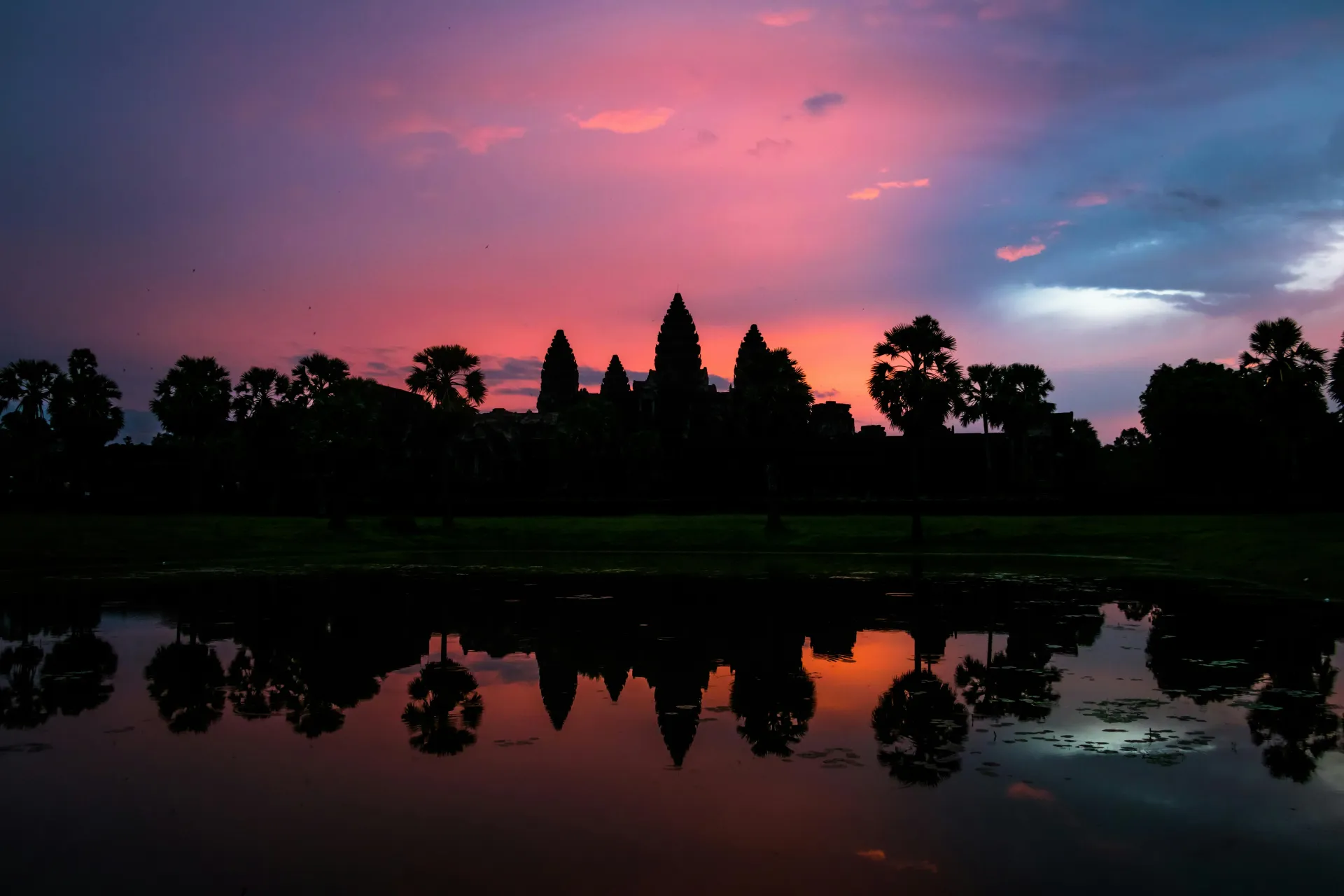
The world's largest religious monument deserves its fame. Built in the 12th century as a Hindu temple to Vishnu (later converted to Buddhism), Angkor Wat's five towers represent Mount Meru, home of the gods. The bas-reliefs—1,300 meters depicting Hindu epics—are among the world's great artistic achievements.
Visiting Tips:
- Sunrise is iconic but crowded; arrive before 5am for position
- The afternoon light on the front façade is actually better for photography
- Plan 3-4 hours to explore properly
- The third level (the highest) has limited daily access; go early
Bayon
The centerpiece of Angkor Thom, Bayon's 216 massive stone faces gaze serenely in every direction. The effect is hypnotic—wherever you walk, faces watch you. Built by Jayavarman VII (late 12th century), the temple represents the high point of Khmer Buddhist architecture.
Visiting Tips:
- Early morning light illuminates the eastern faces beautifully
- Climb to the upper terrace for face-to-face encounters
- Less crowded than Angkor Wat; allow 2 hours
Ta Prohm
The "Tomb Raider temple" was deliberately left partially unrestored—silk-cotton and strangler fig trees grow through the ruins, creating the romantic jungle-temple atmosphere that defines popular imagination of Angkor. It's beautiful and heavily visited.
Visiting Tips:
- Arrive early or late to avoid worst crowds
- The famous tree-wrapped doorways are heavily photographed; be patient
- Explore beyond the main circuit; quieter corners exist
Angkor Thom
The last great capital of the Khmer Empire is a city unto itself—9 square kilometers enclosed by walls and moat, entered through dramatic gates flanked by gods and demons. Bayon sits at the center, but don't miss the Terrace of the Elephants, Terrace of the Leper King, and the quiet corners most tourists skip.
Preah Khan
This massive temple-monastery complex served as temporary capital while Angkor Thom was being built. Larger than Ta Prohm but less visited, Preah Khan offers atmospheric corridors, intricate carvings, and relative solitude. The two-story building with round columns (unique to Angkor) suggests Greek influence.
Banteay Srei
The "Citadel of Women" lies 25 kilometers from the main complex but rewards the journey. Built from pink sandstone, the intricate carvings are Angkor's finest—the stone allowed details impossible in the softer sandstone of other temples. Small in scale, perfect in execution.
Visiting Tips:
- Combine with Banteay Samré and Kbal Spean (river carvings) for a full day
- Morning light is best for the pink stone
- Arrive before 9am or after 3pm to avoid tour groups
Beyond the Big Circuit
#### Pre Rup
A 10th-century temple-mountain with excellent sunset views and fewer crowds than Angkor Wat.
#### East Mebon
The island temple (now dry) features elephant sculptures and atmospheric decay.
#### Neak Pean
A unique Buddhist temple on an artificial island—circular pools surrounding a central sanctuary.
#### Beng Mealea
An hour from Siem Reap, this unrestored temple collapsed into jungle-shrouded rubble. No crowds, no railings—pure exploration for those who venture out.
#### Koh Ker
The remote former capital, 80 kilometers away, centers on a massive pyramid temple. Day-trippable for adventurous travelers.
Planning Your Temple Time
The Pass System
- 1-day pass - Good for quick visits; very rushed
- 3-day pass - The minimum for a satisfying experience; can be used over a week
- 7-day pass - For temple enthusiasts; can be used over a month
Beating the Crowds
- Sunrise at Angkor Wat - Arrive by 5am; the reflection pool fills quickly
- Off-peak hours - Most tours visit 8am-11am and 2pm-5pm; early morning and lunchtime are quieter
- Counter-programming - When crowds go to Angkor Wat, head to Preah Khan or the outer temples
- Season - Rainy season (June-October) has fewer visitors; mornings are usually dry
Getting Around the Temples
- Tuk-tuk - The classic option; hire for a full day ($15-25); driver waits at each temple
- Private car with driver - Air-conditioned, more comfortable ($40-60/day)
- Bicycle - For the fit and adventurous; flat terrain but hot; temples spread out
- E-bike - Increasingly popular compromise
- Guided tours - Worthwhile for historical context; book through hotels or reputable agencies
Suggested Temple Routes
#### One Day (Essential)
Angkor Wat sunrise → Angkor Thom (South Gate, Bayon, Terrace of Elephants) → Ta Prohm → return to Angkor Wat for afternoon exploration
#### Three Days (Comprehensive)
Day 1: Small Circuit - Angkor Wat (sunrise and morning), Ta Prohm, Banteay Kdei, Srah Srang
Day 2: Grand Circuit - Preah Khan, Neak Pean, Ta Som, East Mebon, Pre Rup (sunset)
Day 3: Angkor Thom (full morning), afternoon at Banteay Srei
#### Five+ Days (Deep Exploration)
Add: Beng Mealea, Kbal Spean, Roluos Group (oldest temples), Koh Ker, floating villages, repeat favorites at different times
Beyond the Temples
Tonlé Sap Lake
Southeast Asia's largest freshwater lake expands and contracts dramatically with the seasons. Floating villages—entire communities on the water—offer glimpses of a unique way of life. Kampong Khleang and Kampong Phluk are more authentic than the touristy Chong Kneas. Visit in the wet season (August-October) when water levels are highest.
Cambodian Landmine Museum
Founded by Aki Ra, a former child soldier who has spent decades removing landmines, this sobering museum explains Cambodia's landmine crisis and ongoing clearance efforts. A portion of admissions supports his organization.
Phare Circus
This remarkable social enterprise trains disadvantaged Cambodian youth in circus arts. Nightly shows combine acrobatics, theater, dance, and live music with distinctly Cambodian storytelling. Book ahead—it's deservedly popular.
Artisans Angkor
Watch skilled craftspeople create silk, lacquerware, and stone carvings using traditional techniques. The workshops employ hundreds of rural Cambodians; the adjacent shops sell their work.
Pub Street & Night Markets
Siem Reap's tourist center comes alive after dark. Pub Street is loud and backpacker-focused; the surrounding night markets sell souvenirs and street food. Not authentic Cambodia, but part of the Siem Reap experience.
Cooking Classes
Cambodian cuisine deserves more attention—fish amok, beef loc lac, fresh spring rolls. Cooking classes typically include market visits and hands-on preparation. Several excellent options operate daily.
Where to Eat
Khmer Cuisine
- Cuisine Wat Damnak - Cambodia's first restaurant on Asia's 50 Best list; tasting menus showcasing local ingredients
- Mahob Khmer - Elevated Cambodian classics in a beautiful setting
- Haven Training Restaurant - Social enterprise training former street youth; excellent food
- Chanrey Tree - Traditional dishes in a romantic garden setting
Casual & Local
- Pou Kitchen - Tapas-style Cambodian dishes, local favorite
- Genevieve's - Fair-trade café with outstanding breakfast
- Sister Srey Café - Social enterprise supporting women; good coffee and light meals
- Khmer Kitchen - Reliable, affordable Khmer food near Pub Street
Street Food & Markets
- Old Market area - Noodle soups, grilled meats, fruit shakes
- Psar Leu Market - Where locals shop; adventurous eating
- Night markets - Tourist-oriented but fun for snacking
International
- Malis - Celebrated Cambodian chef's sophisticated restaurant
- Embassy - Fine dining, international with local influences
- Jomno Street Food - Excellent Thai and Asian street food
Drinks & Nightlife
- Miss Wong - Shanghai-inspired cocktail bar, atmospheric
- Asana Old Wooden House - Traditional house, craft cocktails
- Laundry Bar - Rooftop hangout, local expat crowd
- Angkor What? Bar - The classic backpacker spot on Pub Street
Where to Stay
Luxury
Siem Reap punches above its weight in luxury accommodations.
- Amansara - The Aman resort, private temple tours, ultimate exclusivity
- Belmond La Résidence d'Angkor - Colonial elegance, exceptional service
- Park Hyatt - Polished, central, beautiful design
- Shinta Mani Angkor - Boutique luxury with social mission
Boutique & Mid-Range
- Viroth's Hotel - Design-forward, excellent value
- The Aviary Hotel - Stylish, bird-themed, great pool
- Templation - Modern Khmer design, central location
- Jaya House River Park - Peaceful riverside setting
Budget
- Onederz Hostel - Reliable backpacker option
- The Siem Reap Hostel - Social atmosphere, decent rooms
- Mad Monkey - Party hostel vibes
Location Considerations
- Central (near Pub Street/Old Market) - Walkable to restaurants and nightlife; can be noisy
- Sivutha Boulevard area - Quieter, slightly removed, still convenient
- Charles de Gaulle area - More upscale hotels, peaceful
- River Road - Pleasant setting, easy temple access
Practical Wisdom
Getting There
Siem Reap International Airport receives flights from major Asian hubs. Boats from Phnom Penh cross Tonlé Sap (seasonal, scenic, long). Buses connect major Cambodian cities.
Getting Around Town
- Tuk-tuk - Negotiate prices; $2-3 for short trips, arrange full-day temple transport separately
- Bicycle - Flat, manageable; many hotels provide free bikes
- Motorbike - Rentable but traffic is chaotic
- Walking - Central area is walkable; temples require transport
When to Visit
- November-February - Dry season, cooler temperatures, peak tourist season
- March-May - Hot and dry; temperatures can reach 40°C
- June-October - Rainy season; afternoon showers, fewer crowds, green landscapes, dramatic skies
Temple Tips
- Dress code - Cover shoulders and knees; enforced at Angkor Wat's upper level
- Sun protection - Hat, sunscreen, and water are essential
- Shoes - Comfortable and easy to remove (you'll be climbing)
- Start early - Beat heat and crowds; most temples open at 5:30am
- Pace yourself - Temple fatigue is real; quality over quantity
Money
Cambodian riel exists, but US dollars are the practical currency. ATMs dispense dollars. Small bills are essential—many vendors can't break large notes. Cards accepted at upscale establishments only.
Tipping
Not traditionally expected but appreciated. $1-2 for tuk-tuk drivers, 10% at restaurants. Guides expect tips ($10-20/day is appropriate).
Safety
Siem Reap is very safe. Petty theft exists; don't leave valuables unattended. Traffic is chaotic but manageable. Scams are minor (overcharging tourists, mostly).
Health
- Drink bottled water only
- Mosquito protection recommended (especially during rainy season)
- Basic medical facilities available; serious issues require Phnom Penh or Bangkok
- Travel insurance strongly recommended
Understanding Cambodia's History
The Khmer Empire
From the 9th to 15th centuries, the Khmer Empire was Southeast Asia's dominant power. Angkor was its heart—a city of perhaps one million people when London had 50,000. The temples we visit are the religious and ceremonial core of this vast civilization.
The Khmer Rouge
The genocide (1975-1979) killed an estimated 1.5-2 million Cambodians—nearly a quarter of the population. The trauma is recent; survivors are still living. Visit the Killing Fields and Tuol Sleng in Phnom Penh for essential context.
Modern Cambodia
Since the 1990s, Cambodia has rebuilt remarkably. Tourism drives Siem Reap's economy. Challenges remain—poverty, corruption, political restrictions—but progress is visible.
Suggested Itineraries
3 Days: Essential Siem Reap
Day 1: Angkor Wat sunrise, morning exploring the temple complex, afternoon rest, Pub Street evening
Day 2: Angkor Thom (Bayon, terraces), Ta Prohm, Pre Rup sunset
Day 3: Banteay Srei morning, floating village afternoon, Phare Circus evening
5 Days: Complete Experience
Add: Beng Mealea day trip, cooking class, Artisans Angkor, deeper temple exploration, Tonlé Sap at different time
7+ Days: Deep Exploration
Add: Koh Ker and Preah Vihear (remote temples), repeat favorite temples at different times, Kampong Phluk homestay, Battambang excursion
Responsible Tourism
Supporting Local
- Choose locally owned hotels and restaurants
- Buy from Artisans Angkor and similar social enterprises
- Tip appropriately—wages are low
- Use certified guides for fair employment
Temple Preservation
- Stay on marked paths
- Don't touch carvings or climb on structures
- Take nothing but photos
- Report damage or inappropriate behavior
Orphanage Tourism
Avoid "orphanage visits"—this industry often harms children by keeping them in institutions for tourist revenue when many have living families. Support legitimate organizations instead.
Final Thoughts
Angkor demands humility. Standing before temples that took decades to build, carved with devotion now almost incomprehensible, you feel the weight of human achievement and the passage of time. The jungle that consumed these monuments now frames them; the faces of Bayon gaze with something like compassion or amusement at the tourists swarming below.
But Siem Reap is more than Angkor. The town itself has grown into something worth experiencing—excellent food, warm hospitality, the resilience of a nation rebuilding from tragedy. The circus performers at Phare, the artisans preserving traditional crafts, the guides whose grandparents survived the Khmer Rouge—they're part of the story too.
Come for the temples. They're as extraordinary as advertised—perhaps more so, because no photograph captures the scale, the atmosphere, the morning light filtering through jungle canopy onto carved stone. But don't rush through. Let Siem Reap slow you down. Wake early, explore deeply, rest at midday, and let the faces of Bayon ask their silent questions. You won't leave with answers, but you'll leave changed.
Ready to experience Siem Reap? Our Cambodia specialists can arrange private temple tours, ensure access to the best sunrise spots, and help you explore this extraordinary destination beyond the crowds.