Peru: Where Ancient Meets Extraordinary
Peru is South America's crown jewel—home to Machu Picchu, the Sacred Valley, the Amazon rainforest, and Lima's world-famous food scene. Few destinations offer such dramatic diversity: desert coastlines, Andean peaks over 6,000 meters, and jungle lowlands within one country. The Inca legacy lives on in the descendants who farm the same terraces their ancestors built, speak Quechua, and maintain traditions spanning millennia1.
Understanding Peru's Geography
Three Distinct Worlds
The Coast (Costa): A 2,500-kilometer desert strip along the Pacific, home to Lima (population 10 million), ancient pyramids, and world-class surfing. Less than 10% of Peru's population lives here despite it containing the capital2.
The Highlands (Sierra): The Andes dominate central Peru, with peaks over 6,000 meters, the Sacred Valley, Cusco, and Lake Titicaca. This is Inca heartland, where indigenous traditions remain strongest.
The Jungle (Selva): The Amazon basin covers 60% of Peru's territory but holds only 5% of its population. Some of Earth's most biodiverse ecosystems await in the lowland rainforest3.
Best Time to Visit
Dry Season (May-October)
- Best for Machu Picchu and Andean trekking
- Clear skies, cold nights in highlands
- Peak tourist season June-August
- Book Inca Trail permits 6+ months ahead
Wet Season (November-April)
- Better for Amazon (higher water levels, easier wildlife spotting)
- Fewer tourists, lower prices
- Afternoon rains in highlands (mornings often clear)
- Inca Trail closes February for maintenance
- Greener landscapes
Lima/Coast: Year-round destination. Winter (June-September) brings persistent gray fog (garúa); summer (December-March) offers sunny skies.
Machu Picchu: The Lost City
Why It Matters
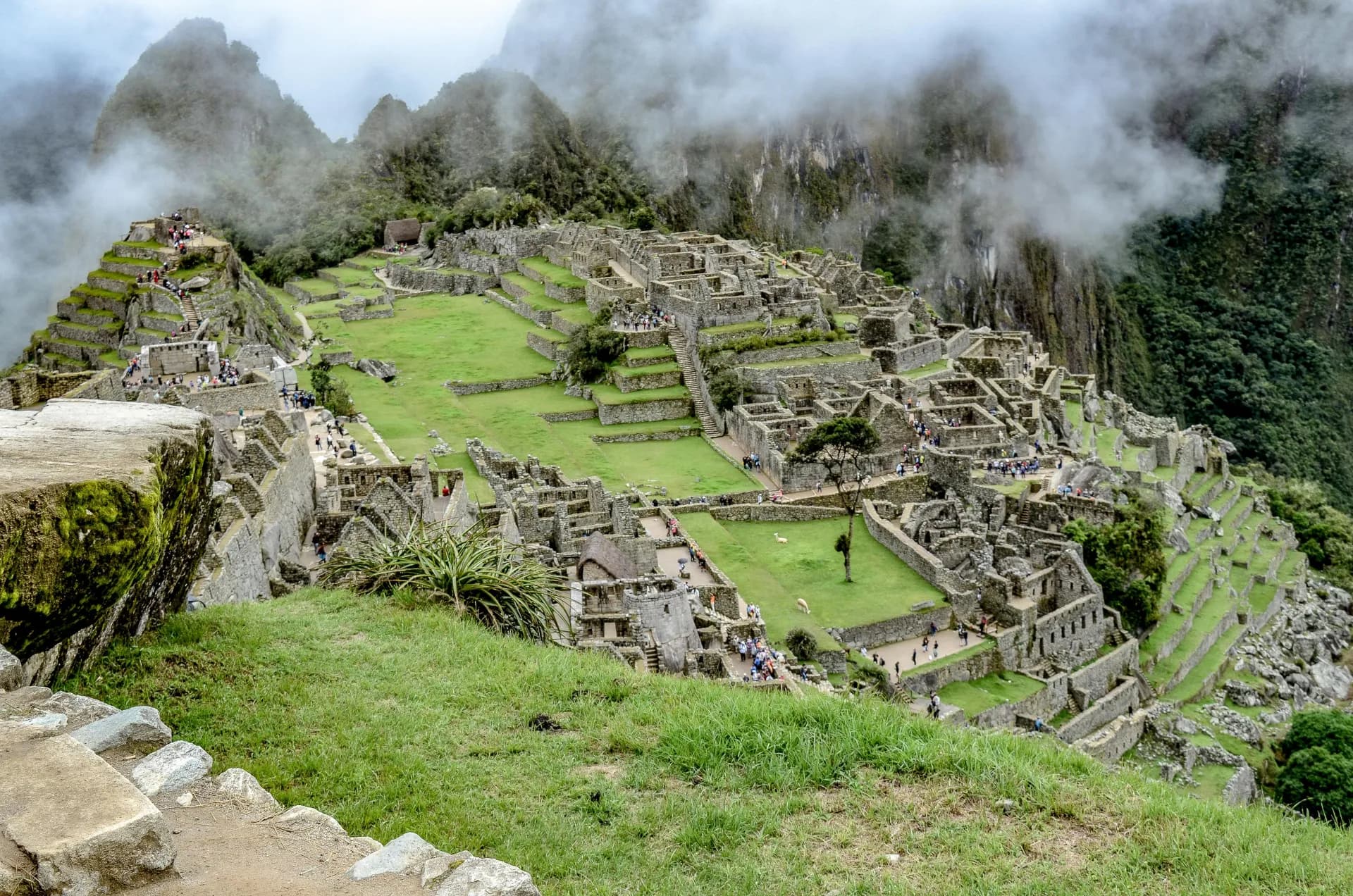
This 15th-century Inca citadel, perched at 2,430 meters in the cloud forest, remained unknown to Spanish conquistadors and was "rediscovered" by American historian Hiram Bingham in 1911. UNESCO inscribed it in 1983, and it was voted one of the New Seven Wonders of the World in 20074.
The site's purpose remains debated—royal estate, religious sanctuary, or astronomical observatory. The Incas built it in the mid-1400s and abandoned it barely a century later as the empire collapsed. Its remote location kept it hidden for 400 years.
Getting There
Classic Inca Trail (4 days):
The legendary trek follows ancient Inca roads through cloud forest and mountain passes, ending at the Sun Gate for a dramatic sunrise arrival. Only 500 people (including guides and porters) are permitted daily, so book 6+ months ahead through licensed operators5.
Alternative Treks:
- Salkantay Trek (5 days): More dramatic scenery, passes 4,600m, no permits needed
- Lares Trek (4 days): Cultural focus, interaction with Andean communities
- Choquequirao Trek (4-8 days): Remote "sister city" of Machu Picchu, far fewer tourists
By Train:
PeruRail and Inca Rail operate scenic journeys from Ollantaytambo or Poroy to Aguas Calientes6. Day trips from Cusco are possible but long (14-16 hours total). The Hiram Bingham luxury train offers onboard dining and guided tours.
Essential Tips
- Acclimatize in Cusco first (Machu Picchu is actually lower at 2,430m vs Cusco's 3,400m)
- Book entrance tickets months ahead—daily limits apply7
- Huayna Picchu and Machu Picchu Mountain require separate tickets (book early)
- Arrive at opening (6 AM) or late afternoon for smaller crowds
- Guides recommended—understanding the site's history dramatically enhances the experience
Cusco & The Sacred Valley
Cusco: Navel of the World
The Incas called Cusco "Qosqo"—navel of the world. It was their imperial capital until Spanish conquistadors arrived in 1533, building their colonial city atop Inca foundations. Today, massive Inca stone walls support Spanish churches, creating a unique architectural fusion8.
Must-See:
- Plaza de Armas: The magnificent main square, flanked by colonial arcades and the Cathedral
- Qorikancha: The Inca Temple of the Sun, once covered in gold, now topped by Santo Domingo church9
- San Pedro Market: Local food, fresh juices, and crafts
- Sacsayhuamán: Massive Inca fortress with walls of stones weighing up to 200 tons—how they moved them remains a mystery
- San Blas: Artisan neighborhood with winding streets and craft workshops
The Sacred Valley (Valle Sagrado)
The fertile valley between Cusco and Machu Picchu was agricultural heartland for the Incas. Sites include:
Pisac: Sunday market draws villagers in traditional dress; Inca ruins overlook the town
Ollantaytambo: A living Inca town where residents still use ancient irrigation systems and live in original stone houses. The fortress above rivals Machu Picchu10
Moray: Circular agricultural terraces, possibly an Inca agricultural laboratory for testing crops at different microclimates
Maras Salt Mines: Thousands of salt pools cascading down the hillside, farmed since Inca times
Chinchero: Famous for weaving demonstrations and the Sunday market
Altitude Awareness
Cusco sits at 3,400 meters—altitude sickness (soroche) is real. Tips:
- Take it easy for 24-48 hours on arrival
- Drink coca tea (mate de coca)—locals swear by it
- Stay hydrated
- Consider staying in the Sacred Valley first (lower elevation)
- Diamox (acetazolamide) helps some travelers—consult a doctor
Lima: World Food Capital
Why Lima Matters
Lima has been repeatedly named the World's Best Food Destination at the World Travel Awards11. The cuisine fuses indigenous ingredients with Spanish, African, Chinese, and Japanese influences into something uniquely Peruvian. Three of the World's 50 Best Restaurants are here12.
Must-Try Peruvian Dishes
Ceviche: Fresh raw fish "cooked" in lime juice with onions, chili, and cilantro—Peru's national dish. Eat it for lunch (fish is freshest)
Lomo Saltado: Stir-fried beef with tomatoes, onions, and french fries over rice—Chinese influence (chifa)
Anticuchos: Grilled beef heart skewers, a street food specialty
Causa: Layered mashed potato with avocado, chicken, or seafood
Ají de Gallina: Creamy, spicy shredded chicken stew
Picarones: Sweet potato and squash donuts with molasses syrup
Pisco Sour: The national cocktail—pisco brandy, lime, sugar, egg white, bitters
Lima's Top Restaurants
Central: Currently #1 in South America and #6 in the world. Chef Virgilio Martínez's "altitude" menu explores ecosystems from sea level to 4,500 meters13
Maido: Japanese-Peruvian (Nikkei) fusion, #7 in the world14
Astrid y Gastón: Gastón Acurio's flagship, the restaurant that launched Peru's culinary revolution15
Isolina: Traditional tavern food (criolla) in Barranco
La Mar: Ceviche institution by Gastón Acurio
Lima Neighborhoods
Miraflores: Tourist hub with Pacific views, shopping, and easy access to restaurants
Barranco: Bohemian quarter with street art, nightlife, and the romantic Puente de los Suspiros
Historic Center: Colonial architecture, museums, and the Plaza de Armas (UNESCO World Heritage)
San Isidro: Upscale residential with the archaeological site Huaca Huallamarca
The Amazon
Peru contains 60% of the Amazon within its borders, and three entry points offer different experiences:
Access Points
Puerto Maldonado: Most accessible, budget-friendly, served by daily flights from Cusco. Lodges along the Tambopata and Madre de Dios rivers offer excellent wildlife16.
Iquitos: The world's largest city unreachable by road. Fly-in only, deep Amazon experience, access to the Pacaya-Samiria National Reserve
Manu National Park: The most biodiverse place on Earth by some measures, expensive and time-consuming but unmatched for wildlife17
What You'll Experience
- Wildlife: macaws at clay licks, howler monkeys, caimans, pink river dolphins, giant otters
- Night walks with tarantulas, tree frogs, and nocturnal creatures
- Canopy walkways 30 meters above the forest floor
- Indigenous community visits
- Piranha fishing
- Boat journeys through flooded forests
Practical Tips
- Most lodges offer 3-5 day packages, all-inclusive with guides
- Quality varies dramatically—research operators carefully
- Yellow fever vaccination required for some areas
- Wet season (November-April) actually better for wildlife (higher water brings animals closer to lodges)
Lake Titicaca
The Highest Navigable Lake
At 3,812 meters, Lake Titicaca is the highest navigable lake in the world, sacred to the Incas who believed their creator god Viracocha emerged from its waters. The lake straddles Peru and Bolivia18.
Island Experiences
Uros Floating Islands: Man-made islands of totora reeds, home to communities who've maintained this lifestyle for centuries. Touristy but fascinating—the islands require constant rebuilding as reeds decompose.
Taquile Island: Known for textile traditions so significant they're UNESCO-recognized. Men knit distinctive caps that indicate marital status19.
Amantani Island: Less visited, with homestay opportunities in local families' homes—a genuine cultural exchange.
Puno: The gateway city on the shore has limited appeal itself but hosts spectacular festivals, particularly the Candelaria celebration in February.
Rainbow Mountain (Vinicunca)
The Instagram Star
Vinicunca's colorful striped slopes at 5,200 meters emerged only recently as glaciers retreated, revealing mineral deposits that create the rainbow effect. It's become wildly popular—expect crowds unless you go very early20.
Tips
- Only attempt after full acclimatization (spend 3-4 days in Cusco first)
- Tours leave Cusco at 4-5 AM, return by late afternoon
- Bring warm layers—it's freezing at 5,200m
- Horses available for the final steep section
- Palccoyo is an alternative rainbow mountain with fewer crowds
Practical Information
Visa
Most nationalities receive visa-free entry for 90-183 days. Check current requirements.
Currency
Peruvian Sol (PEN), approximately 3.7 PEN = $1 USD. US dollars accepted in tourist areas. ATMs widespread in cities.
Health Considerations
- Altitude sickness is the primary concern—acclimatize properly
- Yellow fever vaccination required/recommended for Amazon visits
- Traveler's diarrhea common—stick to bottled water, eat where locals eat
- Travel insurance essential
Transportation
Flights: LATAM and budget carriers connect Lima with Cusco, Arequipa, Iquitos, and Puerto Maldonado21
Buses: Cruz del Sur and Peru Hop offer comfortable long-distance services with reclining seats22
Trains: Tourist trains serve the Sacred Valley and scenic routes to Titicaca
Costs
Peru offers excellent value:
- Budget: $40-60/day (hostels, local restaurants)
- Mid-range: $80-150/day (3-4 star hotels, guided tours)
- Luxury: $250+/day (boutique lodges, private guides)
Suggested Itineraries
Classic Peru (10-12 Days)
- Lima (2-3 days): Food scene, historic center
- Cusco (2 days): Acclimatize, explore city
- Sacred Valley (1-2 days): Ollantaytambo, Pisac, Maras/Moray
- Machu Picchu (1-2 days)
- Optional: Amazon (3-4 days from Cusco)
Peru Explorer (2-3 Weeks)
Add: Arequipa, Colca Canyon (condor watching), Lake Titicaca, Rainbow Mountain, and extended Amazon time
Final Thoughts
Peru humbles and amazes in equal measure. Standing before Machu Picchu at sunrise, floating on Lake Titicaca, or tasting ceviche at a world-class Lima restaurant—these experiences stay with you. The altitude challenges, the distances test patience, but Peru rewards the effort tenfold. Come hungry, come curious, come ready to be moved.
Ready for Peru? Our South America specialists can design an itinerary from Machu Picchu to Amazon adventures.
---
Peruvian Culture
Indigenous Heritage
Peru's indigenous cultures remain vibrant:
Quechua: Still spoken by millions, Quechua was the language of the Inca Empire. Many mountain communities maintain Quechua as their first language.
Aymara: Indigenous people around Lake Titicaca preserve distinct traditions and language.
Amazon tribes: Dozens of indigenous groups maintain traditional lifestyles in Peru's Amazon rainforest.
Traditional Practices
Coca leaf: Sacred to Andean peoples for millennia, coca leaves are legally used in Peru for tea, chewing, and altitude sickness. Distinct from processed cocaine.
Shamanism: Traditional healers (curanderos) remain important in many communities. Ayahuasca ceremonies draw visitors seeking spiritual experiences—approach with research and respect.
Textiles: Andean weaving traditions continue in communities like Chinchero, where natural dyes and backstrap looms produce stunning textiles.
Festivals
Inti Raymi (June 24): Festival of the Sun in Cusco recreates Inca celebrations of the winter solstice with elaborate ceremonies at Sacsayhuamán.
Señor de los Milagros (October): Lima's massive purple-robed procession honors the "Lord of Miracles."
Carnival (February): Water fights and celebrations throughout the country, especially lively in Cajamarca.
Sources
1. UNESCO - Peru World Heritage Sites
2. Britannica - Peru Geography
3. World Wildlife Fund - Amazon
6. PeruRail
7. Machu Picchu Official Tickets
10. Peru Travel - Ollantaytambo
12. World's 50 Best Restaurants
14. Maido Restaurant
15. Astrid y Gastón
17. UNESCO - Manu National Park
18. Britannica - Lake Titicaca
19. UNESCO - Taquile Textile Art
20. Peru Travel - Rainbow Mountain
21. LATAM Airlines