Morocco: Where Africa, Arabia, and Europe Converge
Morocco occupies a unique position at the northwest corner of Africa, where the Atlas Mountains meet the Sahara Desert and ancient medinas buzz with life unchanged for centuries. This kingdom offers sensory overload in the best way—the call to prayer echoing over Marrakech's Djemaa el-Fna, the blue-washed walls of Chefchaouen, the endless sand dunes of Erg Chebbi. It's Africa's most accessible gateway, Europe's exotic neighbor, and a destination that rewards travelers willing to embrace controlled chaos1.
Understanding Morocco
Why Morocco Captivates
- Sensory immersion in ancient medinas
- Stunning geographic diversity (coast, mountains, desert)
- Exceptional handcrafts and souks
- Rich imperial history in four ancient capitals
- Gateway to the Sahara Desert
- Accessible from Europe (2-3 hour flights)
- Excellent value for accommodation and food
- Unique blend of Arab, Berber, and European influences
The Geography
Imperial Cities: Marrakech, Fes, Meknes, Rabat—the historic capitals with medinas, palaces, and monuments.
Atlas Mountains: Three ranges (High, Middle, Anti-Atlas) crossing the country, home to Berber villages and hiking.
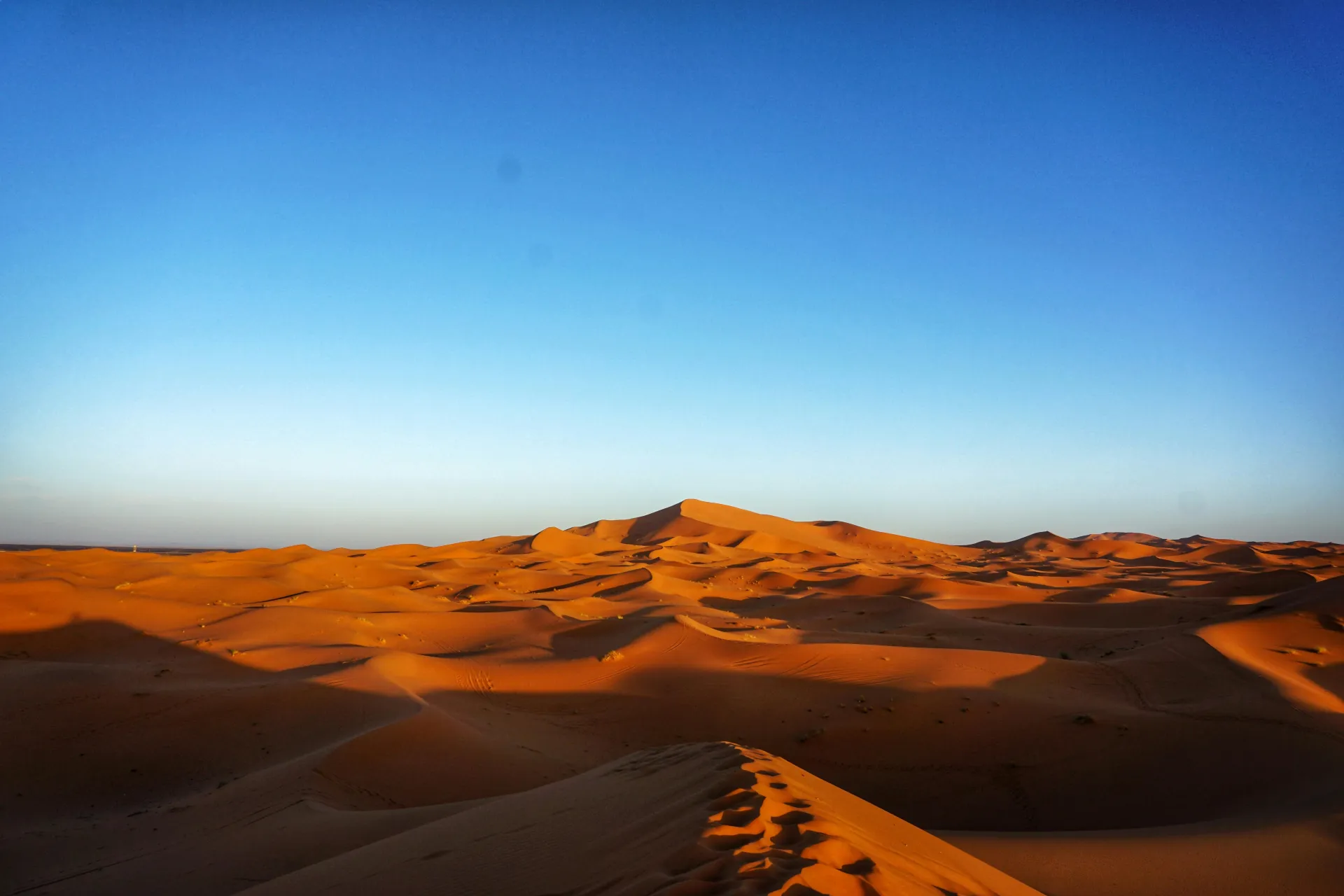
Sahara Desert: The iconic dunes of Erg Chebbi and Erg Chigaga in the southeast.
Atlantic Coast: Casablanca, Essaouira, Agadir—beaches and maritime culture.
Mediterranean Coast: Tangier and the blue town of Chefchaouen2.
Best Time to Visit
Spring (March-May)
- Ideal temperatures throughout the country
- Wildflowers in the Atlas
- Comfortable for desert travel
- Peak season but not overwhelming
Fall (September-November)
- Similar to spring—excellent weather
- Date harvest in Sahara oases
- Festival season
Summer (June-August)
- Extreme heat inland (40°C+ in Marrakech and desert)
- Coastal cities more comfortable
- Low season in south (good deals, empty riads)
Winter (December-February)
- Mild in coastal and desert areas
- Snow in the Atlas (skiing possible)
- Short days
- Good for Marrakech, Fes
Marrakech: The Red City
Djemaa el-Fna
Morocco's most famous square transforms throughout the day: orange juice vendors in morning, snake charmers and musicians by afternoon, open-air food stalls and storytellers at night. UNESCO-recognized as a "Masterpiece of Oral and Intangible Heritage"3.
Experience it:
- Watch from cafe terraces above (Cafe de France, Grand Balcon)
- Eat at the food stalls (numbered stalls help identify favorites)
- Arrive at sunset for the transformation
- Keep small bills ready for performers
The Medina
Marrakech's old city is a UNESCO World Heritage labyrinth4:
Key sites:
- Koutoubia Mosque: 12th-century landmark visible across the city. Non-Muslims can't enter but the gardens and architecture impress externally.
- Bahia Palace: 19th-century palace with stunning tilework and painted ceilings
- Saadian Tombs: Rediscovered 1917, royal tombs sealed for centuries
- Ben Youssef Madrasa: Former Islamic college with intricate decoration
- El Badi Palace: Ruined 16th-century palace, now atmospheric courtyard
Navigating: Hire a guide for the first day, then explore independently. Phones don't always work well for GPS in the medina.
The Souks
Marrakech's markets are organized by trade5:
- Souk Semmarine: Main street, general goods
- Souk des Teinturiers: Dyers' souk with colorful hanging threads
- Souk Haddadine: Metalworkers
- Souk Cherratine: Leather
- Spice Square: Aromatic spices and traditional remedies
Bargaining: Expected everywhere. Start at 30-50% of asking price; meet somewhere in the middle. Walk away if needed.
Riads
Traditional courtyard houses converted to guesthouses offer the quintessential Marrakech stay:
The experience: Windowless exterior opens to interior garden with fountain. Rooftop terraces for breakfast and evening drinks.
Best areas: Central medina near Djemaa el-Fna for atmosphere; Kasbah for quiet; Mouassine for upscale.
Day Trips from Marrakech
Atlas Mountains (1-2 hours): Berber villages, trekking, waterfalls (Ouzoud Falls 3 hours)
Essaouira (2.5 hours): Coastal escape, windsurfing, Game of Thrones location
Ourika Valley (1 hour): Waterfall hikes, Berber villages, cooler temperatures
Fes: The Medieval Marvel
The World's Largest Car-Free Urban Area
Fes el-Bali (Old Fes) is the world's most complete medieval city—9,000+ winding alleys where donkeys remain the primary transport. Founded in the 9th century, it feels genuinely unchanged6.
Essential Fes
The Medina experience:
- Hire a guide for the first exploration (genuinely needed)
- Chouara Tanneries: Ancient leather dyeing pits, viewed from terraces above. Buy mint to hold under your nose.
- Al-Qarawiyyin Mosque: World's oldest continually operating university (founded 859 CE). Non-Muslims can't enter but can view courtyard.
- Bou Inania Madrasa: Stunning 14th-century religious school, non-Muslim entry allowed
Fes el-Jdid (New Fes): Royal Palace (exterior only), Jewish Quarter (Mellah), calmer streets.
Fes vs. Marrakech
Both have UNESCO medinas, but:
- Fes feels more authentic, less touristy
- Marrakech has better nightlife, more international restaurants
- Fes is more conservative, more challenging to navigate
- Marrakech is easier first-time destination
The Sahara Desert
Getting There
Most travelers access the desert via 2-3 day tours from Marrakech or Fes:
Route from Marrakech: Cross High Atlas via Tizi n'Tichka pass, through Aït Benhaddou, Ouarzazate, Dades/Todra Gorges, to Merzouga/Erg Chebbi.
Route from Fes: Through Middle Atlas, Ziz Valley, to Merzouga.
Distance: 9-10 hours driving each way—fly-in options save time7.
The Dune Experiences
Erg Chebbi (Merzouga): Larger dunes (up to 150 meters), more accessible, more touristed. Orange-red dunes.
Erg Chigaga (M'Hamid): More remote, fewer visitors, requires longer journey. Wilder experience.
What's included:
- Camel trek into dunes (1-1.5 hours)
- Desert camp (from basic Berber tents to luxury glamping)
- Sunset and sunrise viewing
- Traditional drumming and dinner
Desert Camp Options
Basic: Simple Berber tents, shared facilities, communal meals. Authentic but minimal comfort.
Standard: Private tents, proper beds, shared bathrooms. Good balance.
Luxury: Furnished tents with en-suite bathrooms, fine dining, pool sometimes. Prices multiply.
Chefchaouen: The Blue Pearl
Why It's Blue
This mountain town famously washes every surface in shades of blue. The tradition may have started with Jewish refugees in the 1930s (blue symbolizes sky/heaven) or simply evolved as insect repellent. Either way, the photogenic streets draw thousands8.
Visiting Chefchaouen
Getting there: 4 hours from Fes, 3 hours from Tangier. Usually combined with a Tangier-Fes route.
What to do:
- Wander the blue medina (photography paradise)
- Hike to the Spanish Mosque for sunset views
- Visit the kasbah museum
- Explore waterfalls outside town
- Shop for woven blankets and leather
Stay: One night minimum to catch morning and evening light.
Practical Information
Getting There & Around
Flights: Marrakech and Casablanca have most international connections. Fes and Tangier have limited direct flights from Europe.
Trains: ONCF runs reliable service between Tangier, Rabat, Casablanca, Fes, and Marrakech9.
Buses: CTM and Supratours for comfortable longer routes. Local buses cheap but slow.
Driving: Possible but challenging in cities. Useful for desert and mountain routes.
Grands taxis: Shared long-distance taxis between cities. Cheap, frequent.
Costs
Morocco offers excellent value:
- Budget: $30-50/day (basic riads, street food, buses)
- Mid-range: $80-150/day (nice riads, restaurants, some guides)
- Luxury: $250+/day (luxury riads, private guides, desert glamping)
Currency
Moroccan Dirham (MAD). Approximately 10 MAD = $1 USD. Cash preferred in medinas. ATMs widely available.
Cultural Considerations
Dress: Cover shoulders and knees. Women should consider headscarves in conservative areas (helpful in medinas, unnecessary in resorts).
Ramadan: Muslim holy month with daytime fasting. Tourist restaurants operate, but some businesses have limited hours. Respectful visitors don't eat/drink in public during daylight.
Harassment: Touts and persistent guides are common in tourist areas. Firm, polite refusals work. Ignore fake "the road is closed" or "I remember you" ploys.
Mosque access: Non-Muslims cannot enter mosques (except Hassan II in Casablanca).
Safety
Morocco is generally safe for tourists. Petty crime and scams exist but violent crime is rare. Keep alert in crowded medinas. Solo female travelers should expect more attention but serious incidents are uncommon10.
What to Buy
Leather: Marrakech and Fes famous for bags, jackets, babouche slippers
Rugs: Berber carpets, kilims—buy from cooperatives for fair trade
Pottery: Fes and Safi specialize in ceramics
Argan oil: Cosmetic and culinary—buy from women's cooperatives
Metalwork: Lanterns, trays, teapots
Textiles: Blankets, scarves, embroidery
Sample Itineraries
Classic Morocco (10 Days)
- Marrakech (3 days): Medina, souks, day trip to Atlas or Essaouira
- Desert tour (2-3 days): Via Aït Benhaddou, Todra Gorge, to Merzouga
- Fes (3 days): Medina exploration, day trip options
- Chefchaouen (1-2 days): Blue city escape
Imperial Cities (7 Days)
- Casablanca (1 day): Hassan II Mosque, arrival
- Rabat (1 day): Kasbah des Oudaias, Hassan Tower
- Meknes (1 day): Bab Mansour, medina
- Fes (2 days): Full medina exploration
- Marrakech (2 days): Highlights and souks
Desert Focus (5 Days)
- Marrakech (1 day)
- Desert tour (3 days): Via southern route to Merzouga, overnight camp
- Return to Marrakech (1 day)
Final Thoughts
Morocco is not an easy destination—the persistent vendors, the navigation challenges, the culture shock. But it rewards persistence with experiences impossible to find elsewhere: getting lost in a 1,000-year-old medina, sleeping under stars in the Sahara, bargaining over mint tea, watching sunset from an Atlas pass. It's Africa without safari, Arabia without visa complications, adventure with good food. Come prepared for sensory overload and the occasional frustration. Leave transformed by one of the world's most fascinating cultures.
Ready for Morocco? Our North Africa specialists can design your perfect journey from imperial cities to desert camps.
---
Moroccan Culture & Traditions
The Islamic Heritage
Morocco is a Muslim country with deep Islamic traditions woven into daily life:
Prayer times: The call to prayer (adhan) sounds five times daily from mosques throughout the country. Life pauses briefly as many answer the call.
Mosque architecture: Some of the world's most beautiful mosques grace Moroccan cities. Non-Muslims cannot enter most mosques (Hassan II Mosque in Casablanca is the notable exception).
Islamic calendar: Ramadan and other religious observances shape the rhythm of Moroccan life. During Ramadan, fasting from dawn to sunset means many restaurants close during daylight hours.
Berber Heritage
The indigenous Berber (Amazigh) people have inhabited North Africa for thousands of years:
Population: Approximately 40% of Moroccans identify as Berber, with distinct languages and cultural traditions preserved especially in mountain and desert regions.
Crafts: Berber rugs, jewelry, and pottery feature distinctive geometric patterns and natural dyes.
Music: Traditional Berber music differs significantly from Arab-Andalusian traditions and remains vital in rural communities.
Daily Life & Customs
Hammam culture: Traditional public bathhouses remain central to Moroccan hygiene and social life. Tourist-friendly hammams offer scrubbing and massage treatments; authentic neighborhood hammams provide cultural immersion.
Mint tea ceremony: "Moroccan whiskey" (sweetened mint tea) is served throughout the day. Refusing tea can offend; accept graciously even if you can't finish it.
Hospitality: Moroccans take hospitality seriously. Invitations to homes include generous food offerings; leaving food shows appreciation (empty plates suggest insufficient portions).
Adventure Beyond Cities
Atlas Trekking
The High Atlas Mountains offer serious trekking opportunities:
Toubkal: North Africa's highest peak (4,167m) is climbable by fit hikers without technical skills. Two-day ascents from Imlil are popular.
Berber villages: Multi-day treks connect remote villages where traditional life continues largely unchanged.
Best seasons: April-May and September-October offer optimal trekking conditions.
Atlantic Coast
Morocco's 3,000 km Atlantic coastline offers surf, seafood, and seaside relaxation:
Essaouira: Windy, artistic port city with excellent seafood and Game of Thrones history (Astapor).
Taghazout: Growing surf destination north of Agadir with consistent waves and laid-back atmosphere.
Dakhla: Remote southern kiteboarding paradise on the edge of Western Sahara.
Additional Practical Tips
Language
Arabic: Darija (Moroccan Arabic) is spoken daily. Standard Arabic used in formal contexts.
French: Widely spoken, especially in cities and tourism. Colonial legacy means French is often the language of business and education.
Berber languages: Tamazight, Tashelhit, and Tarifit spoken in different regions.
English: Growing in tourism areas, less common outside major cities.
Health Considerations
Food safety: Exercise normal caution with street food. Drink bottled water. Fresh orange juice is generally safe.
Stomach issues: Common for first-time visitors. Bring remedies and let your system adjust gradually.
Sun: Strong throughout the year. Desert sun is particularly intense.