Mexico: A World Within a Country
Mexico defies stereotypes at every turn. This vast country offers ancient Mayan pyramids, Spanish colonial cities frozen in time, world-class beaches, and a food culture so significant UNESCO inscribed it as Intangible Cultural Heritage1. From the sophisticated metropolis of Mexico City to the Caribbean turquoise of the Riviera Maya, Mexico delivers the complete package for every type of traveler.
Understanding Mexico's Diversity
Why Mexico Captivates
- Incredible cultural depth spanning 3,000+ years
- UNESCO-recognized food culture with regional distinctions
- Ancient civilizations (Maya, Aztec, Olmec, Zapotec)
- Landscapes from desert to jungle to mountains to beach
- Affordable luxury and exceptional value
- Easy access from US/Canada (2-4 hour flights)
- Warm, welcoming people who embrace visitors
The Major Regions
Central Mexico: Mexico City, colonial silver cities (San Miguel, Guanajuato), Puebla
Yucatán Peninsula: Cancún, Riviera Maya, Mérida, Mayan ruins
Baja California: Los Cabos, wine country, desert landscapes
Pacific Coast: Puerto Vallarta, Sayulita, Mazatlán
Oaxaca: Indigenous culture, mezcal, beaches, Monte Albán
Chiapas: Mayan heritage, jungles, indigenous communities
Best Time to Visit
Dry Season (November-April)
- Best overall weather throughout the country
- Peak tourist season, especially December-January
- Perfect beach weather on both coasts
- Ideal for outdoor activities and ruins
Rainy Season (May-October)
- Afternoon showers (often brief, followed by sun)
- Fewer tourists, significantly lower prices
- Hurricane risk on Caribbean coast (August-October)
- Lush green landscapes, fewer crowds at ruins
Mexico City & Central Highlands:
- Year-round destination due to mild altitude climate (2,240m)
- Best: March-May (jacaranda trees bloom purple throughout the city)
- Avoid: Rainy season afternoons (June-September) can disrupt plans
Mexico City: One of the World's Great Cities
Why CDMX Deserves Your Time
Mexico City (CDMX) is Latin America's largest metropolis—9 million in the city proper, 21 million in the metro area. Built atop the Aztec capital Tenochtitlan, it offers 170+ museums, world-class dining, vibrant neighborhoods, and history layered upon history2. Budget at least 4-5 days.
The Historic Center (Centro Histórico)
UNESCO-listed since 1987, the centro holds over 1,500 historic buildings3:
Zócalo: One of the world's largest public squares, anchored by the Metropolitan Cathedral (built over 200 years, mixing architectural styles) and the National Palace.
Templo Mayor: The main Aztec temple, discovered only in 1978 during subway construction. The excellent museum displays artifacts including the massive moon goddess Coyolxauhqui stone4.
National Palace: Diego Rivera's epic murals depicting Mexico's history wrap the staircase and corridors. Free entry, passport required.
Palacio de Bellas Artes: Art Deco exterior, Art Nouveau interior, and murals by Rivera, Orozco, and Siqueiros. Don't miss the Tiffany glass curtain depicting the Valley of Mexico.
Museums Not to Miss
National Museum of Anthropology: Perhaps the world's finest archaeology museum. The Aztec Sun Stone and Mayan artifacts require hours to appreciate. Go early, plan half a day5.
Frida Kahlo Museum (Casa Azul): The blue house where Frida was born, lived, and died. Book tickets in advance—it sells out6.
Soumaya Museum: Free museum funded by Carlos Slim with an impressive Rodin collection and European art7.
MUAC and JUMEX: Contemporary art in stunning buildings
Neighborhoods to Explore
Roma & Condesa: Tree-lined streets, Art Deco buildings, hip cafés, excellent restaurants, vibrant nightlife. The epicenter of CDMX's food scene.
Coyoacán: Bohemian village atmosphere, Frida's house, markets, Diego Rivera's studio (Anahuacalli Museum).
Polanco: Upscale shopping, Anthropology Museum, high-end dining.
San Ángel: Saturday bazaar (art market), colonial architecture, quiet streets.
Mexico City Food
CDMX is a taco city. Don't miss:
- Tacos al pastor: Pork cooked on vertical spit (Lebanese shawarma influence), served with pineapple
- Tacos de canasta: "Basket tacos" steamed until soft
- Chilaquiles: Breakfast essential—tortilla chips in salsa with cream and cheese
- Pozole: Hominy soup with pork, served with fixings
- Markets: Mercado Roma (foodie), San Juan (exotic ingredients)
The Yucatán Peninsula
The Riviera Maya
Cancún: The gateway. The Hotel Zone offers pristine Caribbean beaches and all-inclusive resorts. Downtown Cancún (El Centro) has local flavor and lower prices. Best as a day-trip base for ruins and cenotes8.
Playa del Carmen: More character than Cancún. The pedestrian 5th Avenue (Quinta Avenida) runs for kilometers with shops, restaurants, and bars. Ferry access to Cozumel for diving.
Tulum: Beach meets archaeology. Clifftop Mayan ruins overlook Caribbean waters—Mexico's most photographed archaeological site. The beach zone has become bohemian-chic (and expensive), while Tulum Pueblo retains Mexican authenticity. Increasingly developed and Instagram-crowded9.
Archaeological Wonders
Chichén Itzá: One of the New Seven Wonders of the World. El Castillo pyramid demonstrates sophisticated Mayan astronomy—during spring and fall equinoxes, shadows create a serpent descending the stairs. Arrive at opening (8 AM) to beat crowds and heat. Day-trippable from Cancún or Mérida10.
Cobá: Deep in the jungle, Cobá's Nohoch Mul pyramid (42 meters) remains climbable—increasingly rare in Mexico. Rent bikes to explore the scattered structures. Far fewer visitors than other sites.
Uxmal: The finest example of Puuc style architecture, with the unusual oval-shaped Pyramid of the Magician. Near Mérida, often combined with the Ruta Puuc of smaller sites11.
Ek Balam: Recent excavation revealed stunning preserved stucco sculptures. Climbable pyramid with views over jungle canopy.
Cenotes: Sacred Swimming Holes
The Yucatán's limestone peninsula is honeycombed with cenotes—sinkholes exposing underground rivers. Sacred to the Maya, they now offer magical swimming experiences:
- Gran Cenote: Near Tulum, crystal clear, excellent snorkeling
- Cenote Dos Ojos: Cave diving and snorkeling, dramatic formations
- Cenote Ik Kil: Near Chichén Itzá, dramatic open cenote with vines
- Cenote Suytun: Famous for beam of light in partially open cave
- Cenotes around Homún: Less touristy, authentic experience
Mérida: The White City
The colonial capital of Yucatán deserves more than a Chichén Itzá stopover. Elegant plazas, excellent museums, and a food scene showcasing Yucatecan cuisine (cochinita pibil, papadzules, sopa de lima). Growing expat community, better value than Riviera Maya12.
Oaxaca: Mexico's Cultural Heart
Why Oaxaca Matters
Oaxaca (wah-HAH-kah) represents Mexico's indigenous soul. Sixteen ethnic groups maintain distinct languages, traditions, and cuisines. The mezcal heartland, the best Day of the Dead celebrations, world-famous crafts, and a food scene that rivals Mexico City13.
Oaxaca City
The colonial centro, wrapped in mountains, offers:
Monte Albán: Zapotec capital perched atop a flattened mountain, with pyramids, ball courts, and astronomical observatory. UNESCO World Heritage Site since 198714.
Hierve el Agua: Petrified waterfalls with natural infinity pools overlooking valleys—swimming with views.
Mezcal Distilleries: Tour palenques (small-batch distilleries) in surrounding villages. Santiago Matatlán is the "mezcal capital."
Markets: Mercado Benito Juárez (central, touristy) and Mercado 20 de Noviembre (food court with traditional cooking).
Oaxacan Food
Oaxaca is Mexico's culinary capital:
- Mole: Seven major varieties, each requiring 20-30+ ingredients. Mole negro is the most complex.
- Tlayudas: Crispy tortillas the size of pizzas, topped with beans, cheese, meat
- Chapulines: Toasted grasshoppers with lime and chili—crunchy, savory, delicious
- Quesillo: String cheese, the Oaxacan original
- Mezcal: "Para todo mal, mezcal; para todo bien, también" (For everything bad, mezcal; for everything good, too)
The Pacific Coast
Puerto Escondido: Mexico's surf capital with legendary waves at Zicatela Beach. Growing tourism but still raw.
Huatulco: Nine bays, developing eco-tourism, snorkeling, quiet beaches.
Mazunte/Zipolite: Laid-back hippie beaches, sea turtle sanctuary, natural beauty.
Colonial Mexico
San Miguel de Allende
UNESCO-listed since 2008, San Miguel exemplifies colonial Mexican architecture15. Cobblestone streets, the neo-Gothic Parroquia church, art galleries, boutiques, and a large American expat community. Romantic and walkable, though increasingly touristy.
Guanajuato
Colorful hillside city in a canyon, connected by underground streets built in old riverbeds. Historic center UNESCO-listed, Diego Rivera's birthplace, university town energy. The Callejón del Beso (Alley of the Kiss) is worth a photo.
Practical Information
Visa
Most travelers receive 180-day visa-free entry (US, Canada, EU, etc.). Fill out the immigration form carefully—keep your portion until departure.
Currency
Mexican Peso (MXN). Approximately 17-18 MXN = $1 USD. US dollars accepted in tourist zones but at worse rates. ATMs widespread—use bank ATMs for best rates.
Safety
Research specific areas before traveling. Tourist zones are generally safe. Use common sense: registered taxis or Uber, avoid flashy displays of wealth, stay aware of surroundings. Check current travel advisories for areas to avoid16.
Transportation
Domestic flights: Cheap and fast (Volaris, VivaAerobus, Aeromexico). Mexico City to Oaxaca is 1 hour.
ADO buses: Comfortable first-class buses connect cities. Excellent for Yucatán travel17.
Uber: Works in major cities, often safer than street taxis.
Rental cars: Good for Yucatán (cenote exploration), Baja, and coastal road trips.
Costs
Mexico offers excellent value:
- Budget: $40-60/day (hostels, street food, public transport)
- Mid-range: $80-150/day (3-star hotels, restaurants, activities)
- Luxury: $250+/day (boutique hotels, fine dining, private tours)
Sample Itineraries
Colonial & Culture (10 Days)
Days 1-4: Mexico City (museums, neighborhoods, food)
Days 5-6: San Miguel de Allende (colonial charm)
Days 7-8: Guanajuato (day trip possible from San Miguel)
Days 9-10: Oaxaca (fly from CDMX, food, mezcal, Monte Albán)
Yucatán Explorer (10 Days)
Days 1-3: Cancún area (beach, water sports)
Day 4: Chichén Itzá, drive to Mérida
Days 5-6: Mérida (colonial city, Uxmal)
Days 7-9: Tulum (ruins, cenotes, beach)
Day 10: Depart Cancún
Best of Both (2 Weeks)
Days 1-4: Mexico City
Days 5-7: Oaxaca (fly)
Days 8-10: Puerto Escondido coast (drive/fly)
Days 11-14: Riviera Maya (fly to Cancún)
Final Thoughts
Mexico rewards the curious traveler. Beyond the resorts lies a country of profound culture, ancient history, and one of the world's great cuisines. The diversity is staggering—Mayan jungles, colonial cities, desert beaches, vibrant metropolis. Each region feels like a different country. Come for the tacos, stay for the soul.
Ready for Mexico? Our Mexico specialists can design an itinerary from ancient ruins to contemporary culture.
---
Mexican Culture & Traditions
Day of the Dead (Día de Muertos)
Mexico's most distinctive celebration honors deceased loved ones (November 1-2):
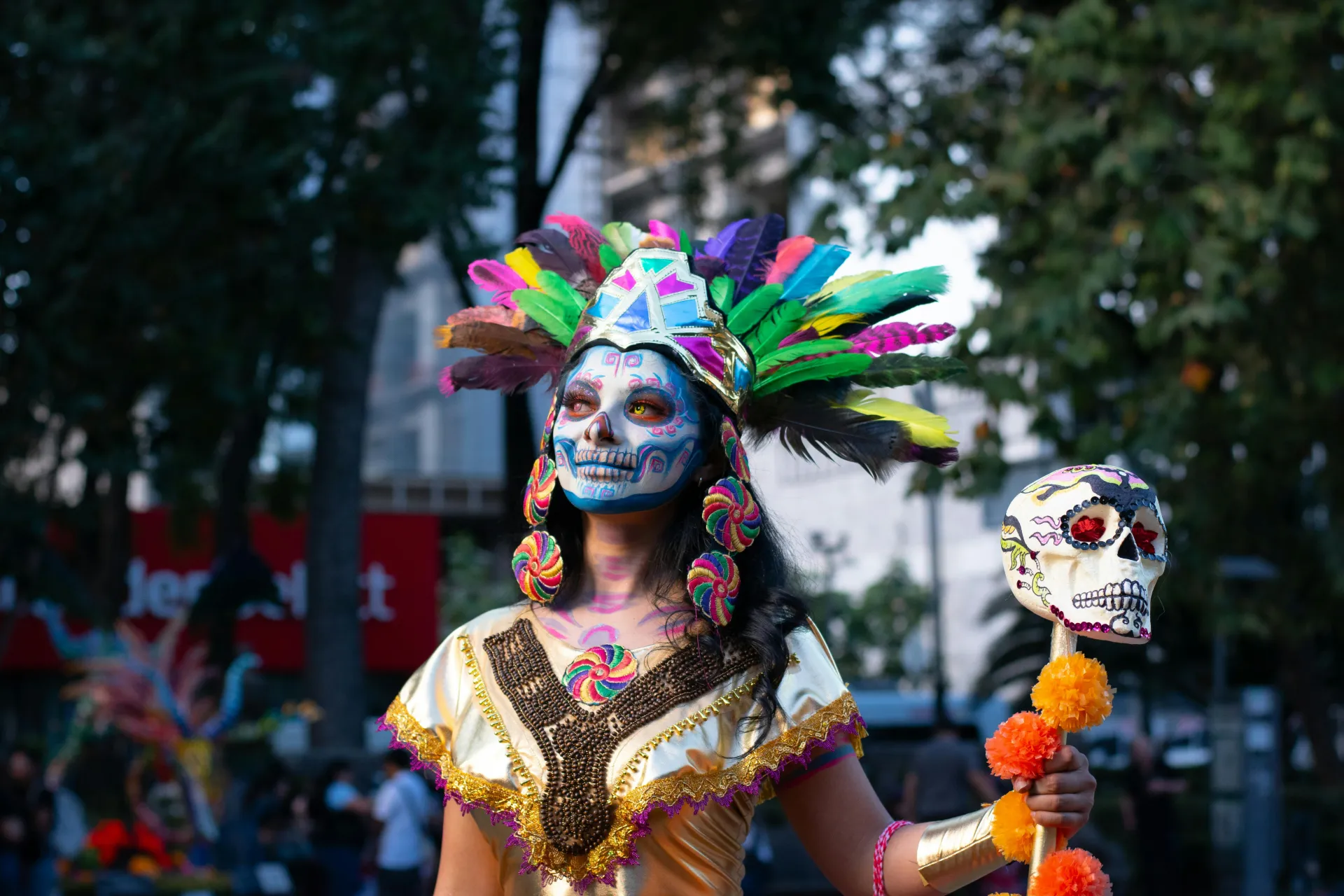
The tradition: Rather than mourning, families celebrate their dead with altars (ofrendas) featuring photos, marigolds, candles, favorite foods, and mementos. The belief holds that spirits return to visit during this time.
Where to experience: Oaxaca and Pátzcuaro offer the most elaborate celebrations. Mixquic (near Mexico City) and San Miguel de Allende are also excellent.
Key elements: Calaveras (decorated skulls), papel picado (cut paper decorations), pan de muerto (bread of the dead), and marigold flowers (cempasúchil).
Music & Dance
Mariachi: UNESCO-inscribed as Intangible Cultural Heritage. Guadalajara is mariachi's birthplace; Plaza Garibaldi in Mexico City hosts nightly performances.
Son Jarocho: Traditional music from Veracruz featuring harp, guitars, and zapateado dancing.
Regional dances: Each region maintains distinct dances—Jarabe Tapatío (Mexican hat dance), Danza de los Viejitos (Michoacán), and many more.
Art & Architecture
Muralism: Diego Rivera, José Clemente Orozco, and David Alfaro Siqueiros created powerful public art throughout Mexico. The National Palace, Palacio de Bellas Artes, and University City showcase masterworks.
Colonial architecture: Spanish baroque churches and buildings grace historic centers. Puebla, Guanajuato, and Morelia are particularly magnificent.
Contemporary art: Mexico City's art scene rivals global capitals. MUAC, JUMEX, and Kurimanzutto gallery lead the contemporary scene.
Additional Tips
Language
Spanish: Essential beyond major tourist zones. Mexican Spanish differs from European Spanish in pronunciation and vocabulary.
Indigenous languages: Náhuatl, Maya, Zapotec, and dozens of other languages are still spoken.
English: Common in tourist areas of Cancún, Los Cabos, and Mexico City's upscale neighborhoods.
Tipping Culture
Restaurants: 15-20% is standard for good service.
Hotels: Tip bellhops, housekeeping, and concierge staff.
Gas stations: Attendants pump gas; small tips appreciated.
Tour guides: 10-15% of tour cost is customary for good guides.
Sources
1. UNESCO - Traditional Mexican Cuisine
3. UNESCO - Historic Centre of Mexico City
5. National Museum of Anthropology
9. INAH - Tulum Archaeological Zone
11. UNESCO - Uxmal
13. Oaxaca Tourism
15. UNESCO - San Miguel de Allende
16. US State Department - Mexico Travel Advisory
17. ADO Bus