Marrakech: A Feast for Every Sense
Marrakech doesn't ease you in—it engulfs you. Step through the ancient walls into the medina, and you're instantly lost in a labyrinth of narrow alleys where donkeys brush past, spice pyramids glow amber and crimson, craftsmen hammer copper into intricate patterns, and the call to prayer echoes from a hundred minarets. This is Morocco's most intoxicating city, a place where medieval chaos and modern luxury coexist, where exhaustion and exhilaration feel like the same thing. The Red City earned its name from the ochre walls that glow rose-gold at sunset—but it's the sensory overload within those walls that makes Marrakech unforgettable.
Why Marrakech Mesmerizes
Sensory Saturation
Every sense fires constantly. The perfume of leather tanneries, cedar wood, and mint tea. The riot of color in tiled fountains and woven carpets. The cacophony of haggling, hammering, and Gnawa music. Marrakech is overwhelming by design—and surrendering to it is the only way in.
Living Medieval City
The medina isn't a museum—it's a functioning medieval city where craftspeople work as they have for centuries. Leather tanners use the same pigeon-dung pits. Metalworkers pound the same patterns. The souks aren't staged; they're the economy.
The Riad Experience
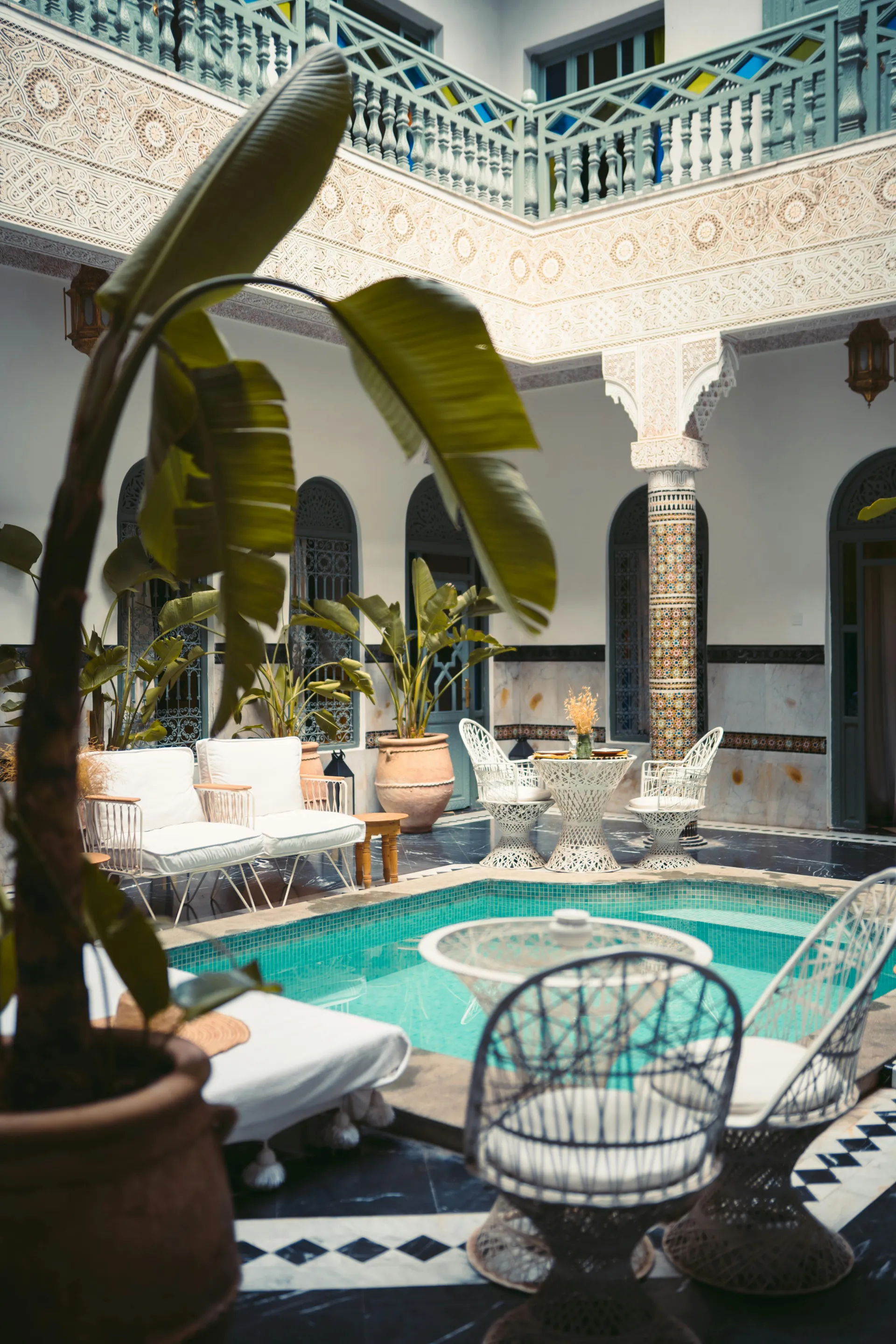
These traditional courtyard houses, converted into intimate guesthouses, offer sanctuary from the medina's chaos. Step through an unmarked door, and suddenly: tiled courtyards, trickling fountains, orange trees, rooftop terraces with Atlas Mountain views. The contrast defines Marrakech.
Gateway to Adventure
Beyond the city walls: the High Atlas Mountains, Sahara Desert, coastal Essaouira, the kasbahs of the south. Marrakech is both destination and launchpad.
Marrakech's Heart: Must-Experience Places
Jemaa el-Fnaa
The main square is Marrakech's beating heart—UNESCO-recognized as a "Masterpiece of World Heritage." By day, it's orange juice vendors, snake charmers, and henna artists. As dusk falls, it transforms: smoke rises from dozens of food stalls, storytellers gather crowds, Gnawa musicians play, and the chaos reaches its crescendo. Come at sunset, find a café terrace overlooking the square, and watch the transformation. Return at night to wade through the crowds.
The Souks
The covered markets sprawl north from Jemaa el-Fnaa in a maze designed to disorient. Each section specializes: leather goods, carpets, metalwork, spices, babouches (slippers), lanterns. Getting lost is inevitable and essential—every wrong turn reveals another craftsman, another courtyard, another photo. Key souks include:
- Souk Semmarine - The main artery, covered and relatively navigable
- Souk des Teinturiers - Dyers' souk, with skeins of colored wool hanging to dry
- Souk Haddadine - Metalworkers hammering lanterns and fixtures
- Souk Cherratine - Leather workers near the tanneries
- Rahba Kedima - Spice square with apothecaries and dried goods
The Tanneries
Marrakech's leather tanneries have operated for centuries. The Chouara Tannery is the most famous (though Fez's are larger). Men stand in vats of pigeon dung and vegetable dyes, turning hides into the soft leather sold throughout the souks. The smell is intense; vendors offer mint to hold against your nose. View from terrace shops above—they'll expect you to look at their merchandise, but no obligation to buy.
Bahia Palace
This 19th-century palace was built by a grand vizier for his harem (supposedly 4 wives and 24 concubines). The sprawling complex showcases Moroccan craftsmanship at its finest: intricate zellige tilework, carved cedar ceilings, painted walls, and peaceful gardens. No furniture remains, but the architecture speaks volumes about power and beauty.
Ben Youssef Madrasa
This 14th-century Quranic school is Marrakech's architectural masterpiece. The courtyard is small but perfectly proportioned, every surface covered in carved stucco, zellige tiles, and cedar wood. 130 students once lived in the tiny cells above. Recently reopened after restoration—don't miss it.
Saadian Tombs
Hidden for centuries, these 16th-century royal tombs were rediscovered in 1917. The Chamber of Twelve Columns houses the sultan's tomb in exquisite Carrara marble and intricate tilework. The gardens hold dozens more tombs. Small space means crowds; come early.
Koutoubia Mosque
Marrakech's landmark minaret rises 77 meters, visible from across the city and dating to the 12th century. Non-Muslims cannot enter, but the exterior and gardens are beautiful. The minaret's design influenced the Giralda in Seville and the Hassan Tower in Rabat.
El Badi Palace
The "Incomparable Palace" is now mostly ruins—but impressive ones. Built in the 16th century, stripped of its gold and marble by a later sultan, what remains is vast: sunken gardens, massive walls, storks nesting on crumbling towers. Climb the ramparts for rooftop medina views.
Majorelle Garden
French artist Jacques Majorelle created this oasis in the 1920s; Yves Saint Laurent restored it decades later. The electric blue buildings, bamboo groves, and cacti provide a peaceful counterpoint to the medina's intensity. The Berber Museum within is excellent. Crowds can be heavy; book timed tickets online.
Le Jardin Secret
A recently restored historic garden in the heart of the medina, offering two distinct garden styles (Islamic and exotic) and a tower with panoramic views. Less famous than Majorelle, often less crowded, and more conveniently located.
Mellah (Jewish Quarter)
The old Jewish quarter holds different architecture—balconied buildings, wider streets—and the Lazama Synagogue, one of Marrakech's few remaining active synagogues. The spice market here is less touristed than the main souks.
Where to Eat
Traditional Moroccan
- Dar Moha - Upscale Moroccan in a palace setting, poolside dining
- Al Fassia - Women-run restaurant, exceptional tagines
- Nomad - Modern Moroccan, rooftop terrace with medina views
- Le Jardin - Garden setting, contemporary Moroccan cuisine
Local & Casual
- Café Clock - Camel burger fame, cultural programming, cooking classes
- Amal Women's Training Center - Social enterprise with excellent daily menus
- Snack Chez Hassan - No-frills local spot near Jemaa el-Fnaa
- Haj Mustapha - Tiny hole-in-the-wall, legendary tanjia (slow-cooked meat)
Jemaa el-Fnaa Food Stalls
The nightly food stalls are essential Marrakech. Stall numbers change, but look for crowds of locals (not tourists). Grilled meats, snail soup, sheep's head, harira soup, fresh juices. Point and sit; prices are posted. Hygiene varies—follow the crowds.
Upscale & International
- La Mamounia Restaurant - The legendary hotel's dining, worth the splurge
- Le Comptoir Darna - Dinner and belly dancing shows
- Latitude 31 - Creative Mediterranean, beautiful riad setting
- Kechmara - Western-style café, good for breakfast and light meals
Rooftops
- Nomad - Best rooftop dining, book ahead
- Café des Épices - Casual terrace overlooking Rahba Kedima
- Le Salama - Multiple levels, Jemaa el-Fnaa views
- Kosybar - Views of the storks nesting on El Badi Palace
Where to Stay
Riads: The Essential Marrakech Experience
A riad is a traditional house with interior courtyard—and staying in one is non-negotiable for first-timers. Behind unmarked doors in the medina's alleys, these guesthouses offer pools, rooftop terraces, and extraordinary hospitality. Most include breakfast; many arrange dinners.
#### Luxury Riads
- Riad Yasmine - The Instagram-famous pool, consistently excellent
- El Fenn - Vanessa Branson's design-forward property
- La Mamounia - The legendary palace hotel (technically not a riad)
- Royal Mansour - Ultimate luxury, private riads within a complex
#### Mid-Range Riads
- Riad BE - Design-focused, excellent value
- Riad 72 - Italian-owned, beautiful restoration
- Dar Les Cigognes - Near El Badi Palace, stork views
- Riad Kheirredine - Friendly, central, reliable
#### Budget-Friendly
- Equity Point - Hostel in a riad, great atmosphere
- Riad Laayoun - Simple but genuine
- Rodamon Riad - Backpacker favorite, rooftop terrace
Ville Nouvelle (New Town)
Modern hotels with reliable amenities but less character. Better for those uncomfortable with medina navigation. The Hivernage district has the main luxury chains.
Palmeraie
The palm grove outside the city holds resort properties with pools and gardens—good for relaxation but removed from Marrakech's energy.
Practical Wisdom
Navigating the Medina
Get Lost on Purpose - The medina is designed to disorient. Accept it. You'll eventually reach a landmark or city wall.
Use Landmarks - Jemaa el-Fnaa and the Koutoubia minaret are always visible. Major mosques help orientation.
Phone Maps Work - GPS functions in the medina; Google Maps and Maps.me are helpful.
Hire a Guide - For first explorations, an official guide (licensed, arranged through your riad) is worthwhile. They know the maze and can translate interactions.
Scam Awareness - "Helpful" strangers offering directions often expect payment or lead you to their brother's shop. Politely decline or agree to a small tip upfront.
The Art of Haggling
Bargaining is expected and cultural. Rules of thumb:
- Start at 30-50% of the asking price
- Be prepared to walk away (often brings the price down)
- Don't bargain unless you intend to buy
- Keep it friendly—it's a negotiation, not a fight
- Fixed-price shops exist (Ensemble Artisanal, cooperatives); no haggling there
Getting Around
Walking - The only way in the medina. Wear comfortable shoes.
Taxis - Petit taxis (beige) for around town; insist on the meter or agree on price first. Grand taxis for longer distances.
Calèches - Horse-drawn carriages, touristy but pleasant for a circuit of the walls at sunset.
Getting to Your Riad - Most riads arrange airport pickups. Within the medina, your riad will send someone to meet you at a landmark.
When to Visit
- Spring (March-May) - Ideal. Warm days, cool nights, gardens blooming.
- Fall (September-November) - Equally good. Less intense than summer.
- Summer (June-August) - Hot (40°C+). Many riads have pools; plan for midday rest.
- Winter (December-February) - Mild days, cold nights (pack layers). Occasional rain.
Ramadan
During Ramadan, the medina transforms. Most restaurants close during daylight hours; sunset brings the iftar (fast-breaking) feast. It's a fascinating time to visit but requires adjustment. Non-Muslims aren't expected to fast but should eat/drink discreetly.
What to Wear
Marrakech is relatively liberal for Morocco, but modest dress is respectful:
- Women: Cover shoulders and knees; loose-fitting clothes
- Men: Long pants preferred; shorts acceptable for tourists
- Shoes: Comfortable and easy to remove (you'll enter mosques' exteriors, riads, shops)
Safety
Marrakech is generally safe. Scams and aggressive touts are more common than crime. Watch for:
- Fake guides
- "Closed today" scams (leading you to their shop instead)
- Inflated prices for tourists
- Pickpockets in crowded souks
Tipping
Expected for most services. 10-15% at restaurants. 10-20 MAD for small services. More for guides and drivers.
Money
Moroccan dirham (MAD). ATMs abundant; credit cards accepted at upscale establishments. Cash essential for souks and small purchases.
Suggested Itineraries
3 Days: Essential Marrakech
Day 1: Morning arrival, settle into riad. Afternoon in Jemaa el-Fnaa and surrounding souks. Sunset from a café terrace overlooking the square. Night exploring the food stalls.
Day 2: Morning at Ben Youssef Madrasa and nearby souks. Lunch at Nomad. Afternoon at Bahia Palace and Saadian Tombs. Evening hammam, dinner at your riad.
Day 3: Majorelle Garden (early to avoid crowds). Le Jardin Secret. Deeper souk exploration—leather, metalwork, carpets. Farewell dinner at Al Fassia.
5 Days: Marrakech In-Depth
Add: Half-day cooking class, El Badi Palace, the Mellah, serious shopping with riad-recommended guides, day trip to Ourika Valley or Essaouira
7+ Days: Marrakech & Beyond
Add: 2-day Atlas Mountains trek, overnight in a Berber village, or 2-3 days in the Sahara (Merzouga/Erg Chebbi), Essaouira overnight
The Hammam Experience
The traditional Moroccan bathhouse is essential. Public hammams offer the authentic experience—bring your own supplies (black soap, kessa glove), strip down (underwear optional), and submit to vigorous scrubbing by an attendant. Tourist-friendly hammams (Les Bains de Marrakech, Hammam de la Rose) provide all supplies, privacy, and massages.
What to Expect
- Hot rooms of increasing temperature
- Scrubbing with black soap and kessa glove
- Rinse and relax
- Optional massage and clay mask
- Allow 2+ hours; book ahead for spa hammams
Day Trips & Excursions
Atlas Mountains
The High Atlas rises dramatically south of Marrakech. Day trips reach Berber villages like Imlil (gateway to Toubkal, North Africa's highest peak) or the Ourika Valley with its waterfalls and traditional markets.
Essaouira
The windswept coastal town is 3 hours west—a UNESCO medina, Portuguese ramparts, and seafood grills on the harbor. Day-trippable but better overnight.
Ouzoud Falls
Morocco's highest waterfalls, 3 hours northeast. Dramatic cascades, swimming pools, Barbary macaques. A long day trip but worth it.
Sahara Desert
The Erg Chebbi dunes near Merzouga require 2-3 days minimum from Marrakech—long drives through the kasbahs of the south (Ait Benhaddou, Dades Gorge), camel treks, desert camps. Transformative but not a day trip.
Shopping: What to Buy
Carpets & Rugs
Berber rugs are the classic purchase—but buying well requires time, knowledge, and negotiation. Quality varies wildly. Visit several shops; compare. Fixed-price cooperatives offer fair prices without haggling.
Leather
The tanneries produce soft leather for bags, poufs, jackets, babouches (slippers). Quality varies; smell is sometimes a giveaway. Babouches make excellent, packable souvenirs.
Metalwork
Lanterns, tea sets, trays—the coppersmith souks are mesmerizing. Large lanterns can be shipped; small items pack easily.
Ceramics
From Fez and Safi, the painted pottery ranges from tourist trinkets to genuine art. The Souk Cherifa has a good selection.
Argan Products
Morocco's liquid gold: argan oil for cooking and cosmetics. Buy from cooperatives for quality assurance.
Textiles
Woven baskets, blankets, embroidered linens—lighter to carry than carpets and often just as beautiful.
Final Thoughts
Marrakech asks you to let go—of control, of Western efficiency, of personal space. The medina will exhaust you, the touts will test you, and the sensory assault never stops. But somewhere between the frustration and the wonder, Marrakech works its magic. It might be the moment you find a quiet riad courtyard, the taste of lamb tagine as the call to prayer echoes overhead, or the sunset light turning the Red City actually red.
The city isn't for everyone. It demands patience, curiosity, and a willingness to be uncomfortable. The chaos is real; the hassle is real; the beauty is also real—and worth it. Marrakech offers something increasingly rare: a place genuinely different from home, where medieval patterns persist not as performance but as life.
Come ready to engage. Hire a guide for the first day, then get lost alone. Eat the street food. Bargain for something you'll treasure. Sit on a rooftop as the muezzin calls across the city. Let Marrakech be difficult and rewarding in equal measure—and you'll leave with memories that other, easier places simply cannot provide.
Ready to experience Marrakech? Our Morocco specialists can arrange riad stays, expert guides, hammam reservations, and excursions to the Atlas Mountains or Sahara Desert.