Maldives: Where Dreams Meet Reality
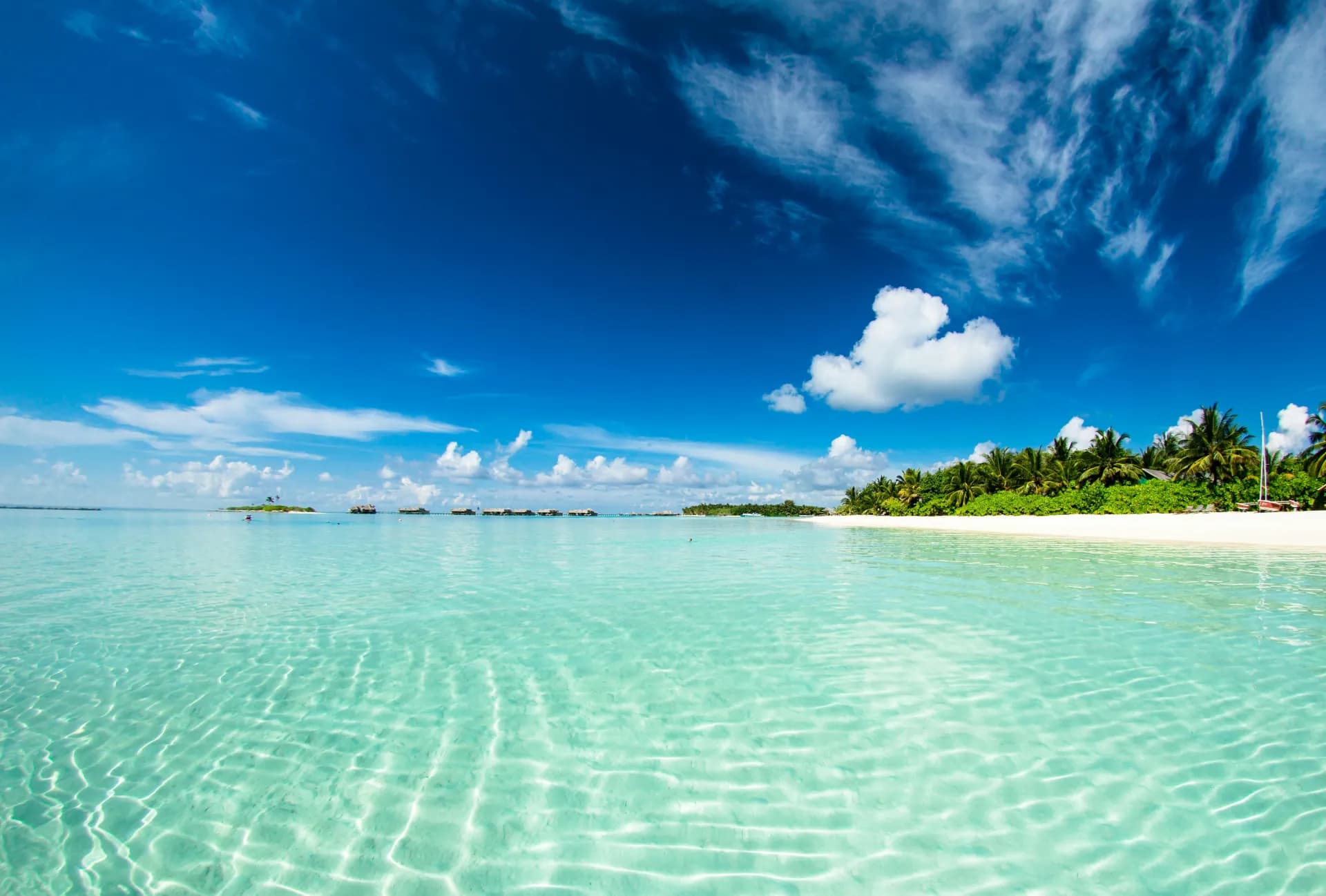
The Maldives needs no introduction—those iconic overwater bungalows, impossibly turquoise waters, and pristine white beaches have graced countless screens. But beyond the Instagram perfection lies a fascinating island nation with world-class diving, unique geography, and increasingly diverse accommodation options. This archipelago of 1,190 coral islands scattered across the Indian Ocean offers one of Earth's most extraordinary destinations1.
Understanding the Maldives
Unique Geography
The Maldives is the world's lowest-lying country, with an average elevation of just 1.5 meters above sea level. The nation stretches 870 kilometers from north to south, yet land comprises only 1% of its territory—the rest is crystalline ocean2.
- 1,190 coral islands grouped in 26 atolls
- Only 200 islands inhabited by locals
- Over 150 islands hosting resorts
- Capital Malé: One of the world's most densely populated cities (over 200,000 people on 8 square kilometers)
- Each resort island typically hosts a single property—complete privacy
Why the Maldives Captivates
- Unmatched overwater villa experiences
- Some of the world's best snorkeling and diving
- Marine megafauna (manta rays, whale sharks, sea turtles)
- Ultimate relaxation and romance
- Consistent warm weather year-round
- World-class service and hospitality
- Isolation from the world (no roads between islands)
Best Time to Visit
Dry Season (December-April)
- Best weather: Clear skies, minimal rain
- Peak prices, especially Christmas/New Year and Chinese New Year
- Best underwater visibility for diving and snorkeling
- Book 6-12 months ahead for popular resorts
- Northeast monsoon brings calm seas
Wet Season (May-November)
- Lower prices: Significant savings (30-50% off)
- More rain, but often brief afternoon showers
- Manta ray season (June-October): Best time to see mantas in Baa Atoll3
- Whale shark season: Year-round in South Ari Atoll, but especially May-November
- Southwest monsoon brings waves—great for surfing
Year-Round Constants
- Water temperature: 27-30°C (81-86°F)—always warm
- Air temperature: 25-31°C (77-88°F)
- Humidity: 75-80%
- Always swimmable, always beautiful
Choosing Your Resort
With over 150 resort islands, selection can be overwhelming. Consider budget, interests, and transfer time from Malé.
By Budget
Ultra-Luxury ($2,000-10,000+/night):
- Soneva Fushi / Soneva Jani: Pioneering eco-luxury, private water retreats with retractable roofs for stargazing, personal butlers4
- One&Only Reethi Rah: Spacious villas, extensive activities, sophisticated atmosphere
- St. Regis Maldives Vommuli: Architectural statement, butler service, spectacular overwater spa
- Cheval Blanc Randheli: French sophistication, LVMH property, art-focused
- Waldorf Astoria Ithaafushi: New icon, largest resort in the Maldives
Luxury ($500-2,000/night):
- Conrad Maldives Rangali Island: Famed underwater restaurant Ithaa, two islands
- Anantara Kihavah: Overwater observatory, underwater restaurant
- W Maldives: Design-forward, younger vibe, excellent house reef
- Baros Maldives: Classic Maldives, legendary house reef, intimate
- Four Seasons Landaa Giraavaru: Marine biology center, manta ray research
Mid-Range ($200-500/night):
- Reethi Beach Resort: House reef, diving focus, good value
- Adaaran Select Hudhuranfushi: North Malé, quick transfer, surf breaks
- You & Me Maldives: Adults-only, honeymoon specialist
- Cinnamon Dhonveli: Surf break access, near Malé
Budget Options ($50-150/night):
- Local island guesthouses offer affordable alternatives
- Maafushi: Most developed local island, easy access
- Thulusdhoo: Surfer haven, laid-back atmosphere
- Dhigurah: Whale shark diving, quiet beach
- Less luxurious but more authentic cultural experience
By Interest
Diving Enthusiasts:
- South Ari Atoll: Year-round whale shark encounters at Maamigili5
- Baa Atoll: UNESCO Biosphere Reserve, massive manta aggregation in Hanifaru Bay (June-October)
- Vaavu Atoll: Channel diving, sharks, strong currents for advanced divers
- North Malé Atoll: Variety of sites, easy access, good for beginners
Exceptional House Reefs (Snorkeling from shore):
- Baros Maldives (legendary coral)
- Mirihi (tiny island, big reef)
- Vilamendhoo (huge house reef)
- W Maldives (sharks, turtles common)
- Angsana Ihuru (coral garden)
Honeymoon/Romance:
- Soneva (private, sustainable luxury)
- One&Only Reethi Rah (seclusion, space)
- Conrad (underwater dining, two islands)
- Gili Lankanfushi (overwater everything, no shoes needed)
Families:
- Niyama Private Islands (kids' club, waterslide)
- Soneva Fushi (The Den—incredible children's space)
- Kandima (activities, sports, teenage appeal)
- Siyam World (waterpark, multiple islands)
Surfing:
- North Malé Atoll (consistent breaks March-October)
- Cinnamon Dhonveli (Pasta Point—world-famous wave)
- Six Senses Laamu (uncrowded southern waves)
- Four Seasons Kuda Huraa (surf school, break access)
Overwater vs. Beach Villas
Overwater Villas
The iconic Maldives experience, pioneered here in the 1970s.
Advantages:
- Direct water access (ladder or steps into lagoon)
- Glass floor sections for fish watching
- Unobstructed ocean views and sunsets
- Privacy and romanticism
- Often larger and more luxurious
- Sunrise or sunset positions available
Considerations:
- Higher price point
- Less beach proximity
- May be a long walk over water to beach/restaurant
- Not ideal with small children (fall risk)
- Early morning fish feeding can be noisy
Beach Villas
Often overlooked but offering significant benefits.
Advantages:
- Direct beach access
- More outdoor space (gardens, yards)
- Better for families with children
- Typically more affordable
- Private pools increasingly common
- More natural vegetation
Considerations:
- Less "iconic" Maldives imagery
- Water access via beach walk
Pro Tip: Split your stay—start in a beach villa, finish in overwater for the "wow" finale.
Activities & Experiences
Water Activities
Snorkeling: Most resorts feature house reefs accessible from shore. Reef quality varies dramatically—research before booking.
Diving: PADI courses available at most resorts. Night dives, manta ray encounters, whale shark expeditions, and channel drift dives for advanced divers. The Maldives hosts over 2,500 species of fish6.
Water Sports: Jet skiing, parasailing, wakeboarding, kayaking, paddleboarding, catamaran sailing
Dolphin Cruises: Sunset cruises often encounter pods of spinner dolphins
Fishing: Night fishing (traditional line fishing), big game fishing, catch-and-cook experiences
Unique Experiences
Underwater Restaurants: Dine surrounded by marine life
- Ithaa at Conrad Maldives (the original, 5 meters below surface)
- Subsix at Niyama (6 meters below, also a nightclub)
- 5.8 at Hurawalhi (largest, 5.8 meters below)
- Sea at Anantara Kihavah
Floating Breakfast: The Instagram essential—trays of fruit, pastries, and champagne delivered to your overwater villa pool
Private Sandbank Picnic: Deserted island lunch with just you and the ocean—arranged by most resorts
Bioluminescent Beach: Certain conditions (usually wet season) cause plankton to glow at night
Overwater Spa: Treatments with glass floors showing the reef below
Stargazing: Zero light pollution makes for exceptional astronomy. Soneva Jani has a professional observatory.
Beyond the Resort
Local Island Visits: See authentic Maldivian life—mosques, schools, fishing harbors. Maafushi is most accessible.
Malé Exploration: The compact capital offers the fish market, Grand Friday Mosque, and local shops
Submarine Tours: See the deep without diving (offered at some resorts)
Dining in the Maldives
Meal Plans
Understanding meal plans is essential for budgeting:
All-Inclusive: All meals, selected drinks (often including alcohol), sometimes water sports. Best value if you drink alcohol (otherwise very expensive à la carte).
Full Board: Breakfast, lunch, and dinner included. Drinks and special restaurants extra.
Half Board: Breakfast and dinner. Allows flexibility for light lunch or sandbank picnic.
Bed & Breakfast: Maximum flexibility but expensive in the Maldives.
Tips:
- All-inclusive often makes sense—alcohol and cocktails are expensive (think $15-25 per drink)
- Compare à la carte prices when deciding
- Most luxury resorts have multiple specialty restaurants
- Special dinners (beach, underwater, sandbank) cost extra even on all-inclusive
Maldivian Cuisine
Beyond international resort food, try local dishes:
- Mas huni: Shredded tuna with coconut, onion, chili—traditional breakfast
- Garudhiya: Clear tuna broth soup
- Rihaakuru: Thick fish paste, spread on roshi (flatbread)
- Hedhikaa: Short eats—savory snacks
- Fresh seafood: Tuna, grouper, lobster throughout
Practical Information
Getting There
Flights to Malé: Major airlines serve Velana International Airport (MLE). Emirates, Singapore Airlines, Sri Lankan, Qatar Airways offer direct connections from their hubs.
Resort Transfers:
- Speedboat (30-90 minutes): For resorts in North/South Malé Atoll. Less expensive, can travel at night.
- Seaplane (20-60 minutes): For distant atolls. Scenic but expensive ($300-700+ per person roundtrip). Operates daylight only—late arrivals require overnight in Malé or airport hotel7.
- Domestic Flight + Speedboat: Some distant resorts use regional airports.
Visa & Entry
- 30-day visa on arrival for most nationalities
- Free of charge
- Must have confirmed hotel booking
- Return/onward ticket required
Currency & Payment
- Maldivian Rufiyaa (MVR), but USD widely accepted
- Most resorts charge everything to your room—settle on departure
- Credit cards accepted universally at resorts
- Cash needed only for tips and local island visits
- Tipping expected: $5-10/day for villa attendant, guides separately
Packing Essentials
- Reef-safe sunscreen: Required by Maldivian law—standard chemical sunscreens damage coral8
- Light, breathable clothing (most resorts have no formal dress code)
- Modest wear for local island visits (cover shoulders and knees)
- Underwater camera (or waterproof case)
- Rash guard for sun protection while snorkeling
- Good book—this is a digital detox destination
Health & Safety
- Extremely safe destination—virtually no crime
- Strong currents in channels—always ask resort about safe swimming areas
- Coral cuts can become seriously infected—clean immediately
- Drink bottled water (resorts typically provide)
- Intense sun—protect yourself constantly
- Travel insurance is mandatory for entry
Costs
The Maldives is expensive—budget accordingly:
- Budget guesthouse: $100-200/day (local islands, simple rooms)
- Mid-range resort: $400-800/day all-inclusive
- Luxury resort: $1,000-3,000/day
- Ultra-luxury: $3,000-10,000+/day
Factor in:
- Seaplane transfers ($400-700 pp roundtrip)
- Excursions ($50-300 each)
- Alcohol if not all-inclusive ($15-25/drink)
- Spa treatments ($150-500+)
- Service charge (usually 10%) and GST (16%)
Environmental Responsibility
Climate Change Reality
The Maldives faces an existential threat from climate change. With an average elevation of 1.5 meters, even modest sea-level rise threatens the nation's existence. The government has committed to carbon neutrality and actively campaigns internationally for climate action9.
Responsible Travel
- Never touch coral—even dead coral provides structure. A single touch kills years of growth.
- Use only reef-safe sunscreen—oxybenzone and octinoxate are banned
- Don't feed fish—it disrupts natural behavior and nutrition
- Choose resorts with genuine environmental programs
- Support local island economies when possible
- Reduce single-use plastic (many resorts now bottle their own water)
Conservation Programs
Many resorts support marine research and conservation:
- Manta Trust partnerships (tagging, research)
- Coral regeneration projects (you can plant your own)
- Sea turtle rescue and rehabilitation centers
- Whale shark research programs
- Marine biologist-led snorkeling excursions
Suggested Itineraries
Honeymoon Classic (7 Nights)
- 3 nights beach villa (settle in, explore)
- 4 nights overwater villa (romance, views)
- Include: Sunset dolphin cruise, couples spa, private beach dinner
Diving Focus (10 Days)
- Choose dive-centric resort (South Ari for whale sharks, Baa for mantas)
- Daily diving program (3 dives/day possible)
- Consider liveaboard for serious divers (access remote sites)
- Non-diving days for snorkeling, relaxation
Island Hopping (10-14 Days)
- Luxury resort (4-5 nights): Pure indulgence
- Local island guesthouse (3-4 nights): Cultural immersion, budget reset
- Second resort, different atoll (3-4 nights): New reef, new experiences
Final Thoughts
The Maldives delivers on its promise of paradise. Yes, it's expensive. Yes, it's remote. But floating in impossibly clear water, watching manta rays glide beneath your villa, or simply doing nothing on a pristine white beach—these moments justify every penny. For honeymoons, milestone celebrations, or simply the ultimate escape, few destinations compare.
Ready for the Maldives? Our luxury specialists can design your perfect island escape, from resort selection to special experiences.
---
Marine Life & Conservation
What You'll Encounter
The Maldives' marine biodiversity is extraordinary:
Manta rays: Year-round residents with predictable cleaning stations. Hanifaru Bay hosts massive feeding aggregations (August-November).
Whale sharks: The world's largest fish gather around South Ari Atoll, with swimming encounters ethically possible year-round.
Reef sharks: Blacktip, whitetip, and grey reef sharks patrol nearly every dive site. Nurse sharks rest under coral overhangs.
Dolphins: Spinner dolphins ride bow waves; bottlenose dolphins inhabit certain channels. Sunset cruises often encounter pods.
Sea turtles: Green and hawksbill turtles common on snorkeling trips; some resorts have turtle rehabilitation centers.
Conservation Challenges
The Maldives faces existential environmental threats:
Rising seas: With an average elevation of 1.5 meters, the Maldives is among the world's most vulnerable nations to sea level rise.
Coral bleaching: Rising ocean temperatures have caused significant coral die-offs. Recovery is happening but remains fragile.
Waste management: Tourism generates substantial waste; many resorts now implement comprehensive recycling and waste management programs.
Responsible resorts: Look for properties with marine biologists, coral regeneration programs, and sustainable practices. Some offer guest participation in conservation activities.
Sources
5. Maldives Whale Shark Research Programme