Kyoto: Where Japan's Soul Endures
For over a thousand years, Kyoto served as Japan's imperial capital. Spared from WWII bombing through the advocacy of Henry L. Stimson (who had honeymooned there), it preserves an unbroken thread of Japanese culture—17 UNESCO World Heritage Sites, over 2,000 temples, traditional arts practiced by masters, and neighborhoods where geisha still glide down lantern-lit streets1. Modern Japan rushes elsewhere; Kyoto moves to an older rhythm.
Understanding Kyoto's Legacy
A Thousand Years as Imperial Capital
Founded in 794 as Heian-kyō ("Capital of Peace and Tranquility"), Kyoto served as Japan's capital for over 1,000 years until the Meiji Restoration moved the emperor to Tokyo in 18682. The city's grid layout, modeled on Tang Dynasty Chinese capitals, remains largely intact. Here, Japanese arts reached their apex: the tea ceremony was codified, Noh theater perfected, and zen gardens achieved sublime expression.
The UNESCO Recognition
Kyoto's 17 UNESCO World Heritage Sites (designated as "Historic Monuments of Ancient Kyoto") span 1,000 years of Japanese architecture and garden design3. These include grand temple complexes like Kiyomizu-dera and intimate zen gardens like Ryoan-ji. Combined with thousands of additional temples, shrines, and traditional neighborhoods, Kyoto offers the densest concentration of Japanese cultural heritage anywhere.
Exploring Kyoto's Districts
Higashiyama: The Eastern Mountains
The most atmospheric district clings to the eastern hills, home to Kyoto's most famous temples and the preserved lanes of Ninenzaka and Sannenzaka. Stone-paved streets wind past traditional shops selling pickles, pottery, and sweets. Start early—by midday, tour groups overwhelm the narrow lanes4.
Gion: The Geisha District
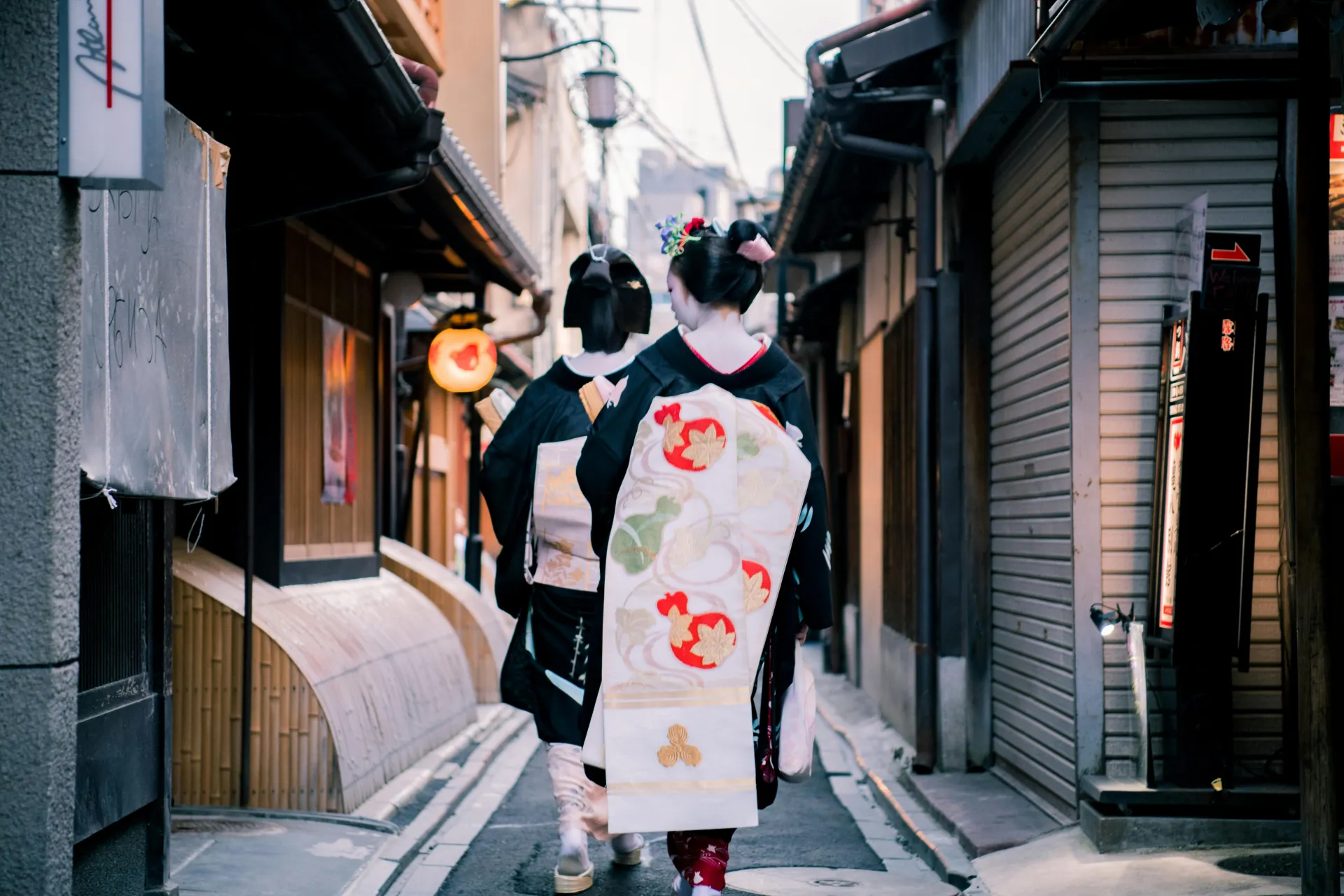
Japan's most famous geisha district centers on Hanami-koji street, where traditional wooden machiya houses host exclusive tea houses (ochaya) and high-end restaurants. Geisha (called geiko in Kyoto) and their apprentices (maiko) can occasionally be spotted heading to evening appointments, particularly around dusk5.
Arashiyama: Western Splendor
The western district offers the famous bamboo grove, river scenery, and several major temples. The Togetsukyo Bridge, spanning the Katsura River, has appeared in Japanese art for centuries. Beyond the popular bamboo path, quieter trails lead to hidden temples in the surrounding hills6.
Northern Kyoto (Kitayama)
The northern district hosts the Golden Pavilion (Kinkaku-ji) and several zen temple complexes in quieter, more residential surroundings. The Kamigamo and Shimogamo shrines, among Japan's oldest, host traditional festivals.
Fushimi: Sake & Shrines
South of central Kyoto, Fushimi is famous for two things: the mesmerizing Fushimi Inari shrine with its 10,000 torii gates, and one of Japan's premier sake-brewing districts. The Gekkeikan Okura Sake Museum offers tastings and history7.
Must-See Temples & Shrines
Fushimi Inari Taisha
Over 10,000 vermillion torii gates tunnel up Mount Inari, dedicated to the Shinto god of rice (and by extension, business prosperity). The main trail takes 2-3 hours to complete, with the crowds thinning significantly after the first quarter8. Dawn visits offer near-solitude and magical light; the shrine is open 24 hours.
Kinkaku-ji (Golden Pavilion)
The gold-leaf covered zen temple, perfectly reflected in its pond, is Kyoto's most photographed sight. The original 14th-century structure burned down in 1950 (an event immortalized in Yukio Mishima's novel "The Temple of the Golden Pavilion") and was rebuilt in 19559. Beautiful but brief—most visitors spend 30-45 minutes.
Kiyomizu-dera
This UNESCO World Heritage temple perches dramatically over a hillside on massive wooden pillars, constructed without a single nail. The main hall's veranda offers sweeping views of eastern Kyoto. The Japanese expression "jumping off the stage at Kiyomizu" means taking a leap of faith—historically, those who survived the 13-meter drop were believed to have their wishes granted10.
Ryoan-ji: The Zen Garden
Japan's most famous rock garden: 15 stones arranged in raked white gravel, designed so that from any vantage point, at least one stone remains hidden. The minimalist 15th-century design has inspired centuries of contemplation and countless interpretations11. Visit early morning for quiet reflection.
Hidden Gem Temples
Sanjusangendo - 1,001 gold-leafed Kannon statues stand in a 120-meter hall—Japan's longest wooden structure. The hypnotic repetition is haunting and meditative12.
Nanzen-ji - A massive zen temple complex featuring an impressive sanmon gate and a surprising brick aqueduct. The subtemple Tenjuan contains an exceptional moss garden.
Daitoku-ji - A vast zen complex with 24 subtemples, several open to visitors. Daisen-in's rock garden is considered a masterpiece; Koto-in offers intimate moss gardens and autumn colors.
Otagi Nenbutsu-ji - Hidden in the Arashiyama hills, 1,200 quirky stone statues (carved by visitors in the 1980s) create an enchanting, off-beat atmosphere.
Geisha Culture: Understanding the Karyukai
The Flower and Willow World
The karyukai (flower and willow world) is the traditional name for the geisha community. In Kyoto, geisha are called geiko (literally "arts child"), while apprentices are maiko (literally "dancing child"). This centuries-old tradition of trained entertainers—masters of classical music, dance, and conversation—continues today with about 200-300 geiko and maiko in Kyoto13.
The Five Hanamachi
Kyoto has five geisha districts (hanamachi):
- Gion Kobu - The largest and most famous, centered on Hanami-koji
- Gion Higashi - Smaller, adjacent to Gion Kobu
- Miyagawa-cho - Less tourist-focused, more residential
- Pontocho - A narrow alley of restaurants along the Kamogawa River
- Kamishichiken - The oldest district, near Kitano Tenmangu shrine
Etiquette & Geisha Sightings
- Never grab, block, or chase geiko or maiko—they are working professionals
- Photography from a respectful distance is acceptable; close-up portraits are not
- The best sighting times are dusk, when maiko head to appointments
- Gion Corner offers tourist-oriented performances showcasing traditional arts
- Private dinner with maiko entertainment is possible through high-end ryokan or agencies but typically costs $500+
Traditional Experiences
Tea Ceremony (Chado)
The Japanese tea ceremony reached its apex in Kyoto under the influence of tea master Sen no Rikyu in the 16th century14. Today, numerous venues offer ceremonies for visitors:
- Camellia - English-language ceremonies in a historic machiya townhouse
- En - Intimate experiences with licensed tea masters
- Urasenke Foundation - Traditional ceremonies at the headquarters of Japan's largest tea school
Zen Meditation (Zazen)
Shunko-in - English-language zazen sessions led by the temple's English-fluent head priest, known for performing Japan's first same-sex Buddhist wedding15.
Taizo-in - A Myoshin-ji subtemple offering meditation and calligraphy experiences in a stunning garden setting.
Kennin-ji - Gion's oldest zen temple offers meditation programs and houses spectacular dragon ceiling paintings.
Traditional Crafts
Nishijin Textile District - The historic weaving district offers demonstrations of Kyoto's famous silk brocade16.
Kiyomizu Pottery - The slopes below Kiyomizu-dera are lined with ceramic studios. Several offer hands-on pottery classes.
Kungyoku-do - One of Japan's oldest incense shops (founded 1594), offering incense-making experiences17.
Kyoto Cuisine (Kyo-Ryori)
Kaiseki: The Height of Japanese Cuisine
Kaiseki is the multi-course haute cuisine that emerged from tea ceremony traditions. Each dish emphasizes seasonality, presentation, and subtle flavors. Kyoto kaiseki typically features vegetable-forward preparations reflecting the city's Buddhist heritage18.
Top Kaiseki Restaurants:
- Kikunoi - Three Michelin stars, the pinnacle of Kyoto kaiseki19
- Gion Nanba - Excellent kaiseki in Gion at relatively accessible prices
- Hyotei - Operating since 1678, near Nanzen-ji20
Kyoto Specialties
- Yudofu - Simple simmered tofu, a specialty near Nanzen-ji where soft water produces exceptional tofu
- Obanzai - Home-style Kyoto cooking featuring seasonal vegetables
- Nishin Soba - Buckwheat noodles topped with sweet herring, a Kyoto specialty
- Matcha everything - As Japan's tea capital, Kyoto excels in matcha desserts, from parfaits to ice cream
Nishiki Market
The 400-year-old "Kitchen of Kyoto" stretches five blocks, packed with shops selling pickles, tofu, fish, tea, sweets, knives, and countless other specialties21. Mornings are best for serious shopping; afternoons bring grazing tourists. Several stalls offer samples and street food.
Vegetarian & Buddhist Cuisine
Shojin Ryori (Buddhist temple cuisine) originated in Kyoto's monasteries. Entirely vegetarian, these elaborate meals demonstrate that meatless cooking can achieve supreme refinement. Several temples serve shojin ryori to visitors, including Shigetsu at Tenryu-ji.
Day Trips from Kyoto
Nara (45 minutes)
Japan's capital from 710-784, Nara offers a compact cluster of UNESCO sites and the unforgettable sight of 1,000+ sacred deer roaming freely through the park. Todai-ji houses Japan's largest bronze Buddha in the world's largest wooden building22. Easy half-day trip.
Osaka (15 minutes)
Japan's second city offers vibrant contrast to refined Kyoto. Street food culture thrives in Dotonbori's neon-lit streets. Must-eats: takoyaki (octopus balls) and okonomiyaki (savory pancakes).
Uji (20 minutes)
Japan's finest matcha comes from Uji. The gorgeous Byodo-in temple appears on the 10-yen coin23. Traditional tea houses line the approach. Perfect half-day combination with Fushimi Inari.
Himeji Castle (45 minutes)
Japan's most spectacular original castle, nicknamed the White Heron for its bright white exterior. The only castle to remain intact through feudal wars, the Meiji restoration, and WWII bombing24.
Practical Information
Getting Around
Buses cover most sites but can be frustratingly slow and crowded, especially in peak season. The one-day pass (¥700) is only economical if you take 3+ rides.
Trains/Subway are faster when routes align. JR lines reach Arashiyama, Fushimi Inari, and connect to Nara and Osaka.
Cycling is excellent—Kyoto is flat, and many rental shops offer bikes. Some areas restrict cycling.
Walking works best for exploring individual districts (Higashiyama, Gion, Arashiyama town).
When to Visit
Cherry Blossoms (Late March - Early April) - Magical but mobbed. Book accommodations months ahead.
Autumn Colors (Mid-November) - Equally stunning and crowded. Tofuku-ji and Eikan-do are particularly spectacular.
Summer (June-August) - Hot and humid but fewer tourists. Gion Matsuri in July is Japan's most famous festival.
Winter (December-February) - Cold but atmospheric, with the lightest crowds and occasional snow on temple roofs.
Avoiding Crowds
- Start early (temples open 6-8 AM)
- Visit famous sites on weekdays
- Explore lesser-known temples
- Hit popular spots at lunch when tour groups eat
- Evening Gion is actually less crowded than midday
Temple Etiquette
- Remove shoes when entering buildings (socks recommended)
- Bow at temple gates and before Buddha statues
- No photography where prohibited (usually interior Buddha statues)
- Maintain quiet voices
- Don't point at sacred objects
Suggested Itineraries
3 Days: Essential Kyoto
Day 1: Fushimi Inari (dawn), Nishiki Market lunch, Gion afternoon walk (Hanami-koji, Ninenzaka), Pontocho dinner
Day 2: Kinkaku-ji (early), Ryoan-ji, Arashiyama (bamboo grove, Tenryu-ji), return for Gion dusk
Day 3: Kiyomizu-dera area (morning), walk to Maruyama Park, Philosopher's Path to Ginkaku-ji, final evening exploration
5 Days: Deeper Exploration
Add: Day trip to Nara, Northern Higashiyama (Nanzen-ji, Eikan-do), traditional experience (tea ceremony or zazen), deeper Arashiyama hills (Otagi Nenbutsu-ji, Adashino Nenbutsu-ji)
Final Thoughts
Kyoto demands slowness. The temples blur together if you rush; the city reveals itself when you linger. Watch the light change on a rock garden, lose yourself in a quiet neighborhood, join monks at morning prayer. Beyond the UNESCO sites and Instagram moments, Kyoto offers something increasingly rare—a place where ancient ways persist not as museum pieces but as lived practice. That continuity, fragile and precious, is the real treasure.
Ready to experience Kyoto? Our Japan specialists can help you access private temples, reserve kaiseki restaurants, and discover the ancient capital beyond the crowds.
---
Sources
1. UNESCO - Historic Monuments of Ancient Kyoto
3. UNESCO - Ancient Kyoto Details
4. Japan Guide - Higashiyama District
5. Japan Guide - Gion District
12. Sanjusangendo
14. Britannica - Japanese Tea Ceremony
15. Shunko-in Temple
21. Nishiki Market
22. Todai-ji Temple
23. Byodo-in Temple
24. Himeji Castle