Dublin: Where Words Flow as Freely as Guinness
Dublin punches above its weight. This compact capital of just over a million people has produced four Nobel laureates in literature, invented the modern novel (thank you, James Joyce), and exports culture—music, writing, wit—far beyond what its size suggests. But Dublin isn't a museum to its literary past. It's a living city where the pub remains the social center, where traditional music sessions happen spontaneously, and where conversation is elevated to an art form. The Irish have a word for it: craic—that ineffable combination of fun, good company, and flowing talk that defines a Dublin evening done right.
Why Dublin Delights
Literary Everywhere
Joyce, Yeats, Wilde, Beckett, Shaw, Swift, Stoker—Dublin's writers shaped modern literature. Their presence lingers everywhere: in the pubs they frequented, the streets they walked, the houses they lived in. Dublin is a city best explored with a book in hand or a story in mind.
Pub Culture
The Irish pub isn't just where you drink—it's where you talk, listen to music, meet strangers who become friends, and while away entire evenings without noticing. Dublin has over 700 pubs, from Victorian snugs to modern craft beer bars, each with its own personality.
Human Scale
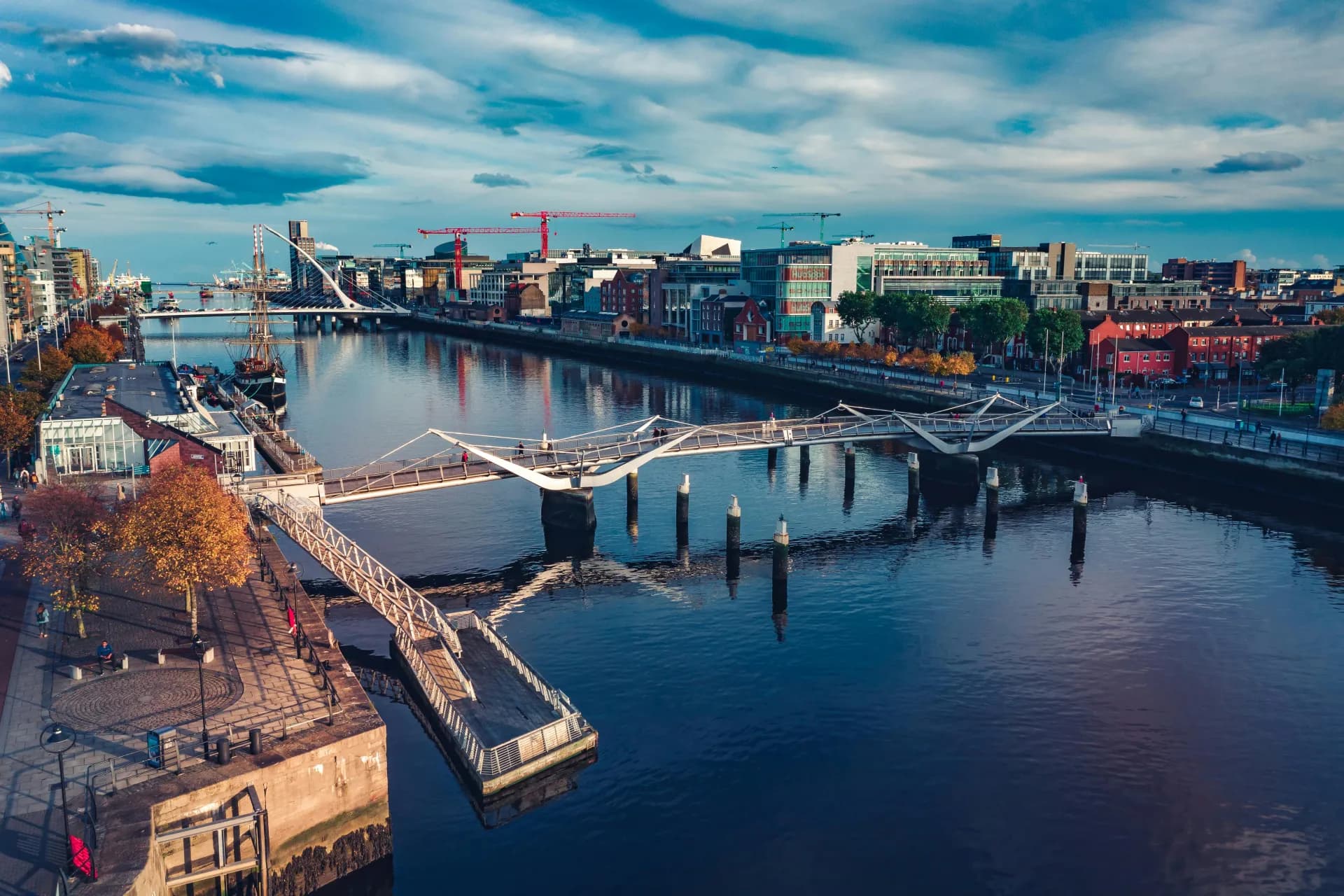
Unlike London or Paris, Dublin is walkable and approachable. Georgian streetscapes remain intact. The River Liffey divides north from south, but neither side is far from the other. The city feels manageable from day one.
The Irish Welcome
The famous Irish friendliness isn't myth—it's cultural practice. Dubliners talk to strangers, bartenders remember your name, and conversations start easily. The warmth is genuine and infectious.
Dublin's Soul: Must-Experience Places
Trinity College & the Book of Kells
Founded in 1592, Trinity is Dublin's ancient heart. The cobblestoned campus feels timeless, and the Old Library's Long Room—200,000 ancient books lining a barrel-vaulted space—is one of the world's most beautiful rooms. The Book of Kells, a 9th-century illuminated manuscript, draws crowds for good reason. Book timed tickets online; early morning is quietest.
Georgian Dublin
Dublin's Georgian architecture is remarkably intact. Merrion Square's colorful doors, Fitzwilliam Street's brick terraces, and St. Stephen's Green's elegant surrounds showcase 18th-century urban planning at its finest. Oscar Wilde's childhood home faces Merrion Square; a quirky statue of him lounges in the park.
Temple Bar
Yes, it's touristy. Yes, the pubs are overpriced. But Temple Bar's cobblestoned lanes also hold legitimate cultural venues—the Irish Film Institute, Project Arts Centre, Temple Bar Gallery—alongside the hen parties and stag dos. Come for afternoon culture, be more selective about evening pubs.
Grafton Street & South City
Dublin's main shopping street is pedestrianized and perpetually animated by buskers—some genuinely talented. The surrounding streets hold better shopping: Powerscourt Centre for fashion, George's Street Arcade for vintage, the side streets for independent boutiques.
O'Connell Street & the GPO
Dublin's widest street tells Ireland's story. The General Post Office (GPO) was headquarters of the 1916 Easter Rising—bullet holes remain visible. The Spire, a 120-meter stainless steel needle, marks the street's center. North of the Liffey feels different from south: grittier, more working-class historically, increasingly regenerated.
Dublin Castle
More complex than palace, Dublin Castle mixes medieval towers with Georgian state apartments. It represented British rule for 700 years before Irish independence. The Chester Beatty Library here—free and world-class—holds one of the finest collections of Islamic, Asian, and biblical manuscripts anywhere.
St. Patrick's Cathedral & Christ Church
Dublin's two medieval cathedrals stand within walking distance. St. Patrick's is larger, associated with Jonathan Swift (dean here for 30 years). Christ Church is older, more atmospheric, with a crypt containing a mummified cat and rat. Both charge admission; both reward a visit.
Kilmainham Gaol
This former prison is essential for understanding Irish history. The leaders of the 1916 Rising were executed here; the guided tour brings that history to life. Book ahead—tours fill quickly. Emotionally powerful and genuinely excellent.
The Guinness Storehouse
Dublin's most-visited attraction is essentially a seven-story advertisement, but it works. You'll learn how Guinness is made, understand its marketing genius, and end at the Gravity Bar with a pint and 360-degree city views. Yes, it's touristy. Yes, it's worth doing once.
IMMA & Kilmainham
The Irish Museum of Modern Art occupies the Royal Hospital Kilmainham, Ireland's oldest classical building. The combination of contemporary art in 17th-century surroundings works beautifully. Free entry; often-overlooked grounds worth wandering.
Phoenix Park
One of Europe's largest enclosed urban parks, Phoenix Park dwarfs London's Hyde Park. The Dublin Zoo, the President's residence, wild deer, and vast open spaces make it perfect for escaping the city without leaving it. Rent a bike to cover ground.
Where to Eat
Traditional & Modern Irish
- Chapter One - Dublin's finest, modern Irish in the basement of the Dublin Writers Museum
- The Woollen Mills - Elevated comfort food, River Liffey views, reliably excellent
- Locks 1 - Grand Canal setting, creative Irish cooking, lovely terrace
- Forest Avenue - Tasting menus celebrating Irish ingredients, intimate setting
Casual & Neighborhood
- Brother Hubbard - Middle Eastern-influenced brunch favorite, two locations
- The Fumbally - Wholesome café in the Liberties, community atmosphere
- Assassination Custard - Tiny Drumcondra spot, creative comfort food
- Craft - Harold's Cross local with excellent small plates
Seafood
- Fish Shop - Small-batch fish and chips elevated to art form
- Klaw - Crab shack simplicity, excellent shellfish
- Matt The Thresher - Fresh fish, proper pub atmosphere
Street Food & Markets
- Eatyard - South Richmond Street food hall, rotating vendors
- George's Street Arcade - Indoor market with food stalls
- Temple Bar Food Market - Saturday morning, mostly local producers
Traditional Pubs with Food
- The Old Storehouse - Temple Bar but genuine, traditional music and decent food
- The Brazen Head - Claims to be Ireland's oldest pub (1198), touristy but atmospheric
- Mulligan's - Proper Dublin pub near Trinity, simple food done right
Where to Drink
Traditional Pubs
- The Long Hall - Victorian masterpiece, ornate interior, serious about pints
- Kehoe's - South Anne Street classic, multiple rooms, local crowd
- Toner's - Baggot Street institution, barely changed in a century
- Grogan's - Artist and writer hangout, no music, conversation only
- Doheny & Nesbitt - Political and media types, snug rooms, proper old pub
Craft Beer
- The Porterhouse - Irish craft beer pioneer, Temple Bar location
- Against the Grain - Excellent selection, Wexford Street location
- P.Mac's - Stephen Street, extensive taps, good food
Cocktails
- The Blind Pig - Speakeasy accessed through burger joint
- Peruke & Periwig - Quirky Dawson Street spot, theatrical drinks
- The Liquor Rooms - Wellington Quay, sophisticated cocktails
Live Music Pubs
- O'Donoghue's - Merrion Row, birthplace of The Dubliners, nightly sessions
- The Cobblestone - Smithfield, serious traditional music, not touristy
- Whelan's - Wexford Street, live music venue, Irish acts before they're famous
Where to Stay
City Center South
Prime location between Trinity and St. Stephen's Green. The Merrion and Shelbourne are luxury landmarks. Grafton Street buzzes below; Georgian squares surround. Expensive but convenient.
Temple Bar
Central to nightlife, noisy on weekends. Better for younger travelers or short stays. The Clarence (Bono's hotel) adds celebrity factor.
North Side
Traditionally less fashionable, increasingly interesting. Better value, emerging neighborhoods around Smithfield and Stoneybatter. The Morrison and Generator cater to different budgets.
Portobello & South Circular
Residential neighborhoods with excellent food scenes. More local feel, good value, short walk or bus to center.
Ballsbridge
Embassy district, leafy and upscale. The InterContinental and Dylan provide suburban calm while remaining accessible.
Practical Wisdom
Getting Around
Walking - Dublin is extremely walkable. Most attractions within 30 minutes on foot.
DART - Coastal train connecting southern suburbs (Dún Laoghaire, Dalkey) and northern suburbs. Scenic and useful.
Luas - Tram system connecting suburbs to center. Two lines that don't connect (classic Dublin).
Bus - Comprehensive but confusing. Leap Card essential for savings.
Taxis - Plentiful, metered, reasonable. Free Now app works well.
When to Visit
- Spring (March-May) - Mild, less crowded, occasional sun. St. Patrick's Day (March 17) means festival atmosphere but book far ahead.
- Summer (June-August) - Longest days (sunset after 10pm), busiest period, outdoor life.
- Fall (September-October) - Golden light, literary festivals, locals return, good value.
- Winter (November-February) - Cold, dark early, but cozy pub season. Christmas markets, fewer tourists.
The Weather Reality
Dublin's reputation for rain is somewhat earned—bring layers and a good jacket. But the weather changes quickly; sun breaks through. Summer temperatures rarely exceed 20°C (68°F); winter rarely freezes.
Pub Etiquette
- Rounds system is sacred: you buy for everyone, then they buy for you
- Don't order complicated cocktails in traditional pubs
- Tipping bartenders isn't expected for counter service
- "Closing time" is flexible; stay if the conversation's good
- Sunday sessions start afternoon and can run all day
Tipping
10-15% at restaurants where service isn't included. Nothing expected at pubs for drinks. Small tips for hotel porters and taxi drivers appreciated.
Language
English, but Irish (Gaeilge) appears on signs. Most Dubliners don't speak Irish fluently, but place names are often Irish-derived. "Sláinte" (slahn-cha) is "cheers."
Suggested Itineraries
3 Days: Essential Dublin
Day 1: Trinity College and Book of Kells, Georgian squares walk, National Gallery (free), pub dinner, traditional music session
Day 2: Kilmainham Gaol (morning), IMMA, Phoenix Park afternoon, Guinness Storehouse (late afternoon for sunset Gravity Bar)
Day 3: Chester Beatty Library, Dublin Castle, lunch in George's Street Arcade, Grafton Street shopping, Temple Bar evening
5 Days: Deeper Dublin
Add: Day trip to Howth (coastal village, cliff walk, seafood), Literary Dublin walking tour, deeper neighborhood exploration (Stoneybatter, Portobello), proper pub crawl with local guidance, Dublin Writers Museum
7 Days: Dublin & Beyond
Add: Day trip to Glendalough (monastic ruins, Wicklow Mountains), Dalkey and Killiney (coastal villages), match at Croke Park (GAA) or Aviva Stadium (rugby/soccer), deeper cultural program (Abbey Theatre, concerts)
Day Trips
Howth
The fishing village at Dublin's northern peninsula offers cliff walks, seafood restaurants, and an easy DART escape. Walk the loop trail, eat fish and chips on the pier, return by sunset.
Glendalough
Wicklow's monastic ruins sit in a glacial valley of heartbreaking beauty. The round tower, Celtic crosses, and mountain lakes make this the essential Irish countryside day trip. Bus tours available; car gives more flexibility.
Malahide
Northern coastal town with a castle, good restaurants, and genteel seaside atmosphere. DART accessible; combine with Howth for a full day.
Dalkey & Killiney
Affluent southern suburbs (Bono lives here) with a charming village, castle ruins, and Killiney Hill views often compared to the Bay of Naples.
Brú na Bóinne (Newgrange)
The 5,000-year-old passage tomb predates Stonehenge and the pyramids. The winter solstice alignment is legendary. About an hour north; book ahead for tomb access.
The Literary Dublin
Walking in Writers' Footsteps
- James Joyce Centre - North Great George's Street, dedicated to Ulysses' author
- Oscar Wilde House - Merrion Square, his childhood home
- Dublin Writers Museum - Parnell Square, overview of Irish literature
- Sweny's Pharmacy - Lincoln Place, featured in Ulysses, still sells lemon soap
- The Duke - Duke Street pub, starting point for literary pub crawl
Bloomsday (June 16)
Joyce's Ulysses takes place on June 16, 1904, and Dublin celebrates annually. Readings, re-enactments, period dress, and tracing Leopold Bloom's route through the city.
Contemporary Scene
Dublin's literary culture continues. The Dublin Literary Award is among the world's richest. The city hosts numerous festivals. Modern Irish writers (Anne Enright, Sally Rooney, Colm Tóibín) maintain the tradition.
Traditional Music
What to Expect
Traditional Irish music sessions (seisiúns) happen in pubs, often spontaneously. Musicians gather, instruments appear, and tunes flow. Some are formal performances; others are genuine jam sessions. Listening, not talking, is the etiquette.
Where to Find It
- O'Donoghue's - Historic Merrion Row venue, nightly sessions
- The Cobblestone - Smithfield's serious music pub, authentic sessions
- Hughes' Bar - Behind Four Courts, local musicians
- The Palace Bar - Fleet Street, traditional atmosphere
Beyond Pubs
The National Concert Hall hosts formal traditional concerts. Comhaltas Ceoltóirí Éireann promotes Irish music culture with regular performances.
Final Thoughts
Dublin doesn't demand reverence. It's too busy laughing at itself, telling stories, and pouring pints to stand on ceremony. The Georgian squares are elegant, but the real beauty is in a pub at midnight when the music starts and strangers become friends. The literary heritage is real, but so is the living culture—new writers in old pubs, new music in traditional forms.
The city has changed enormously—Celtic Tiger wealth, EU immigration, tech industry boom—but something essential persists. Call it craic, call it warmth, call it the Irish gift for making talk into art. Dublin is a city that talks to you, that wants you in the conversation, that remembers you when you return.
Come ready to wander, to linger, to let an afternoon in a pub become an evening become a late night. Dublin runs on its own time, measured in rounds and stories. The best moments are the ones you don't plan—the session that materializes, the local who shares a tale, the pint that turns into five. Let Dublin happen to you. It will.
Ready to experience Dublin? Our Ireland specialists can arrange literary walking tours, book traditional music experiences, and guide you to the pubs where the locals actually drink.